





Cancer is one of the most common health challenges seniors face today. While Medicare provides important support for cancer diagnosis and treatment, it does not cover all costs associated with care.
Expenses such as deductibles, copays, non-covered treatments, lodging, and income loss can create financial strain during a difficult time.
Cancer insurance helps fill these coverage gaps by paying cash benefits directly to the policyholder. Seniors can use these funds for medical or non-medical needs, which brings flexibility and support during treatment and recovery.
Cancer insurance plans vary by insurer, but most offer lump-sum benefits, expense-based reimbursement, or a combination of both. These plans are designed to help seniors manage the unexpected financial pressures that arise after a cancer diagnosis. Because treatment may involve surgery, chemotherapy, radiation, hospital stays, physical therapy, or travel to cancer centers, costs can add up quickly.
Cancer insurance gives seniors the ability to manage expenses in a way that fits their life and helps reduce stress during a challenging period.
Evaluating cancer insurance options requires understanding how coverage works, what benefits each plan includes, how payouts are made, and how these policies complement Medicare.
With the right cancer insurance plan, seniors can gain financial protection that supports them through treatment while helping preserve financial stability.

How Cancer Insurance Works for Seniors
Cancer insurance provides financial support if the policyholder receives a cancer diagnosis. The most common type of cancer insurance plan pays a lump-sum benefit upon diagnosis.
Once the diagnosis is confirmed, the insurer issues a tax-free cash payment to the policyholder. This money can be used for any purpose, including deductibles, prescription copays, travel to treatment centers, lodging near hospitals, alternative therapies, child or pet care, or household bills.
The insurer does not restrict how the payment is used, giving seniors flexibility during treatment.
Other types of cancer insurance pay benefits for specific services.
These plans may reimburse policyholders for chemotherapy, radiation, hospitalization, nursing care, or diagnostic testing. Some plans include daily hospital cash benefits or allowances for outpatient treatment. Although these plans require more documentation, they can help seniors manage ongoing treatment costs.
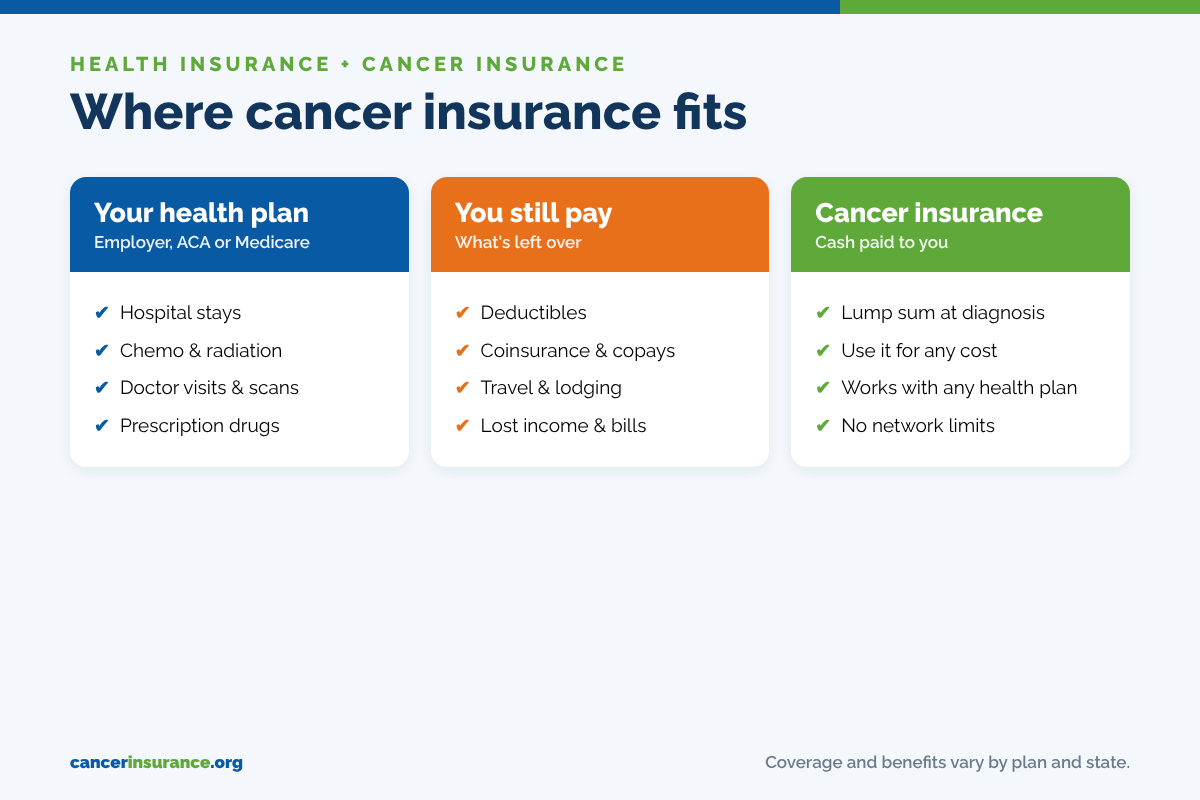
Cancer insurance is not a replacement for traditional health coverage. Instead, it supplements Medicare or other insurance by covering expenses that primary insurance does not pay. Many seniors pair cancer insurance with Medicare Advantage, Medicare Supplement (Medigap), or employer-based coverage.
Because Medicare covers medically necessary treatment but not non-medical expenses, cancer insurance fills a valuable financial gap.
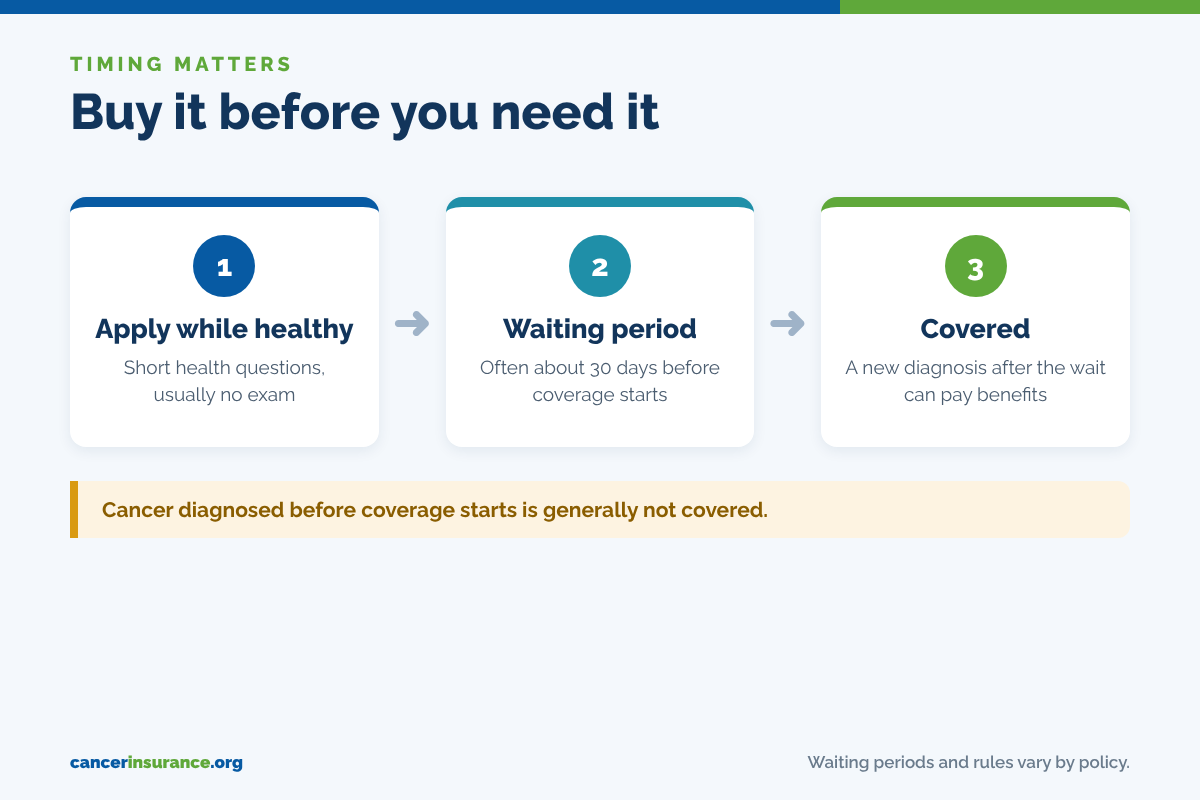
Waiting periods may apply, especially for lump-sum plans. Most policies exclude coverage for cancer diagnoses received shortly after the policy begins. Pre-existing condition rules vary by insurer, so seniors should read policy details carefully or ask a licensed insurance professional for help comparing their options.
Cancer insurance also offers peace of mind. Many seniors want predictable financial support in case of unexpected illness, and a cancer insurance plan provides an additional layer of reassurance at a time when stability matters most.
Why Seniors Consider Cancer Insurance
Seniors consider cancer insurance for several reasons, including the cost of Medicare cost-sharing, the financial impact of travel and lodging, the burden of non-covered treatments, and the desire to maintain financial independence during treatment. While Medicare covers doctor visits, chemotherapy, radiation therapy, and hospitalization, many expenses fall outside what Medicare pays.
Policyholders must pay deductibles, coinsurance, and copays. These costs increase further if treatment requires specialist visits, repeated imaging scans, or multiple hospital stays.
Cancer insurance helps reduce these unexpected expenses. Lump-sum benefits allow seniors to focus on healing rather than worrying about how to pay for travel to cancer centers, hotel stays during treatment, out-of-network second opinions, wigs or prosthetics, and alternative therapies.
Although these items may not be covered by Medicare, they can be important for comfort, mobility, and emotional well-being.
Seniors also consider cancer insurance because treatment can affect income. Even in retirement, individuals may work part-time or rely on family members who must take time off work to help. Cancer insurance benefits can help pay for groceries, utility bills, home modifications, and other living expenses when income is reduced.
Another reason seniors explore cancer insurance is the rising cost of transportation and lodging. Many top cancer centers are located in major cities. Traveling for specialized treatment can involve hotel stays, parking fees, meals, and extended time away from home. A cancer insurance plan provides financial support that helps offset these logistical costs.
Finally, seniors want the freedom to choose where and how they receive care. Some want access to national research hospitals, participation in clinical trials, or advanced treatment options. A cancer insurance plan allows seniors to pursue the care path that feels right for their situation without worrying about the financial burden.
Types of Cancer Insurance Coverage and Policies
Cancer insurance plans vary, but most fall into three categories: lump-sum plans, expense-based plans, and combination policies. Each type offers different advantages depending on the policyholder’s needs, financial priorities, and health history.
Lump-sum cancer insurance plans pay a single cash benefit upon diagnosis. The payment amount depends on the policy, typically ranging from a few thousand dollars to higher benefits for broader coverage. Seniors can use this cash however they choose, making it the most flexible type of cancer insurance. Because funds arrive quickly after diagnosis, they help address immediate financial needs.
Expense-based cancer insurance plans pay benefits for specific treatments or services as they occur. These plans reimburse policyholders for eligible expenses such as chemotherapy, radiation, surgery, imaging, or hospital stays. The plan outlines covered services and payment amounts, so benefits may vary depending on the type of care required. Seniors who want support for ongoing treatment costs may prefer this structure.
Combination cancer insurance plans include both lump-sum benefits and service-based reimbursement. For example, a plan may issue a lump-sum benefit upon diagnosis and then continue paying daily benefits for hospital stays or outpatient treatments. These plans offer more extensive support for seniors who anticipate needing multiple types of coverage.
Some cancer insurance plans also include wellness benefits, which reward policyholders for completing annual screenings or preventive checkups. These small payments encourage early detection and help seniors stay engaged in their health.
Regardless of the plan type, seniors should review coverage details, exclusions, waiting periods, benefit limits, and eligibility rules before enrolling. Understanding how benefits are paid ensures that the plan aligns with expected needs.

What Is Cancer Insurance
Cancer insurance coverage varies widely by insurer and plan type. Lump-sum plans issue a fixed cash benefit after a confirmed cancer diagnosis, and seniors can use that money however they choose, whether for medical bills, travel expenses, or everyday living costs that become more difficult to manage during treatment. Expense-based plans operate differently by outlining approved treatments and reimbursing policyholders for those specific services. This structure helps support ongoing cancer care and offers clarity about what the plan pays for throughout treatment.
Coverage may include, but is not limited to:
- Chemotherapy and radiation therapy
- Surgery
- Hospital stays
- Diagnostic imaging
- Skilled nursing care
- Transportation
- Lodging during treatment
- Alternative therapies
- Home health support
Many seniors use cancer insurance to pay for deductibles, coinsurance, and copays not covered by Medicare. Others rely on these benefits for non-medical needs such as home modifications, mobility aids, meal services, or personal caregiving support.
Because cancer affects every individual differently, having flexible coverage allows seniors to maintain comfort, stability, and independence during treatment and recovery.
Travel expenses remain a major concern for many seniors, especially when specialized care is available only at distant cancer centers. Costs for hotel stays, fuel, airfare, meals, and extended time away from home can accumulate quickly. Cancer insurance provides financial breathing room, allowing seniors to access top-tier treatment without disrupting retirement savings or long-term financial plans.
Cancer insurance does not typically cover pre-existing cancers or non-cancerous conditions. Policies may also exclude certain cancer types or require waiting periods before benefits begin. Seniors should review all exclusions and limitations to ensure their chosen plan aligns with their health history and expectations.
Some plans even include small benefits for wellness screenings or routine preventive care, which help encourage early detection and may contribute to improved outcomes and more manageable treatment costs.
How Cancer Insurance Works With Medicare
Cancer insurance complements Medicare by covering expenses that fall outside Medicare’s standard benefits. Medicare Part A covers inpatient hospital care related to cancer treatment, while Part B includes doctor visits, chemotherapy drugs administered in clinical settings, outpatient radiation therapy, diagnostic tests, and durable medical equipment.
Medicare Part D covers many oral chemotherapy drugs, anti-nausea medications, and supportive treatments.
Despite this broad coverage, Medicare still requires beneficiaries to pay deductibles, coinsurance, and copays. For seniors facing extended treatment, these costs can accumulate quickly. Cancer insurance helps pay these remaining expenses, easing the financial burden.
Because cancer insurance pays cash benefits directly to the policyholder, it can be used in ways Medicare cannot. For example, benefits can cover out-of-network second opinions, travel to specialized cancer hospitals, hotel stays, parking fees, or caregiving support. Seniors who choose to seek treatment outside their local area often rely on cancer insurance for these expenses.
Cancer insurance is especially helpful for seniors enrolled in Medicare Advantage. While Medicare Advantage plans can include coverage for medical costs, they still require copays and may have network restrictions. Cancer insurance gives seniors more flexibility and financial support regardless of their main insurance plan.
Seniors who have Medigap coverage may still consider cancer insurance if they want protection for non-medical costs, travel expenses, and financial security during treatment. Because Medigap does not cover out-of-network hotel stays or lost income, cancer insurance fills an important role in providing additional support.
How Premiums, Eligibility, and Enrollment Work
Cancer insurance premiums depend on several factors, including age, desired benefit amount, health history, tobacco use, and selected plan type. Premiums for lump-sum plans tend to be stable, while expense-based plans may cost more because they offer ongoing benefits throughout treatment.
Eligibility varies by insurer. Some companies require health questionnaires, while others allow guaranteed acceptance during enrollment windows.
Pre-existing cancer diagnoses are generally excluded, and many policies require a waiting period before benefits apply. Seniors who want coverage should consider enrolling before health issues arise.
Enrollment in cancer insurance is available year-round because these policies do not follow Medicare’s enrollment schedule. Seniors can apply at any time, although earlier enrollment may result in lower premiums and shorter waiting periods.
A licensed insurance agent can help compare prices, benefit options, and eligibility requirements to ensure a plan fits your situation.
Many insurers allow customization of benefit amounts. Seniors can choose how much coverage they want based on expected financial needs and budget.
Choosing a higher benefit amount increases premium cost but provides more financial protection.
Cancer insurance remains an affordable option for many seniors, especially compared to potential out-of-pocket costs after a diagnosis. Early enrollment, before major health conditions appear, often provides the most flexibility.

Advantages of Cancer Insurance Plans for Seniors
Cancer insurance offers several advantages that support seniors during a challenging time in life. The most important advantage is the financial flexibility it provides. Lump-sum benefits can be used for virtually any need, allowing seniors to address medical and non-medical expenses as they arise. Expense-based plans help pay for ongoing cancer treatments, reducing the burden of repeated copays and coinsurance.
Another advantage is the convenience of receiving funds quickly. Many insurers process lump-sum benefits within days of diagnosis verification, ensuring policyholders can take immediate action. Seniors can use this money for travel, lodging, prescriptions, or modifications that support comfort during treatment.
Cancer insurance can also help improve peace of mind. Knowing that financial support is available can reduce stress and support overall well-being during treatment. Emotional strain is common after a cancer diagnosis, and having supplemental funds can make planning easier.
This coverage supports family members as well. Caregivers often take time off work, travel to appointments, and provide daily assistance. Cancer insurance benefits help offset the financial impact of caregiving responsibilities.
Finally, cancer insurance gives seniors the freedom to choose where they receive treatment. Some individuals wish to pursue specialized treatment programs, clinical research trials, or consultations with renowned cancer centers. The financial support from cancer insurance makes these choices more accessible.
How to Compare Cancer Insurance Plans
Comparing cancer insurance plans requires reviewing coverage details, exclusions, benefit amounts, premium costs, and payout structures. Seniors should start by identifying what type of plan fits their needs. If flexibility is a priority, a lump-sum policy may be the right choice.
If ongoing treatment support is important, an expense-based plan could be more suitable.
Review the benefit amount carefully. Larger benefits provide stronger financial support but cost more in premiums. Seniors should consider how much coverage they want based on potential travel, lodging, caregiving, and treatment expenses.
Next, review exclusions. Some policies exclude certain cancer types or limit coverage to specific conditions. Others may have longer waiting periods before benefits apply. Comparing these rules helps seniors avoid unexpected surprises when filing a claim.
It is also important to review policy renewability. Most cancer insurance plans are guaranteed renewable for life as long as premiums are paid. Seniors should confirm this guarantee with the insurer.
Finally, comparing insurers based on customer service, claims processing, financial stability, and available plan options can help seniors make informed decisions. Working with a licensed agent can simplify the comparison by identifying plans that meet your health priorities and budget.
Many seniors prefer to compare cancer insurance alongside Medicare plans to ensure coverage fits together smoothly. An advisor can help determine how cancer insurance complements your Medicare Advantage or Medigap coverage.
Getting Help Choosing a Cancer Insurance Plan
Choosing a cancer insurance plan involves reviewing benefits, costs, eligibility, and how coverage fits with Medicare. Seniors who want personalized help can speak with a licensed insurance advisor who specializes in cancer insurance and Medicare options.
Advisors can review available plans, compare benefit amounts, and explain how each policy pays. They can also help identify coverage that aligns with your budget and expected needs.
A licensed advisor can review your medical history, preferred treatment centers, and financial priorities to determine which cancer insurance options fit your circumstances. If you expect to travel for specialized treatment or want strong financial support during recovery, an advisor can help identify plans with higher benefit levels.
They can also clarify differences between lump-sum and expense-based coverage so you understand how each type of plan would support your daily life during treatment.
If you would like help comparing cancer insurance plans, you can contact us today for a personalized consultation.
One of our licensed insurance agents will help you review your options, answer coverage questions, and select a cancer insurance policy that supports your health and financial needs with confidence.