




Speak with a licensed insurance agent

1-888-891-0229

5 Best Cancer Insurance Policies

Choosing the right cancer insurance policy can be a crucial step in protecting your finances against the high costs of cancer treatment. With numerous plans available, understanding how each one pays is essential.

This guide compares five of the best-known cancer insurance companies, explains how their policies pay, and covers what to check before you buy, so adults, caregivers, and families can make informed decisions.

✔ 5 carriers compared
✔ Licensed agents
✔ Free quotes

Key Highlights

✔

Our five picks are Mutual of Omaha, Aetna, Allstate, Cigna (now HealthSpring), and Aflac, each with a different approach to paying benefits.

✔

Lump-sum policies pay one cash benefit at diagnosis, while scheduled-benefit policies pay set amounts as treatment happens.

✔

Most cancer policies have a waiting period, often 30 days, and do not cover cancer diagnosed before coverage begins.

✔

Benefit amounts, issue ages, and availability vary by company and by

Compare Mutual of Omaha, Aetna, Allstate & More

Speak with a licensed insurance agent

1-888-891-0229

CancerInsurance.org logo

The 5 Best Cancer Insurance Policies

Key Takeaway

Four of our picks pay a lump sum at diagnosis. Aflac pairs a first-diagnosis benefit with set amounts per treatment. The right fit depends on how you want to be paid.

How we chose:

How the policy pays
Who can apply
Riders available
How widely it’s sold

This is an educational overview, not a quote or an endorsement of any single policy. Benefits, prices, and availability vary by state, so confirm details for your area with a licensed agent.

CompanyHow It PaysBest ForCheck Before Buying
Mutual of OmahaLump sum at diagnosisA simple, flexible cash benefitBenefit amount and optional riders
AetnaLump sum, with heart attack and stroke optionsMedicare-age shoppersRecurrence option and state availability
AllstateLump sum at first-ever diagnosisFamilies wanting equal benefits for everyone coveredPays only for a first-ever cancer diagnosis
Cigna (now HealthSpring)Lump sum at diagnosisAdding recurrence or heart attack and stroke ridersNot sold in every state; skin cancer not covered
AflacFirst-diagnosis benefit plus set amounts per treatmentSupport throughout treatmentBenefit schedule and waiting period

Not all plans offer all benefits. Benefits, issue ages, and availability vary by company and state.

1. Mutual of Omaha Cancer Insurance

Best for: a simple, flexible cash benefit
Pays: lump sum at diagnosis

Mutual of Omaha’s cancer insurance pays a lump-sum cash benefit when you are diagnosed with a covered cancer. You can use the money for anything, from deductibles and co-pays to travel, groceries, or lost income.

✔

Simple yes-or-no health questions on the application, according to the company’s materials

✔

Issue ages extend well into the senior years, and benefits do not reduce as you age

✔

Optional riders may add heart attack and stroke coverage

Things to check: the benefit amount you choose drives the premium, and riders and issue ages vary by state.

2. Aetna Cancer Insurance

Best for: Medicare-age shoppers
Pays: lump sum, with heart attack and stroke options

Aetna, part of CVS Health, offers cancer coverage through its Aetna Senior Supplemental Insurance line, built with Medicare-age shoppers in mind. Its Cancer and Heart Attack or Stroke Plus policy lets you choose a cancer plan, a heart attack and stroke plan, or both.

✔

Pays a lump-sum benefit directly to the insured or someone they designate

✔

A recurrence benefit option is available

✔

Coverage can include a spouse, with the same benefit amount for each covered person

Issued by Continental Life Insurance Company of Brentwood, Tennessee, an Aetna company.

Things to check: plan options and benefit amounts vary by state, and the policy is sold through licensed insurance agents.

3. Allstate Cancer Insurance

Best for: families wanting equal benefits for everyone covered
Pays: lump sum at first-ever diagnosis

Allstate sells individual cancer insurance through Allstate Health Solutions. The policy pays a lump-sum cash benefit upon a first-time-ever diagnosis of cancer, and the money can be used for anything, from treatment to mortgage or car payments and household bills.

✔

All covered family members, including dependents, receive equal benefits

✔

No doctor, network, hospital, or treatment restrictions

✔

Pays in addition to any other coverage you have

Things to check: benefits are for a first-ever cancer diagnosis, so a prior cancer history matters, and renewability age varies by state.

Note: Allstate’s workplace benefits business was sold to The Standard in 2025, so employer plans formerly branded Allstate Benefits are separate from this individual policy.

Best for: families wanting equal benefits for everyone covered
Pays: lump sum at first-ever diagnosis

Allstate cancer insurance is sold through Allstate Health Solutions. The policy pays a lump-sum cash benefit of $5,000 to $75,000 upon a first-time-ever diagnosis of cancer, and the money can be used for anything, from treatment to mortgage or car payments and household bills.

✔

All covered family members, including dependents, receive equal benefits

✔

No doctor, network, hospital, or treatment restrictions

✔

Enrollment ages 18 to 70, with premiums locked in at your enrollment age

Things to check: benefits are for a first-ever cancer diagnosis, pre-existing condition limitations apply, and renewability age varies by state.

Note: Allstate’s workplace benefits business was sold to The Standard in 2025, so employer plans formerly branded Allstate Benefits are separate from this individual policy.

4. Cigna Cancer Insurance (Now HealthSpring)

Best for: adding recurrence or heart attack and stroke riders
Pays: lump sum at diagnosis

Cigna cancer insurance is now offered under the HealthSpring name. Its Lump Sum Cancer Insurance pays a lump-sum cash benefit if you are diagnosed with a covered cancer, which you can use for medical costs or everyday expenses. Its strength is customization.

✔

Lump-sum cash benefit on diagnosis of a covered cancer

✔

Optional Cancer Recurrence Benefit Rider may pay additional benefits for a later diagnosis

✔

A lump-sum heart attack and stroke option can broaden protection

Things to check: benefits are not payable for skin cancer, and the policy is not available in Idaho, New Mexico, New York, Virginia or Wyoming. Benefit amounts, issue ages, and rates vary by state.

5. Aflac Cancer Insurance

Best for: support throughout treatment
Pays: first-diagnosis benefit plus set amounts per treatment

Aflac has sold cancer insurance since 1958. Its policies typically combine a one-time first-occurrence benefit, paid when internal cancer is first diagnosed, with scheduled cash benefits for treatments.

✔

Scheduled benefits for chemotherapy, radiation, surgery, and hospital stays

✔

Depending on the plan, may pay toward experimental treatments recognized by the National Cancer Institute

✔

Transportation and lodging benefits when you travel for care

Things to check: Aflac’s cancer policies include a 30-day waiting period, and the first-occurrence benefit is not paid for cancer diagnosed before coverage begins or for certain early-stage skin cancers.

See Which of These 5 Policies Is Available in Your ZIP

Speak with a licensed insurance agent

1-888-891-0229

CancerInsurance.org logo

Understanding Cancer Insurance

Key Takeaway

Cancer insurance is a financial safety net for the costs of cancer treatment and recovery. It is designed to complement your health insurance or Medicare, not replace it.

The sections below explain how it works and what to look for.

What is Cancer Insurance and How Does It Work?

Cancer insurance is supplemental insurance that pays cash benefits if you are diagnosed with cancer. Unlike health insurance, which pays doctors and hospitals, cancer insurance usually pays you directly.

That cash can help with deductibles, co-pays, and coinsurance, or with living expenses if illness keeps you from working.

Lump Sum

Many policies pay one cash benefit when internal cancer is first diagnosed.

Set Amounts

Others pay set amounts as treatment happens.

Watch for: most policies cover internal cancers, while early-stage cancers such as carcinoma in situ may receive a reduced benefit and some skin cancers may be excluded.

Recurrence: some policies also offer a recurrence benefit if cancer returns after a treatment-free period.

Key Features of Cancer Insurance Policies

Key Features

✔

Choose your benefit amount. Most cancer policies let you pick an amount based on your budget.

✔

Broad treatment benefits. Depending on the policy, benefits may be paid for hospital stays, surgery, chemotherapy, radiation, and, on some scheduled-benefit policies, experimental treatments recognized by the National Cancer Institute.

✔

No network, no deductible. Because cancer insurance pays fixed amounts rather than reimbursing bills, it typically has neither.

✔

Simpler claims. Claims are usually simpler than major medical claims.

Approaching or in retirement? Weigh the premium against the benefit to make sure the policy offers real financial relief.

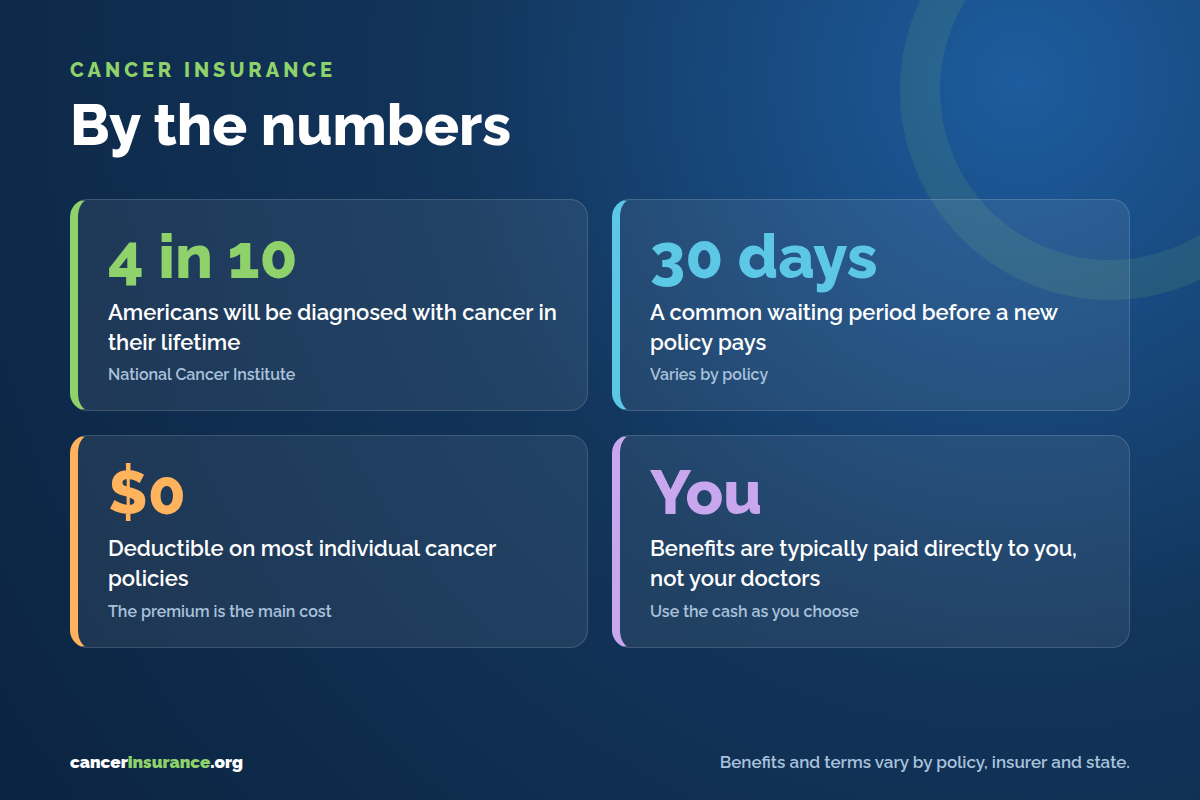
Cancer insurance by the numbers: 4 in 10 Americans diagnosed with cancer, 30-day waiting period, $0 deductible, benefits paid directly to you

Cancer Insurance Coverage: What's Included?

Key Takeaway

Cancer insurance policies vary, but most draw from the same set of benefits. The table below shows the common ones and what to watch for.

Coverage ElementDescriptionWatch For
Diagnosis BenefitLump sum paid on confirmed diagnosis of covered cancerEarly-stage cancers may pay a reduced amount
Treatment BenefitsSet amounts for chemotherapy, radiation, and surgeryFixed amounts may not match actual costs
HospitalizationDaily benefit for cancer-related hospital staysMay be capped at a number of days
Travel and LodgingBenefits for travel to treatment and nearby lodgingOften limited by distance or a yearly maximum
Recurrence BenefitPays again if cancer returns after a treatment-free periodIncluded on some policies, optional rider on others

Not all plans offer all benefits. Benefits vary by company, policy, and state.

Typical Coverage Offered by Cancer Insurance Plans

Because benefits are usually paid in cash directly to you, they can help with co-pays, deductibles, and other out-of-pocket costs your primary coverage leaves behind, whether treatment happens in the hospital or as an outpatient.

That cash can also help with:

Specialist Travel

Trips to out-of-state specialists

Lodging

A place to stay near a cancer center

Second Opinions

Out-of-network second opinions

Household Bills

Bills while you are unable to work

Exclusions and Limitations in Cancer Insurance Policy

While understanding the benefits of cancer insurance is crucial, being aware of its exclusions and limitations is equally important.

Common Exclusions & Limits

!

Prior diagnosis. Most policies will not pay for cancer diagnosed or treated before coverage began.

!

Waiting period. Most individual policies have one, often 30 days, and a diagnosis during that time is typically not covered.

!

Skin and early-stage cancers. Many policies exclude or reduce benefits for skin cancers other than melanoma and for early-stage diagnoses such as carcinoma in situ.

!

Benefit caps. Benefits may be capped per treatment, per year, or over a lifetime, so review these terms closely.

Cancer Insurance vs. Health Insurance

Key Takeaway

Cancer insurance and health insurance play different roles. Understanding how they work together helps you build coverage that holds up when a diagnosis happens.

Health Insurance / Medicare

Pays doctors and hospitals for a broad range of care, with deductibles, co-pays and coinsurance.

Cancer Insurance

Pays fixed cash benefits, usually directly to you, to use for the costs your health plan leaves behind.

How Does Cancer Insurance Differ from Standard Health Insurance?

Health insurance and Medicare pay providers for a broad range of medical services, usually with deductibles, co-pays, and coinsurance. Cancer insurance is a supplemental policy that pays fixed cash benefits, usually directly to you, when you are diagnosed with or treated for covered cancer.

Health Insurance / MedicareCancer Insurance
Who it paysDoctors and hospitalsUsually you, directly
What it coversA broad range of medical careCovered cancer only
How it paysBased on your bills, after deductibles and co-paysFixed cash amounts set by the policy

Supplementary cancer insurance often includes benefits such as a lump-sum payment upon diagnosis, which you can use at your discretion for out-of-pocket medical costs, travel, second opinions, or daily expenses.

Supplementary Role of Cancer Insurance in Health Coverage

Cancer insurance fills the financial gaps left after your primary coverage pays.

Gaps It Helps Fill

✔

Transportation for out-of-town treatment

✔

Lodging near a treatment center

✔

Mortgage or rent, utilities, and groceries if you cannot work

Funds when you need them: because benefits are fixed amounts paid on a confirmed diagnosis or treatment, many insurers can pay claims promptly.

Get Cancer Insurance Quotes From Top-Rated Carriers

Speak with a licensed insurance agent

1-888-891-0229

CancerInsurance.org logo

Financial Aspects of Cancer Insurance Plans

Key Takeaway

Understanding what a policy costs, and how it pays, helps you decide whether it delivers the financial security you want.

What It Costs

What sets your premium, and the terms that affect your value.

How It Pays

Lump sum, scheduled benefits, or both, and what to check before you buy.

Understanding the Costs and Premiums

What sets your premium:

Age

Older applicants typically pay more.

Tobacco Use

Tobacco users usually pay higher rates.

Your State

Rates and availability vary by state.

Benefits & Riders

Higher benefits and riders like recurrence or heart attack and stroke raise the premium.

No deductibles or co-pays: unlike major medical insurance, most cancer insurance policies don’t have them. The main cost is the premium.

Watch for: the waiting period, benefit maximums, and whether premiums can rise over time. Many policies are guaranteed renewable, though insurers may still raise rates for an entire group of policyholders.

A licensed insurance agent can compare premiums and benefits across companies to find a policy that fits your budget.

How Benefits are Paid Under a Cancer Policy

Lump Sum

One cash benefit after a covered diagnosis.

Scheduled

Set amounts as specific treatments occur.

Both

Some policies combine a lump sum with scheduled benefits.

In each case, benefits are usually paid directly to you to use however you choose.

Before You Buy

✔

Whether a lump sum or ongoing treatment benefits better fits your needs

✔

The waiting period before coverage begins

✔

How the policy defines covered cancer, including skin cancer and early-stage diagnoses

✔

Benefit maximums per treatment, per year, or over a lifetime

✔

Whether a recurrence benefit is included or available as a rider

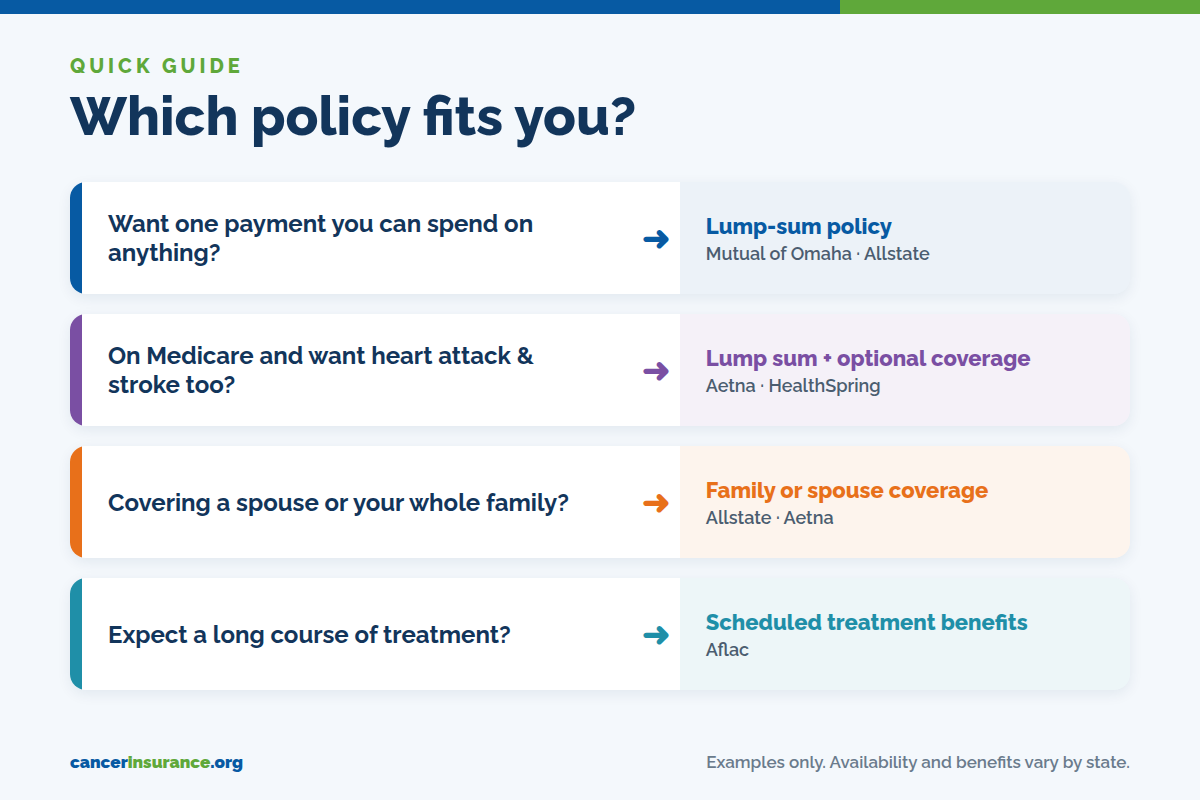
Which cancer insurance policy fits you: lump-sum, heart attack and stroke options, family coverage, and scheduled treatment benefits by carrier

Choosing the Right Cancer Insurance Policy

Key Takeaway

Choosing the right cancer insurance policy means weighing four things against your own health and budget.

1. Eligibility
2. Benefits
3. Limitations
4. Cost

Eligibility and Considerations for Selecting Insurance Plans

Who Can Qualify

✔

Most individual cancer policies ask a short set of health questions rather than requiring a medical exam

✔

A current or past cancer diagnosis may make an applicant ineligible

✔

Issue ages vary by company, and many policies are available to seniors

Which carriers fit you:

On Medicare or Buying on Your Own

Individual policies from Mutual of Omaha, Aetna, Allstate, and Cigna (now HealthSpring) are built for you.

Through Work or Individually

Aflac policies are often offered through employers as well as individually.

How to Compare Cancer Insurance Companies

Compare These

1

How each policy pays

2

The benefit amounts offered

3

The waiting period

4

How covered cancer is defined

5

Available riders

6

Whether the policy is sold in your state

7

Each company’s financial strength and claims reputation

Save Time

A licensed insurance agent who works with several companies can compare these details side by side and help you find a policy that fits your needs and budget.

Let a Licensed Agent Compare All 5 for You

Speak with a licensed insurance agent

1-888-891-0229

CancerInsurance.org logo

Frequently Asked Questions

➤ What are the best cancer insurance companies?

Five of the best-known cancer insurance companies are Mutual of Omaha, Aetna, Allstate, Cigna (now HealthSpring), and Aflac. The best choice depends on whether you want a lump sum or ongoing treatment benefits, your age, and your state.

➤ What is cancer insurance?

Cancer insurance is supplemental insurance that pays cash benefits, usually directly to you, if you are diagnosed with cancer. It complements health insurance or Medicare and does not replace it.

➤ How does cancer insurance differ from standard health insurance?

Health insurance pays providers for a broad range of medical care. Cancer insurance pays fixed cash benefits for covered cancer, usually to you, which you can use for out-of-pocket costs, travel, or living expenses.

➤ What are common exclusions and limitations in cancer insurance policies?

Common limits include no coverage for cancer diagnosed before the policy starts, a waiting period often around 30 days, reduced or no benefits for some skin cancers and early-stage diagnoses, and caps on benefit amounts.

➤ What features should be considered when choosing a cancer insurance policy?

Consider how the policy pays, the benefit amount, the waiting period, how covered cancer is defined, recurrence benefits, available riders, and whether the policy is sold in your state.

➤ Who is eligible for cancer insurance, and how can it complement existing coverage?

Most individual policies ask a few health questions rather than requiring a medical exam, and issue ages vary by company. Cancer insurance complements existing coverage by paying cash you can use for costs your health plan or Medicare does not fully cover.

Have Questions?

Speak with a licensed insurance agent

1-888-891-0229

Ready to Compare? Get Free Cancer Insurance Quotes

Speak with a licensed insurance agent

1-888-891-0229

CancerInsurance.org logo

ZRN Health & Financial Services, LLC, a Texas limited liability company