➤ Can I get health insurance if I already have cancer?
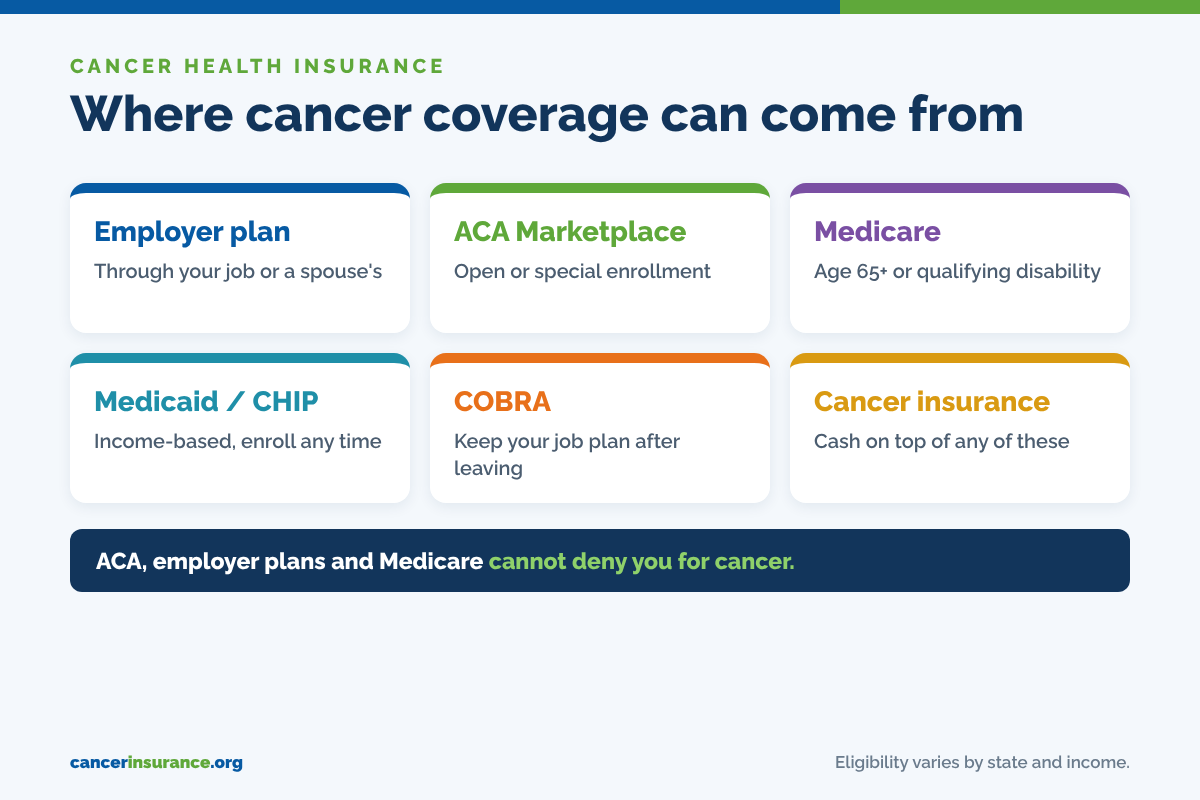
Yes. ACA Marketplace plans and employer health plans cannot deny you, charge more or exclude treatment because of cancer. Timing still matters, so check open enrollment, a Special Enrollment Period, Medicaid, Medicare or your employer’s plan.
➤ What does health insurance usually cover for cancer treatment?
Comprehensive health insurance may cover oncology visits, tests, imaging, surgery, chemotherapy, radiation, hospital care, prescription drugs and follow-up care. Your costs depend on the plan’s deductible, copays, coinsurance, network, drug formulary and prior authorization rules.
➤ Is cancer insurance the same as health insurance?
No. Cancer insurance is supplemental coverage that pays cash after a covered diagnosis. It works on top of your health insurance and can help with deductibles, travel, lost income and household bills, but it does not replace a health plan.
➤ How do I choose the best health plan for cancer care?
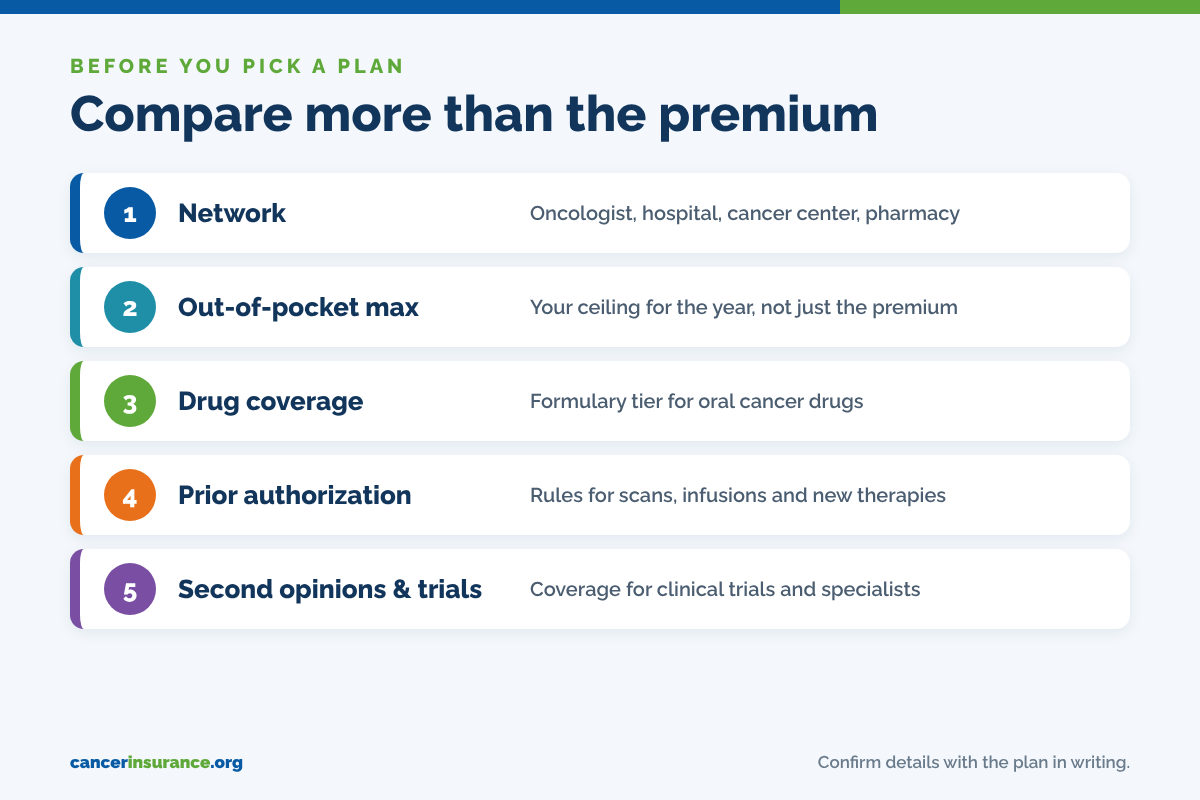
Confirm your oncologist, cancer center, hospital and pharmacy are in network. Then compare the out-of-pocket maximum, deductible, drug coverage for cancer medications, prior authorization rules, and coverage for second opinions and clinical trials.
➤ Can I keep my insurance after leaving my job during cancer treatment?
You may be able to keep the same employer plan through COBRA, which can preserve access to your current doctors. You may pay the full premium plus a fee, so compare COBRA with Marketplace plans, Medicaid, Medicare and a spouse’s plan before deadlines pass.
➤ What cancer costs might I still pay after insurance?
You may still owe deductibles, copays, coinsurance, prescription costs and out-of-network charges, plus travel, lodging, lost wages and home care. Cancer insurance pays cash that can help with these costs.