Speak with a licensed insurance agent

1-888-891-0229

Cancer Insurance Plans

Cancer insurance plans are specialized insurance policies designed to provide financial support specifically for costs associated with cancer diagnosis and treatment.

With mounting healthcare expenses, these plans offer a crucial safety net that helps manage the unexpected costs arising from hospital stays, treatments, and ongoing care.

Unlike traditional health insurance, cancer insurance pays cash benefits that can help offset non-covered treatments, deductibles, and out-of-pocket expenses left by your primary coverage.

Understanding these plans can empower individuals and families to make informed decisions about their future financial security, ensuring peace of mind during challenging times. Explore this guide to learn more about how cancer insurance works.

✔ Licensed agents
✔ Top-rated carriers
✔ Free quotes

Key Highlights

✔

Cancer insurance offers financial support for cancer-related expenses, complementing traditional health insurance.

✔

Eligibility typically depends on your current health, and most individual policies ask applicants to answer a short health questionnaire rather than take a medical exam.

✔

Critical illness insurance can enhance coverage, providing lump-sum benefits for severe health conditions like cancer.

✔

Cash benefits may be used for both direct medical costs and indirect expenses, such as transportation and home care.

✔

Payouts can be lump-sum or scheduled, offering flexibility in managing cancer treatment expenses.

See What Cancer Insurance Costs in Your Area

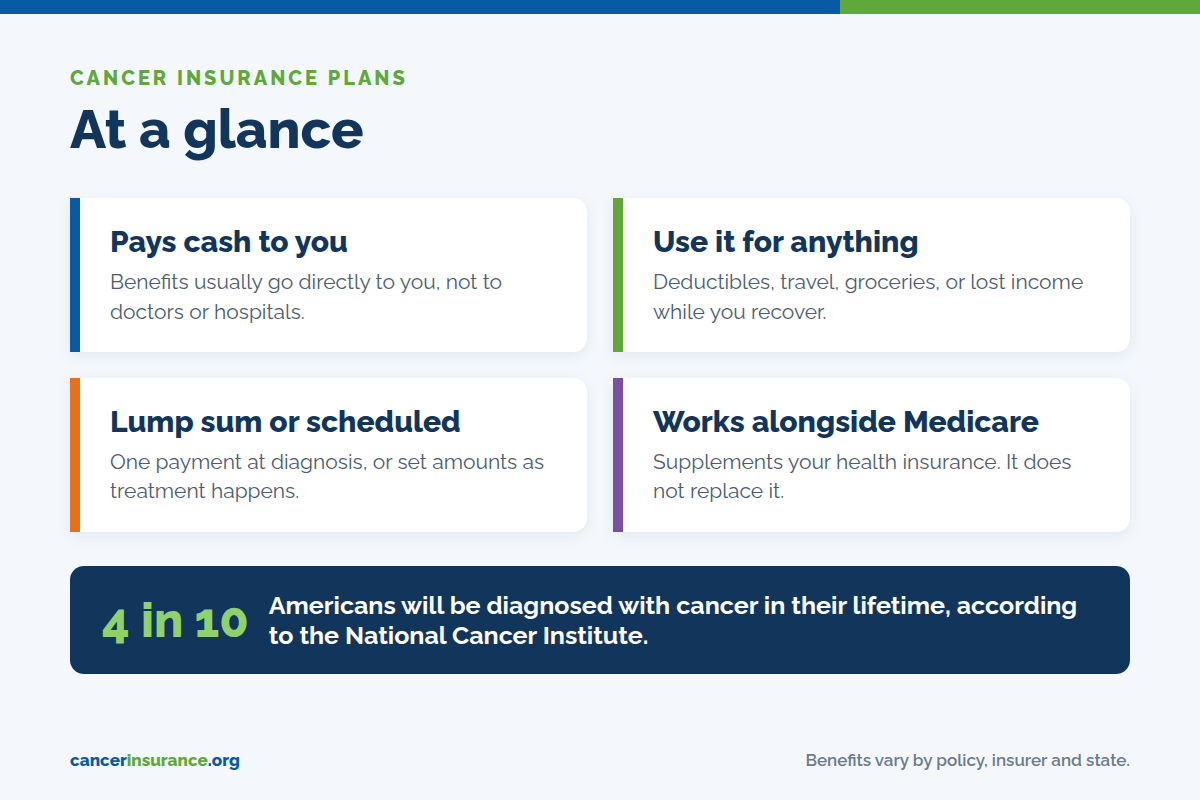
Cancer insurance plans at a glance: pays cash to you, use it for anything, lump sum or scheduled benefits, works alongside Medicare

Understanding Cancer Insurance: An Overview

Cancer insurance plans are supplemental insurance policies designed to provide financial support following a cancer diagnosis. Understanding cancer insurance is crucial for individuals seeking added protection from the overwhelming costs associated with cancer treatment.

Good to know: cancer insurance is not major medical health insurance and does not replace it. It pays cash alongside the coverage you already have.

This overview examines the essence of cancer insurance, how it works, and how it compares with hospital indemnity insurance. By grasping these concepts, readers can better evaluate insurance policies and make informed decisions about insurance coverage.

In this guide

1

What cancer insurance is and how it compares with indemnity insurance

2

How it works, from diagnosis to claim to payout

3

What it may pay for, including medical and everyday costs

4

Who is eligible and what it costs

5

How to choose the right policy for you

What is Cancer Insurance?

Key Takeaway

Cancer insurance is supplemental coverage that pays cash when you are diagnosed with cancer. It works alongside your health insurance or Medicare. It does not replace it.

Cancer insurance serves as a supplemental insurance designed specifically to offer financial assistance in the event of a cancer diagnosis. Unlike traditional health insurance, which typically handles a broad spectrum of medical conditions, cancer insurance focuses exclusively on cancer-related expenses.

Focused on Cancer

Benefits are built around a cancer diagnosis and its treatment.

Pays Cash to You

A lump sum or scheduled payouts you can generally use as you see fit.

Flexible Options

A range of benefit amounts and policy structures to fit your needs.

The primary goal of cancer insurance is to lessen the economic burden that often accompanies serious health conditions like cancer. It goes beyond direct medical costs by also helping with indirect expenses such as lost income, transportation to and from treatment centers, or home care services.

When considering cancer insurance, it’s pivotal to understand that it does not replace standard health insurance policies but rather complements them by filling in the gaps. Because insurers offer a variety of benefit amounts and policy structures, individuals can select a plan that suits their anticipated needs based on family history or specific risk factors.

Who Can Apply

✔

Most plans ask a few health questions at the time of application, usually without a medical exam.

✔

A current or past cancer diagnosis may make an applicant ineligible or limit coverage.

✔

For seniors aged 50-85, understanding premium costs and benefit payout options plays a significant role in the decision.

Research and education about these insurance plans are key in choosing the most suitable policy. For a deeper look, read our full guide: what is cancer insurance.

How Does Cancer Insurance Compare to Indemnity Insurance?

Key Takeaway

Most cancer insurance is a form of fixed indemnity insurance. The difference is what triggers a payment: cancer insurance pays for cancer, while hospital indemnity pays for hospital stays.

When exploring insurance coverage options, it’s essential to understand how cancer insurance relates to indemnity insurance. The two are closely connected, and the terms are often confused. Both pay set dollar amounts listed in the policy, rather than reimbursing the actual cost of your medical bills.

Cancer Insurance

✔

Pays only for cancer

✔

Often a lump sum when cancer is first diagnosed

✔

Some policies add scheduled amounts for chemotherapy, radiation or surgery

✔

Helps with outpatient treatment as well as hospital care

Hospital Indemnity Insurance

✔

Pays for covered hospital stays, whatever the condition

✔

Typically a set amount per admission or per day in the hospital

✔

Generally pays only when you are admitted

✔

Narrower for cancer, since much treatment is outpatient

A critical distinction lies in the flexibility of benefit usage. Cancer insurance often offers a lump-sum benefit upon diagnosis, providing policyholders with the liberty to use funds for a variety of purposes, ranging from medical bills to ancillary costs like travel or housing during treatment. This benefit structure can be especially valuable for seniors and families facing the financial impact of a serious diagnosis.

What They Have in Common

✔

Both pay fixed amounts directly to you

✔

Neither typically has a deductible or a provider network

✔

Benefits are generally paid regardless of what your other insurance covers

A notable advantage of cancer insurance is its predetermined payout system, which simplifies financial planning during the uncertainty following a cancer diagnosis.

Watch for: many policies pay a reduced benefit for early-stage diagnoses, such as carcinoma in situ, and some exclude certain skin cancers. These details can significantly change what a policy pays.

For families and caregivers, understanding these differences is vital when evaluating cancer insurance and hospital indemnity insurance alongside primary health coverage, and helps ensure better preparedness for life’s unpredictable moments.

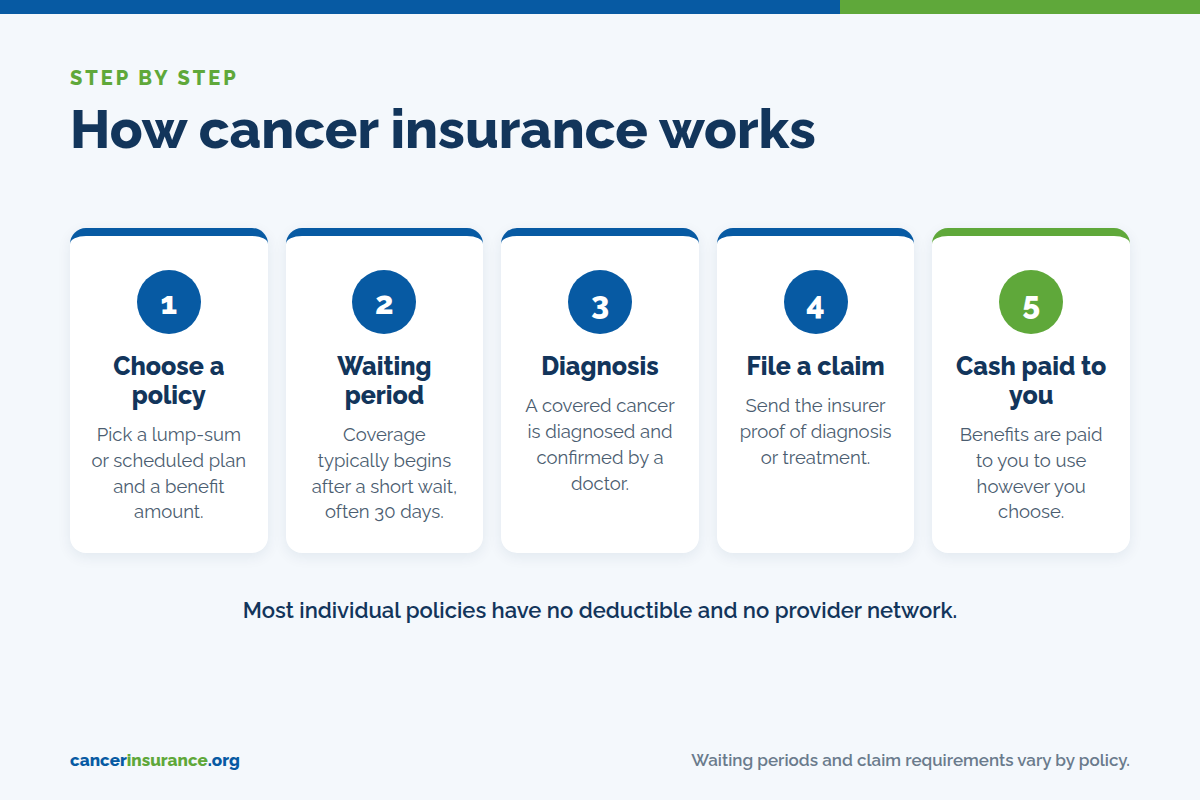
How cancer insurance works step by step: choose a policy, waiting period, diagnosis, file a claim, cash paid to you

How Cancer Insurance Works

Key Takeaway

You pay a premium, a covered cancer is diagnosed, you file a claim, and the insurer pays cash benefits to you based on your policy.

Understanding how cancer insurance works is pivotal for those looking to safeguard their finances against potential cancer-related expenses. This section breaks down the mechanics of cancer insurance plans and examines the role of critical illness coverage.

By understanding these details, adults aged 50 to 85 and their families can make informed decisions that best suit their needs and financial situations, and better anticipate the benefits available when faced with a cancer diagnosis.

The Claims Process

What happens from diagnosis to payout, and how insurers review claims.

Direct and Indirect Costs

How benefits can help with treatment bills and everyday expenses.

Critical Illness Coverage

How critical illness insurance can broaden your protection.

How Much Would a Lump-Sum Payout Cost You?

Breaking Down the Process

Key Takeaway

Cancer insurance complements your existing health coverage. After a confirmed diagnosis, you file a claim and receive benefits based on your policy terms.

Navigating a cancer diagnosis involves more than just dealing with medical treatment; it often requires a thorough understanding of the available insurance options to tackle the financial side. Cancer insurance operates by offering benefits that complement existing health insurance policies, designed specifically for costs associated with cancer treatment.

How a Claim Works

1

Diagnosis. A covered cancer is diagnosed and confirmed by a doctor.

2

Claim review. You file a claim, and

Critical Illness and Its Impact on Coverage

Key Takeaway

Critical illness insurance pays a lump sum for a list of serious conditions, which may include cancer. Paired with cancer insurance, it creates a broader safety net.

Critical illness insurance is often purchased alongside cancer insurance to broaden protection, and some insurers offer it as a rider. These policies provide financial protection for severe health conditions, including diagnoses like cancer, by paying a lump-sum benefit upon the diagnosis of a covered critical illness.

Cancer Insurance

✔

Pays for cancer only

✔

Lump sum at diagnosis, scheduled treatment benefits, or both

✔

Can support you through ongoing treatment

Critical Illness Insurance

✔

Pays for a list of covered conditions, which may include cancer, heart attack and stroke

✔

One lump sum per covered condition, up to policy limits

✔

Sold on its own or as a rider on some policies

Critical illness policies are designed to ease the financial strain of serious medical conditions by offering more than just medical expense coverage. For seniors, this additional support can be a game-changer when facing long-term or complex treatment plans.

How the money can be used:

Medical bills
Ongoing treatment
Non-medical care
Home modifications

Check Before You Buy

✔

Eligibility can differ from cancer insurance, with specific health criteria and possible age-related conditions or exclusions.

✔

Review which illnesses are included and how each one is defined.

✔

Check the timing of payouts and any policy limitations.

By carefully comparing critical illness and cancer coverage, individuals can build a plan that protects both financial and emotional well-being during recovery. Insurance educators like cancerinsurance.org emphasize these options so you and your family can plan with confidence for a future that prioritizes health and financial security.

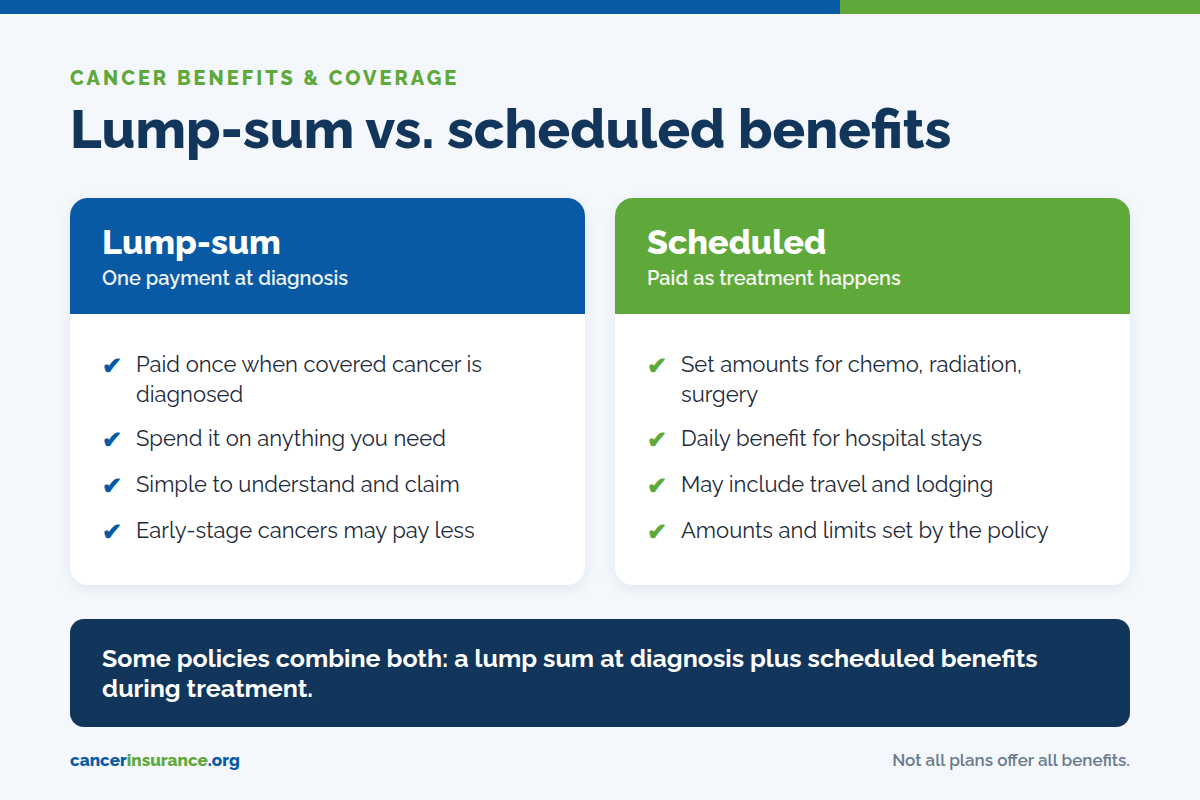
Lump-sum vs scheduled cancer insurance benefits compared

Cancer Benefits and Coverage Details

Key Takeaway

Before you buy, know two things about any policy: what it may pay for, and how it pays.

Understanding cancer benefits and insurance coverage is crucial for evaluating cancer insurance policies. This insight helps individuals and families make informed decisions about the right insurance to support the financial side of cancer treatment.

What It May Pay For

Medical treatment, hospital stays, and everyday costs like travel and home care.

How Benefits Are Paid

A lump sum at diagnosis, scheduled amounts as treatment happens, or both.

Compare Lump-Sum Cancer Plans From Top Carriers

Speak with a licensed insurance agent

1-888-891-0229

What May Be Covered Under Cancer Insurance Policies?

Cancer insurance pays cash benefits that can help with both the medical bills and the everyday costs that come with a cancer diagnosis. Because benefits are usually paid directly to you, you decide where the money goes.

Medical Costs

  • Chemotherapy and radiation
  • Surgery and hospital stays
  • Certain cancer drugs
  • Deductibles, copays and coinsurance your health plan leaves behind

Everyday Costs

  • Travel to and from treatment
  • Lodging near a cancer center
  • Home care during recovery
  • Rent, groceries and bills if you can’t work

Bonus on some policies: a small yearly benefit for completing a covered cancer screening test, which encourages early detection.

Coverage varies a lot between insurance companies, so compare how each policy pays before you buy. The table below shows the four most common types of cancer-related coverage.

Coverage TypeWhat It Pays ForHow It PaysPossible ExtrasWatch For
Lump-Sum Cancer InsuranceCancer when first diagnosed; cash for medical or non-medical costsOne fixed amount you choose when you buyRecurrence or screening benefit on some policiesReduced benefit for early-stage cancer; waiting period
Scheduled-Benefit Cancer InsuranceSpecific treatments: chemo, radiation, surgery, hospital daysSet amounts listed in the policy, paid as treatment happensTravel and lodging during treatmentCaps per treatment or per year; doesn’t reimburse actual bills
Hospital Indemnity InsuranceHospital admissions, for cancer or other covered conditionsFixed amount per admission and/or per dayOutpatient or observation-stay benefits on some plansPays little toward outpatient cancer treatment
Critical Illness InsuranceDiagnosis of covered conditions, which may include cancer, heart attack and strokeOne lump sum per covered condition, up to policy limitsReduced benefit for less severe diagnosesCovered conditions and definitions vary by policy

Not all plans offer all benefits. Benefits, limits and availability vary by insurer and state.

How Are Cancer Benefits Paid Out?

Key Takeaway

Health insurance pays your providers. Cancer insurance pays fixed amounts directly to you, as a lump sum, scheduled payments, or both, depending on the policy you choose.

Understanding how cancer benefits are paid out is a pivotal element when considering cancer insurance coverage. Unlike traditional health insurance, which pays providers or reimburses policyholders for costs after they’ve been incurred, cancer insurance provides financial support through fixed payouts made directly to you.

STEP 1

Diagnosis

A covered cancer is diagnosed.

STEP 2

Claim

The insurer reviews it against your policy terms.

STEP 3

Payout

Cash is paid to you, in the form your policy specifies.

Whether benefits arrive as a one-time lump sum, as scheduled payments, or both depends on the type of policy you choose when you enroll.

Lump-Sum Payment

Flexibility and immediacy

✔

One payment you can use as needed

✔

Medical bills, daily living expenses, or home modifications

✔

Best if you want cash on hand right away

Scheduled Benefits

Continuous support over time

✔

Paid over the duration of treatment

✔

No pressure of managing a large sum up front

✔

Best if you expect long-term treatment

Understanding these options can significantly affect decision-making, especially for adults ages 50-85, their caregivers, and families planning around financial support for cancer-related expenses.

Questions to Ask

?

Does this policy pay a lump sum, scheduled benefits, or both?

?

How are different cancer stages and types handled when benefits are paid?

?

What terms or limits apply, since payout rules vary by insurance company and policy?

By weighing these factors, you can choose a payout method that aligns with your financial needs and treatment plans, so your cancer insurance truly complements your primary health insurance.

Eligibility and Cost Considerations for Cancer Insurance

Key Takeaway

Eligibility decides whether you can get a policy. Cost decides whether it fits your budget. Check both before you buy.

Understanding the eligibility and costs associated with cancer insurance is essential for those considering this valuable protection. By examining both, adults ages 50-85, caregivers, and families can make informed decisions about a cancer insurance plan that fits their needs and budget.

Who Can Qualify

Health questions, issue ages, and how pre-existing conditions are treated.

What It Costs

What sets your premium, and the policy terms that affect your value.

Who is Eligible for Cancer Insurance?

Key Takeaway

Most adults in reasonably good health can qualify. Individual policies usually ask a short set of health questions, with no medical exam.

Eligibility for cancer insurance often varies based on the specific policy and insurance provider, but there are common criteria that most individuals must meet. Generally, adults interested in cancer insurance must be in reasonably good health at the time of application.

What Insurers Look At

✔

Whether you are currently in cancer treatment or were recently diagnosed

✔

Your answers to a short health questionnaire, usually with no medical exam

✔

Your age, since issue ages vary by insurer

Some insurance companies offer more lenient eligibility requirements than others. However, even with more accessible criteria, certain health conditions might still affect eligibility.

Pre-existing conditions: conditions related to cancer can limit which plans are available or change the benefits and premiums. Read each policy’s terms carefully.

There are two main routes to coverage:

Individual Plans

✔

Bought on your own, including by seniors on Medicare

✔

Short health questionnaire

✔

Choose your own benefit amount

Group Plans (Employer)

✔

Offered through an employer

✔

Fewer restrictions; may skip health questions during enrollment

✔

Often lower premiums due to shared risk

Adults aged 50-85, caregivers, and families should evaluate their health status and insurance needs before applying. For added financial security, other supplemental policies, such as hospital indemnity or critical illness insurance, can provide further help.

Ultimately, understanding eligibility requirements is a critical first step in securing protection against the financial strain of a cancer diagnosis.


Understanding Potential Costs and Premiums

Key Takeaway

Your main cost is the premium. It is driven by your age, tobacco use, state, and the benefit amount and riders you choose.

The costs associated with cancer insurance come down to several factors that potential policyholders need to consider. Premiums are the regular payments made to keep your coverage in force.

What sets your premium:

Age

Older adults often pay more, since cancer risk rises with age.

Tobacco Use

Tobacco users typically pay higher rates.

Your State

Rates and plan availability vary by state.

Benefits & Riders

Higher benefits and added riders raise the premium.

Plans offering broader protection and higher benefits naturally cost more. They may include benefits for direct medical expenses such as chemotherapy and radiation, as well as indirect costs like transportation or lodging. The trade-off is greater peace of mind and financial security if you face a cancer diagnosis.

No deductibles or co-pays: unlike major medical insurance, most individual cancer insurance policies don’t have them. The premium is the main cost.

Check These Terms

✔

Waiting period: often around 30 days, during which a diagnosis is not covered

✔

Pre-existing condition limits: how your health history affects coverage

✔

Maximum benefit: the most the policy will pay

✔

Future rate increases: many policies are guaranteed renewable, but insurers may still raise rates for an entire group of policyholders

To manage costs, compare multiple plans and providers, since premiums and benefits can differ significantly. Look for a policy that balances premium cost with the coverage you need, and ask about discounts or lower rates on group plans through organizations or employers.

With this knowledge, adults aged 50-85, caregivers, and families can confidently choose a cancer insurance plan that fits their budget and provides meaningful support during challenging times.

Choosing the Right Cancer Insurance

Key Takeaway

The right policy matches how you want to be paid, covers the costs you’re most worried about, and fits your budget. Compare several before you decide.

When it comes to cancer insurance plans, choosing the right policy means carefully evaluating several factors so it meets your coverage needs and financial preferences.

How to Choose

1

Pick how you want to be paid. Some policies pay a lump sum at diagnosis, while others pay scheduled benefits through treatment, addressing immediate and long-term needs.

2

Cover direct and indirect costs. A well-rounded policy pays benefits that help with hospitalization, treatment and medication, plus costs like transportation or home care.

3

Consider critical illness coverage. It can protect against the costs of other severe health conditions.

4

Factor in your health and risk. Insurers use your health status and risk factors to set eligibility and premiums, so consider your medical history and any hereditary concerns.

5

Compare companies and read the details. Coverage, premiums and benefits differ significantly. Check exclusions, waiting periods, benefit limits and how benefits are paid.

6

Talk to a licensed agent. An agent familiar with cancer insurance can help you choose a policy that complements your existing health or life insurance.

“As a Cancer Insurance Educator, I emphasize the importance of understanding the nuances of each insurance policy and working closely with a licensed insurance agent to secure coverage that best suits you.”

The Bottom Line

Cancer insurance is designed to supplement your existing health coverage, offering financial relief for treatment-related expenses and non-medical costs alike. By researching your options and weighing your health needs and budget, individuals over 50 and their families can make an informed choice that provides critical support where it’s needed most.

Find the Right Cancer Plan for Your Budget

Frequently Asked Questions

➤ What is cancer insurance?

Cancer insurance is a supplemental insurance policy that pays cash benefits to help with expenses related to cancer diagnosis and treatment. It complements existing health insurance coverage and does not replace it.

➤ Who is eligible for cancer insurance?

Eligibility generally depends on your health at the time of application. Most individual policies ask a short set of health questions rather than requiring a medical exam, and a current or past cancer diagnosis may limit eligibility. Issue ages vary by insurer.

➤ What types of expenses does cancer insurance cover?

Cancer insurance pays fixed cash benefits, usually directly to you, which can be used for direct medical costs such as treatment, medication, and hospital stays, and for indirect expenses like transportation, home care, and lost income. Benefits vary by policy.

➤ How are cancer insurance benefits paid out?

Depending on the policy, benefits are paid as a lump sum upon diagnosis, as scheduled amounts for specific treatments, or both. Most policies pay fixed amounts regardless of your actual medical bills.

➤ How does critical illness insurance complement cancer insurance?

Critical illness insurance can add to cancer coverage by paying a lump-sum benefit for covered conditions, which may include cancer, heart attack, and stroke, helping manage financial needs beyond medical costs.

Have Questions?

Speak with a licensed insurance agent

1-888-891-0229

Ready to Compare? Get Free Cancer Insurance Quotes

Speak with a licensed insurance agent

1-888-891-0229

ZRN Health & Financial Services, LLC, a Texas limited liability company