




Updated November 2026
Key Takeaway
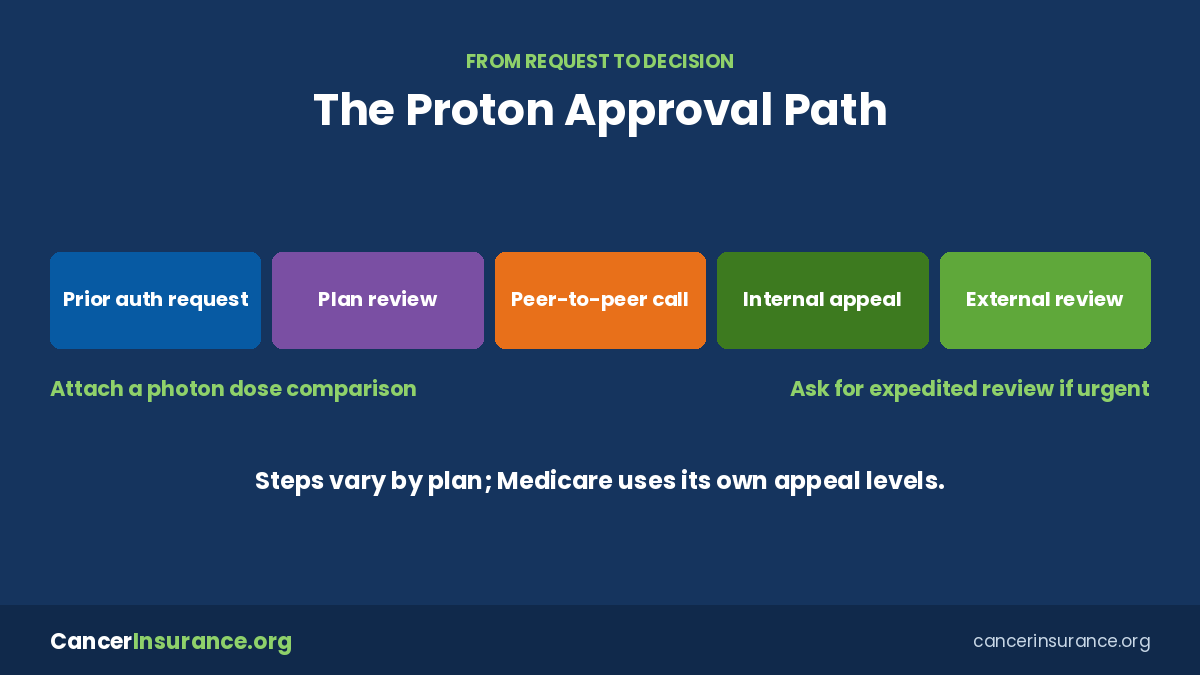
Proton therapy is covered by insurance when the plan agrees it is medically necessary, which Medicare usually finds for tumors near critical organs, childhood cancers and repeat radiation, while private plans approve it far less often and treat it as equal to standard radiation for prostate cancer. Expect prior authorization from almost every plan, and appeal a denial, since many are reversed.
2027 by the Numbers
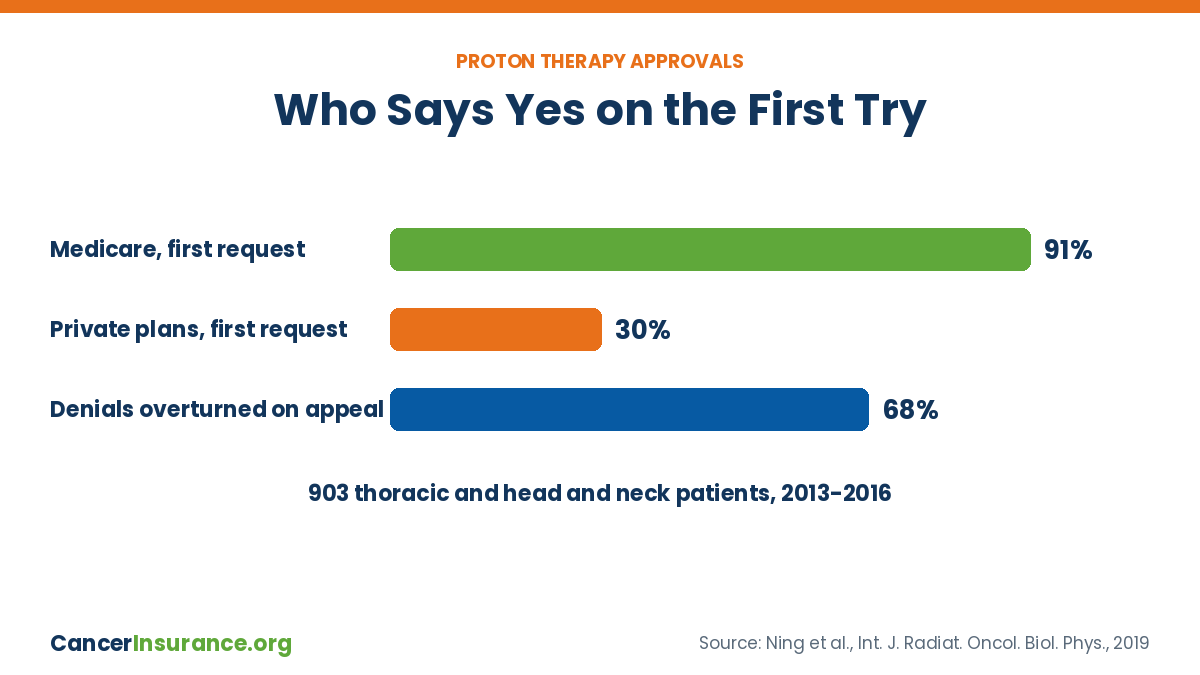
91% vs 30%
first-request proton approval rate, Medicare vs private insurance, at one high-volume center (Int. J. Radiat. Oncol. Biol. Phys., 2019)
3 vs 14 days
median wait for a coverage decision, Medicare vs private insurance, same study
$12,000
2027 ACA out-of-pocket cap for one person on in-network covered care (HHS)
Proton therapy uses a beam that releases most of its energy at the tumor and then stops, so less radiation reaches tissue behind it. Standard photon radiation, such as IMRT, keeps going through the body. That is why oncologists choose protons for tumors beside the eye, brainstem, spinal cord or a child’s growing organs, and why health plans ask hard questions before paying.
Below is who pays for proton beam therapy: Original Medicare, Medicare Advantage, employer and ACA plans, plus where a supplemental cancer or critical illness policy fits. For other newer treatments, see cancer insurance and experimental treatments. The treatment choice belongs with a radiation oncologist.