




Updated November 2026
Key Takeaway
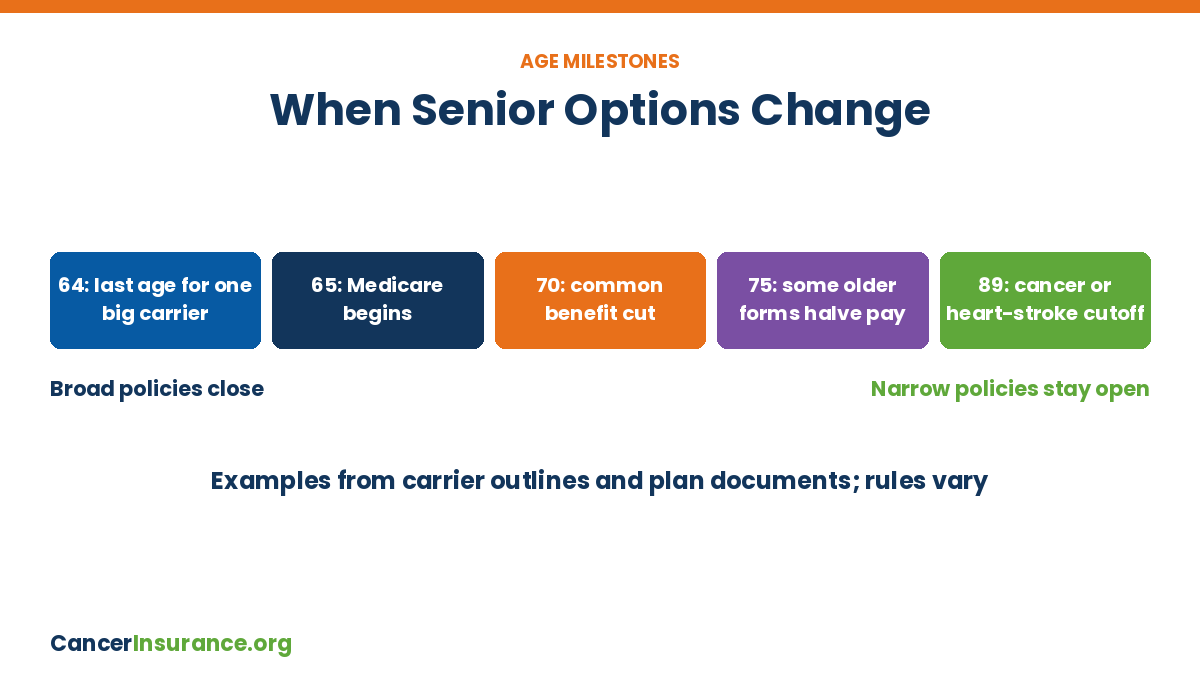
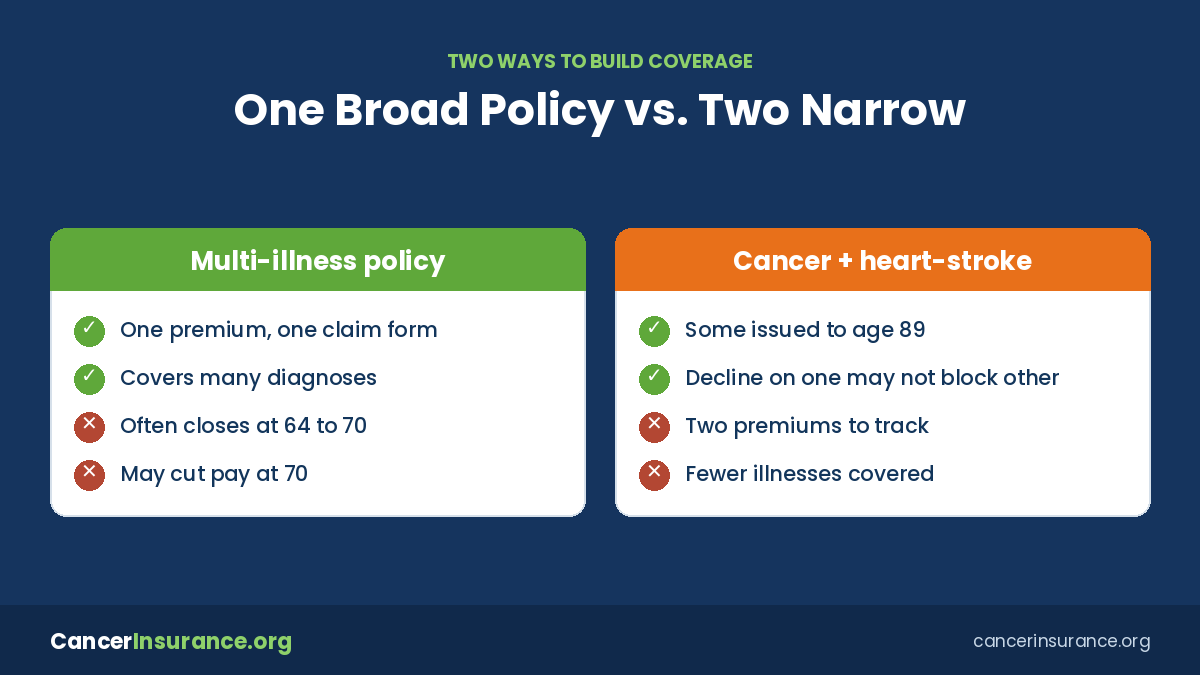
Critical illness insurance for seniors is a lump-sum policy that pays cash after a covered diagnosis such as a heart attack, stroke or cancer, but most multi-illness policies stop accepting new applicants somewhere between ages 64 and 70. After that, people on Medicare usually build similar protection from narrower policies, such as cancer-only or heart attack and stroke plans that some insurers issue up to age 89.
2027 by the Numbers
$1,776
2027 Part A hospital deductible, owed each benefit period (CMS)
$292
2027 Part B yearly deductible before Part B pays its share (CMS)
$9,850
2027 cap on in-network out-of-pocket costs a Medicare Advantage plan may set (CMS)
Turning 65 changes the critical illness market more than most shoppers expect. The same policy a 50-year-old can buy in ten minutes may be closed to a 66-year-old, and a workplace plan that paid $20,000 at age 68 may pay half that after a birthday. None of this shows up on a quote screen unless you know where to look.
This page sorts out the age rules: who still sells coverage after 65, which designs shrink the benefit later in life, and how a cash payout works next to Original Medicare, Medigap or Medicare Advantage. Like every policy in this category, it is supplemental, limited-benefit insurance. It does not pay doctors, hospitals or drug costs the way Medicare does and never replaces your Medicare coverage. For the basics of how the payout works, see our critical illness insurance guide.