




Updated November 2026
Key Takeaway
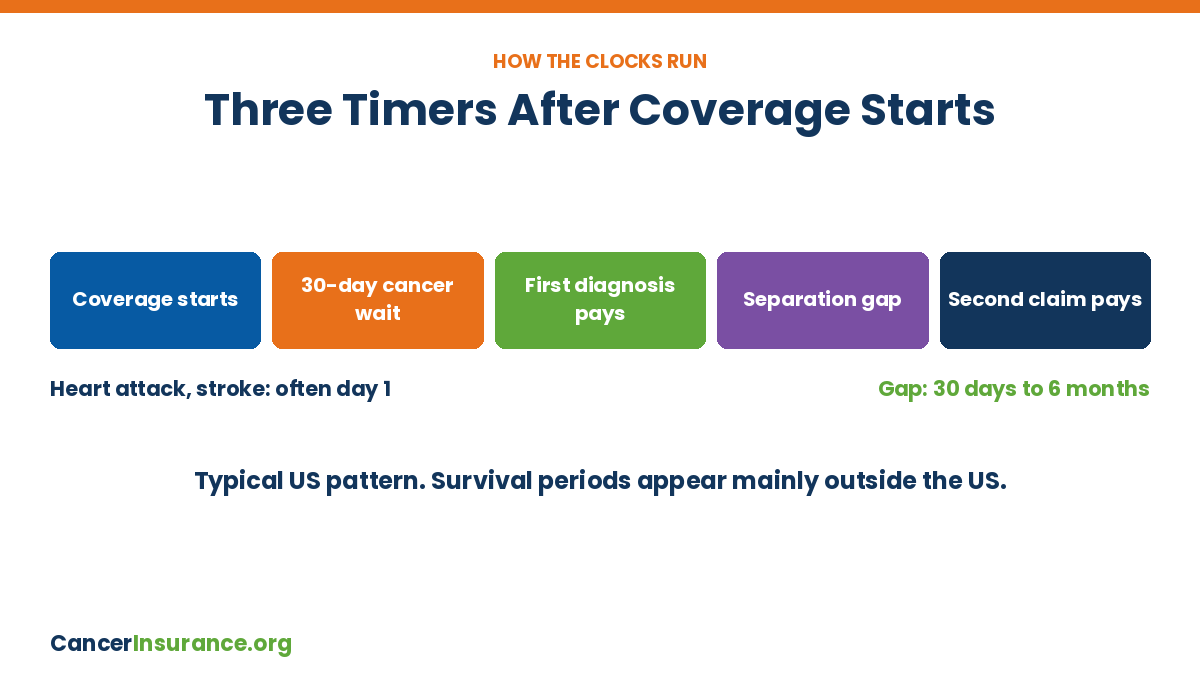
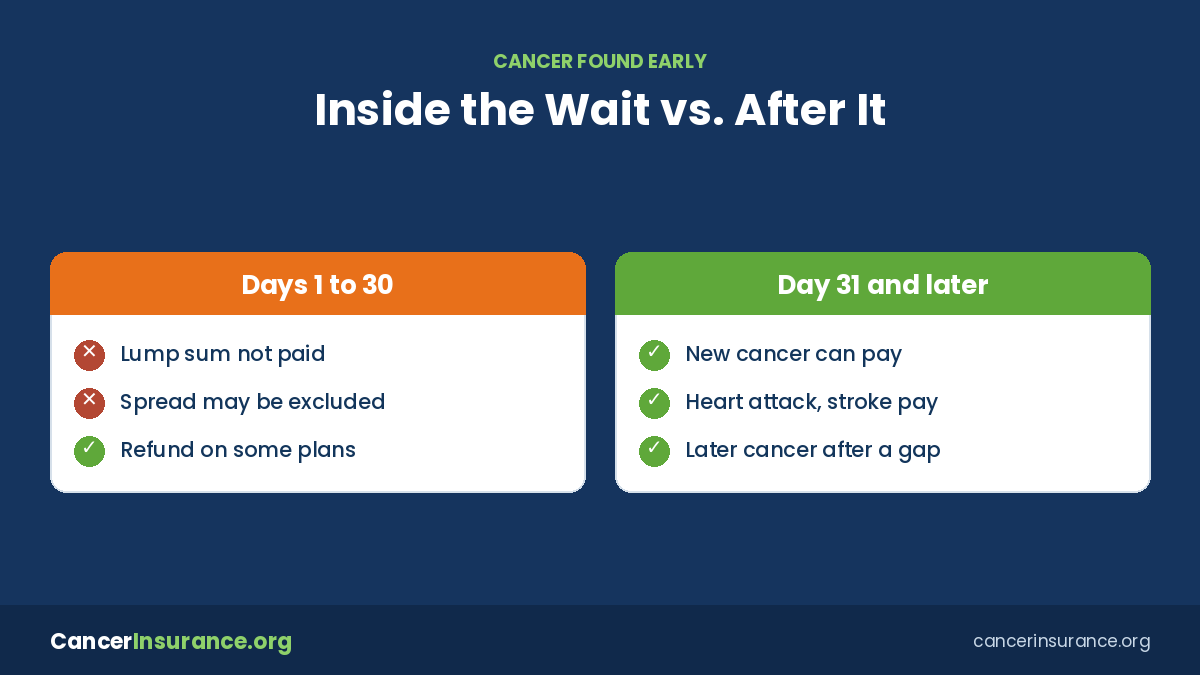
The typical critical illness insurance waiting period is 30 days and usually applies only to cancer on individual policies, while many employer group plans list no waiting period at all. Heart attack and stroke are commonly covered from the effective date, and a second claim usually needs a gap of 30 days to 6 months between diagnoses.
2027 by the Numbers
30 days
cancer-only wait in the Aflac, Assurity and Mutual of Omaha individual documents reviewed
0 of 9
US critical illness documents in our review that list a survival period
30 days to 6 months
gap required before a different illness pays, across the plan documents reviewed
A critical illness policy does not run on one clock. It can run on three: a short wait after the start date before some diagnoses count, a survival rule that a few policies outside the US attach to heart attack and stroke, and a spacing rule that decides when a second or repeat illness can pay. Most buyers hear about the first clock and miss the other two.
This page pulls those clocks out of nine real US plan documents, individual and employer group, and lines them up. It sticks to critical illness rules. For cancer-only policies, see cancer insurance waiting periods explained. Critical illness coverage is a supplemental, limited-benefit policy that pays cash on top of health insurance and does not replace it; the basics are in our critical illness insurance guide.