




Speak with a licensed insurance agent

1-888-891-0229

Early Stage Cancer Insurance: How Policies Pay When Cancer Is Found Early

Updated October 2026

Key Takeaway

Early stage cancer insurance is cancer or critical illness coverage that pays something when cancer is caught early. Many lump sum policies pay the full amount for early invasive cancer but only part, often 25%, for carcinoma in situ, so the policy’s definitions decide what you get.

Screening finds more cancers early than ever, and early detection is good news for treatment. It can be less good news for an insurance claim if the policy you bought pays little or nothing for the kind of early cancer you have.

This guide explains how cancer policies define early-stage disease, shows real payout rules from carrier materials, and helps you choose a plan that pays well when cancer is found early. Every plan discussed here is supplemental, limited-benefit coverage that pays cash on top of your health plan. Cancer insurance does not replace health insurance. For the basics, start with our cancer insurance plans overview.

Compare Cancer Insurance Plans

Speak with a licensed insurance agent

1-888-891-0229

CancerInsurance.org logo

What Is Early Stage Cancer Insurance?

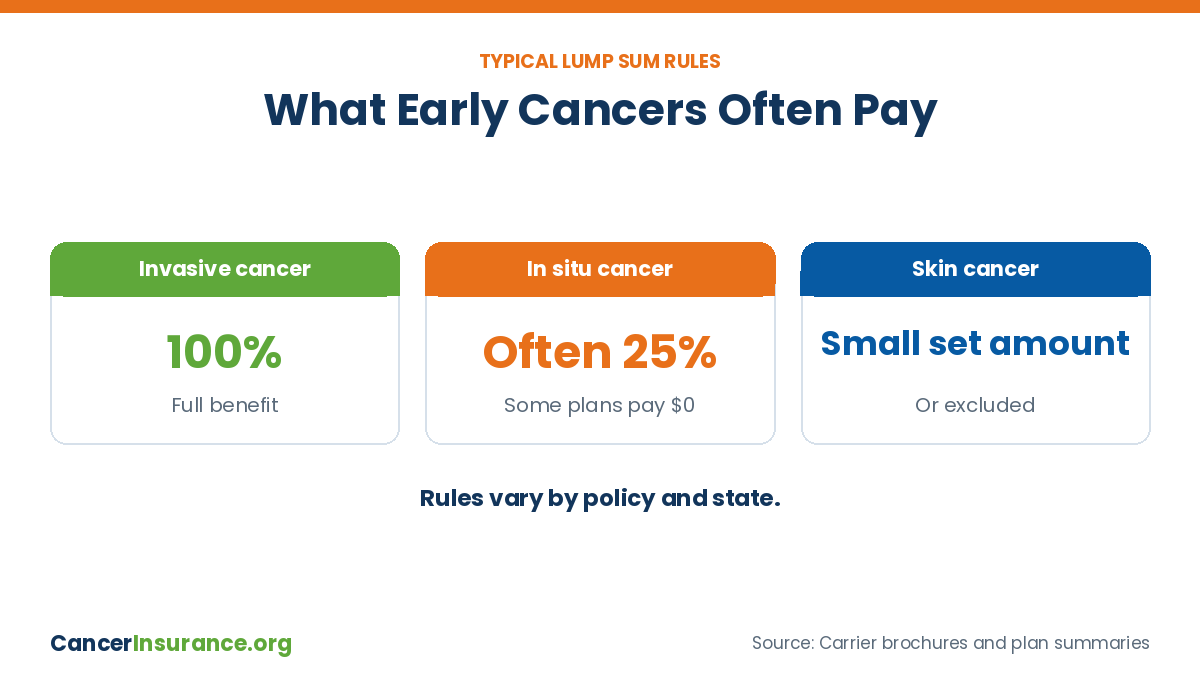
Early stage cancer insurance payout examples for invasive cancer, carcinoma in situ and skin cancer

There is rarely a policy named early stage cancer insurance. The phrase describes how well a cancer or critical illness policy pays when a cancer is diagnosed before it spreads. Two plans with the same price can pay very different amounts for the same early diagnosis.

The gap shows up most with three kinds of diagnoses. A small invasive tumor that has not spread far usually counts as full cancer. Carcinoma in situ, where abnormal cells have not invaded nearby tissue, is often paid at a reduced share. Common basal and squamous cell skin cancers are usually left out of the main benefit or paid as a small set amount. The graphic above shows the pattern we see most often in carrier brochures.

Why it matters: Early cancers can still mean surgery, imaging, follow-up visits and time off work. If your policy pays a fraction for an in situ diagnosis, you may get far less cash than you expected at the moment you need it. Compare definitions, not just prices.

Cancer Insurance Quotes

Call a Licensed Agent Now

Compare cancer insurance plans and cash benefits from several insurance companies in one call.

☎ 1-888-891-0229

No obligation to buy

What Counts as Early-Stage Cancer Under a Policy

Your doctor stages cancer with medical tests. Your policy uses its own definitions, and those decide whether a claim pays. Here are the terms to look for.

Policy termWhat it meansHow policies often treat it
Invasive or internal cancerCancer that has invaded tissue beyond where it startedFull benefit
Carcinoma in situ (including DCIS)Cancer cells still confined to where they startedReduced benefit, often 25%, or excluded
Non-melanoma skin cancerBasal cell or squamous cell skin cancerExcluded from the lump sum or paid as a small set amount
Pre-cancerous conditionsChanges that may turn into cancer, such as some lesions or polypsUsually not covered

Typical treatment based on carrier brochures we reviewed. Each policy’s definitions control.

Watch for: Most policies require a pathologist’s diagnosis based on a tissue sample. A diagnosis from imaging alone may not be enough to start a claim.

Real Examples: How Plans Pay for Early Cancer

Benefit rules differ a lot from one company to the next. These examples come from plan summaries and brochures we reviewed.

Voya group critical illness. One employer plan summary pays 100% of the benefit for cancer, 25% for carcinoma in situ and 10% for skin cancer.

Aflac group critical illness. One employer brochure pays 100% for internal or invasive cancer, 25% for non-invasive cancer and a $250 skin cancer benefit once per calendar year.

Mutual of Omaha lump sum. Its cancer, heart attack and stroke plan pays $10,000 to $100,000 for covered cancer, but its cancer definition excludes pre-cancerous conditions. Ask how carcinoma in situ is handled in your state.

ManhattanLife Cancer Care Plus. A brochure shows a one-time First Occurrence Benefit that does not pay for skin cancer, plus a $250 benefit for a positive outpatient diagnostic test.

Employer plan details vary by contract, so ask your benefits office for your own certificate. To see how other benefits are defined, read what does cancer insurance cover.

Lump Sum vs. Treatment Plans for Early Cancer

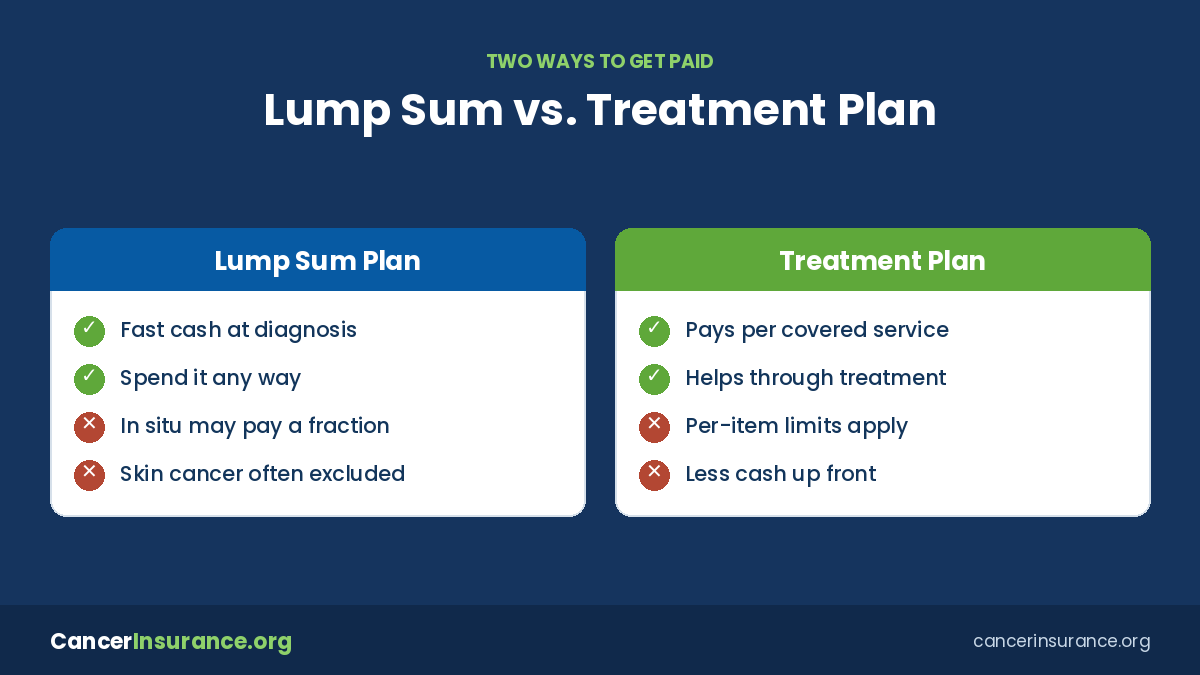
Early stage cancer insurance lump sum plans compared with treatment-based plans

The way a plan pays changes how it handles early-stage cancer. A lump sum plan bases the check on the diagnosis. A treatment-based plan pays for the care you actually receive.

1

Lump sum plans pay by category. If your diagnosis falls into the in situ category, the check may be a fraction of the full amount, even if you need surgery.

2

Treatment plans pay per service. Benefit-schedule plans pay set amounts for covered surgery, radiation, chemotherapy and hospital days, so early cancers that need treatment can still trigger payments.

3

Some people combine both. A smaller lump sum plus a treatment plan can balance fast cash with ongoing help.

If one large check appeals to you, compare lump sum cancer insurance options and look closely at each plan’s in situ percentage.

Compare Cancer Insurance Plans

Speak with a licensed insurance agent

1-888-891-0229

CancerInsurance.org logo

When Early Cancer Comes Back

An early diagnosis is not always the last one. How a policy handles a second diagnosis matters as much as the first payment.

Partial payments may count against the total. On some policies, a reduced in situ payment is subtracted from what the plan will pay for a later invasive diagnosis. Ask whether benefits are separate or advanced.

Treatment-free periods. The Aflac group plan above pays for a later cancer only after you have been treatment-free for at least 12 months.

Recurrence riders. ManhattanLife’s lump sum plan offers a rider that pays 25%, 50% or 100% of the original cancer benefit after two, five or ten treatment-free years.

If your family history or a past diagnosis makes a second cancer more likely, put recurrence rules near the top of your list. A plan that pays once and then ends may cost less, but it leaves you without help if cancer returns years later.

How to Choose Coverage That Pays for Early Cancer

Use this short checklist when you compare quotes.

1

Ask for the in situ percentage. Get it in writing. A plan that pays 25% for carcinoma in situ is very different from one that pays nothing.

2

Read the skin cancer rule. Skin cancer is common. Know whether the plan pays a set amount or excludes it.

3

Check the waiting period. Many policies have a 30-day waiting period, and cancer diagnosed during it is not covered. Learn more in cancer insurance waiting periods explained.

4

Look for screening benefits. Some policies pay a small yearly amount when you get a covered cancer screening test.

Broker tip: Women weighing coverage for breast cancer should pay special attention to DCIS rules. See our guide to breast cancer insurance for details.

Bottom Line

Early stage cancer insurance comes down to definitions. Many lump sum policies pay in full for early invasive cancer but only part for carcinoma in situ and little for skin cancer, while treatment-based plans pay for the care you receive. Ask for the in situ percentage, recurrence rules and waiting period before you buy.

Get Free Cancer Insurance Quotes

Speak with a licensed insurance agent

1-888-891-0229

CancerInsurance.org logo

Early Stage Cancer Insurance — Frequently Asked Questions

➤ Does cancer insurance cover early-stage cancer?

Usually yes for early invasive cancer, which most policies treat as full cancer. Carcinoma in situ and skin cancer are often paid at a reduced amount or excluded.

➤ How much does cancer insurance pay for carcinoma in situ?

It varies by policy. Several employer critical illness plans we reviewed pay 25% of the full benefit for carcinoma in situ, and some policies pay nothing for it.

➤ Is DCIS covered by cancer insurance?

DCIS is a form of carcinoma in situ, so it falls under the in situ rules of your policy. Check whether your plan pays a reduced benefit or excludes it.

➤ Does cancer insurance pay for skin cancer?

Non-melanoma skin cancer is usually excluded from the main lump sum. Some plans pay a small set amount, such as a yearly skin cancer benefit.

➤ Will an in situ payment reduce my later benefit?

On some policies, yes. A partial payment may be subtracted from what the plan pays if an invasive cancer is diagnosed later. Ask how your policy works.

➤ Is there a waiting period for early stage cancer coverage?

Most cancer policies have a waiting period, often 30 days. A cancer diagnosed during that time is not covered.

➤ Can I buy early stage cancer insurance after a diagnosis?

Usually not for the cancer you already have. Most policies exclude cancer diagnosed before coverage starts.

➤ Does early stage cancer insurance replace health insurance?

No. It is supplemental, limited-benefit coverage that pays cash to you. Your health plan, Medicare or Medicaid still pays for treatment.

Cancer Insurance Quotes

Call a Licensed Agent Now

Compare cancer insurance plans and cash benefits from several insurance companies in one call.

☎ 1-888-891-0229

No obligation to buy

Ready to Compare? Get Free Cancer Insurance Quotes

Speak with a licensed insurance agent

1-888-891-0229

CancerInsurance.org logo

ZRN Health & Financial Services, LLC, a Texas limited liability company