




Speak with a licensed insurance agent

1-888-891-0229

Is Cancer Guard Covered by Insurance? Cancerguard Coverage Explained

Updated November 2026

Key Takeaway

In most cases, no: Cancerguard, the multi-cancer blood test from Exact Sciences, is not covered by most private health plans or by Medicare, so most people pay the $689 list price themselves. HSA or FSA funds may be usable, and a 2026 federal law sets up a future Medicare path that only applies after the FDA clears or approves a test.

2027 by the Numbers

$689

Cancerguard list price (Exact Sciences)

50+

cancer types and subtypes the test looks for (Exact Sciences)

Feb. 3, 2026

Medicare multi-cancer test law signed (Prevent Cancer Foundation)

Jan. 1, 2029

earliest Medicare coverage date in the law (ACS CAN)

Cancerguard is a blood test that looks for signals of many cancers at once. Exact Sciences, the company behind Cologuard, launched it in the U.S. on September 10, 2025, and the company has been part of Abbott since Abbott completed its purchase of Exact Sciences on March 23, 2026. Because the test is new and not FDA approved, coverage works differently than for mammograms or colonoscopies.

This page shows where Cancerguard stands with each way people pay for care, from Medicare to an HSA, and what a supplemental cancer insurance policy can and cannot do here. A cancer policy is a limited-benefit plan that pays cash on top of your medical coverage. It does not replace health insurance.

One naming note: searches for “cancer guard” also turn up insurance policies with that name sold outside the U.S., such as plans from Great Eastern in Singapore and iA Financial Group in Canada. This guide is about the Exact Sciences blood test, spelled Cancerguard.

Compare Cancer Insurance Plans

Speak with a licensed insurance agent

1-888-891-0229

CancerInsurance.org logo

Why Insurers Treat Cancerguard Differently

Is cancer guard covered by insurance: what the Cancerguard test is and what it is not

Health plans usually pay for a screening test once it has strong evidence, guideline support and, for many tests, FDA review. Cancerguard does not check those boxes yet. Its own FAQ states plainly that most insurance plans do not yet cover any multi-cancer early detection test.

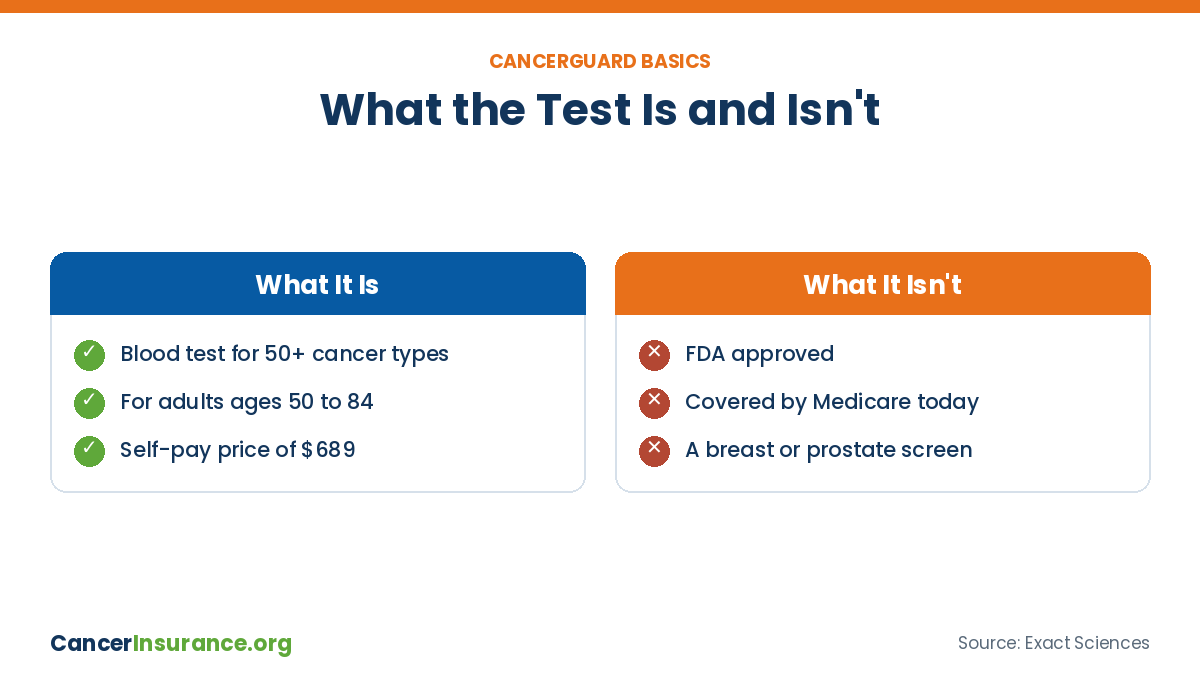
Lab-developed test. Cancerguard is sold as a laboratory-developed test (LDT). It has not been cleared or approved by the FDA. Exact Sciences says it plans to seek FDA approval as its clinical studies finish.

Who it is meant for. The company recommends it for adults ages 50 to 84 with no cancer diagnosis in the past three years. It can be considered once a year and is meant to add to, not replace, routine screenings.

What it skips. It is not meant to screen for breast or prostate cancer, so mammograms and PSA decisions stay with your doctor.

What the numbers say. In Exact Sciences’ test-development studies, it showed 68% sensitivity across six of the deadliest cancers, 64% overall (not counting breast and prostate) and 97.4% specificity. Real-world results can differ.

Cancer Insurance Quotes

Call a Licensed Agent Now

Compare cancer insurance plans and cash benefits from several insurance companies in one call.

☎ 1-888-891-0229

No obligation to buy

Cancerguard Coverage by Type of Insurance

This table lines up each payment path as of late 2026, built from Exact Sciences’ patient materials, the federal law and carrier benefit lists.

Payment pathPays for Cancerguard today?What to know
Original MedicareNoMedicare has no benefit category for multi-cancer tests yet. The 2026 law creates one, but only for FDA-cleared or approved tests and not before 2029.
Medicare AdvantageNot as a standard benefitPlans must cover what Original Medicare covers. Check the plan’s Evidence of Coverage for any extra benefit before ordering.
Employer and ACA plansUsually noMost plans do not cover multi-cancer tests yet. ACA no-cost screening rules apply to tests with an A or B grade from the U.S. Preventive Services Task Force, and multi-cancer tests have no such grade.
HSA or FSAOften usableExact Sciences says the test may be eligible for HSA and FSA funds. Your account administrator makes the final call.
Cancer insurance wellness benefitMaybe, as a small cash paymentWellness lists reviewed name single-cancer blood tests, not multi-cancer tests. Your certificate decides.

Sources: Cancerguard FAQ and launch release (Exact Sciences); H.R. 842 text as summarized by ACS CAN; Colonial Life and Securian wellness benefit lists. Coverage can change, so confirm with your plan.

What the 2026 Medicare Law Means for Cancerguard

The Nancy Gardner Sewell Medicare Multi-Cancer Early Detection Screening Coverage Act was signed into law on February 3, 2026, as part of a federal spending package. It gives Medicare a way to cover multi-cancer blood tests. It does not cover Cancerguard today.

Law check: Under the bill text summarized by the American Cancer Society Cancer Action Network, coverage applies to tests furnished on or after January 1, 2029. The test must be FDA cleared or approved, the person must be at least 50, and the upper age limit starts at 65 in 2029 and rises by one year each year after. Payment is limited to one test every 11 months.

Two details stand out for people already on Medicare. First, the starting age cap means many people over 65 would not qualify in the first years. Second, Medicare will pay a rate tied to the Cologuard stool DNA test, and CMS keeps the power to set coverage rules through an evidence review.

Until a test clears the FDA and CMS acts, keep up with the screenings your doctor recommends. Our guide to cancer insurance and preventive screenings explains how those standard tests fit with a cancer policy.

Paying for Cancerguard Without Insurance

Is cancer guard covered by insurance: steps to pay for a Cancerguard test

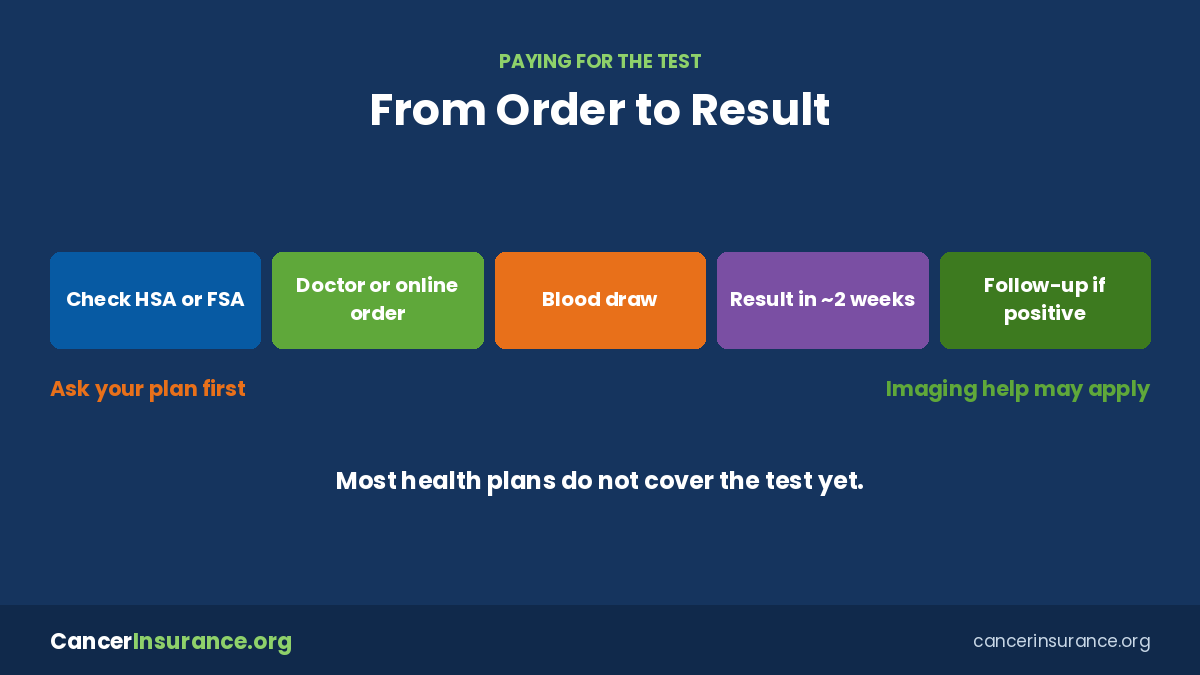
For most buyers, Cancerguard is a self-pay test. The $689 price is set by Exact Sciences, and these are the main ways to manage it.

Use pre-tax dollars. Health savings and flexible spending accounts may cover the test. Ask your administrator before you pay, and keep the receipt.

Blood draw costs. Exact Sciences says there is no added charge when the draw is done through its managed phlebotomy services, including Quest Diagnostics sites and at-home visits.

Help after a positive result. The company’s Imaging Reimbursement Program can help with follow-up imaging your insurance does not cover. You must apply, approval is not guaranteed, and it does not repay copays, coinsurance or deductibles on covered scans.

Ordering options. A doctor can order the test, or adults without one can request it through the company’s consumer ordering site. Results go to the ordering provider in about two weeks.

A positive result is not a diagnosis. The next steps are diagnostic tests, which your health plan handles under its normal deductible and copays. For typical self-pay prices on standard tests, see cancer screening cost without insurance.

Compare Cancer Insurance Plans

Speak with a licensed insurance agent

1-888-891-0229

CancerInsurance.org logo

Can a Cancer Insurance Policy Help With Cancerguard?

Many cancer and critical illness policies include a yearly wellness or screening benefit that pays you a set cash amount after a covered test. Whether a multi-cancer blood test counts depends on the list in your certificate. Two published lists show the pattern.

Benefit listCancer blood tests namedMulti-cancer test named?Payment rule
Colonial Life cancer wellness benefitCA 15-3, CA 125, CEA, PSA, serum protein electrophoresisNoOnce per calendar year per covered person, after a 30-day waiting period; a separate part pays for a follow-up test after an abnormal result
Securian 2026 health and wellness list (accident and critical illness)CA 125, CA 15-3, CEA, PSA, BRCA1/BRCA2No$50 per plan, one payment per insured per year

From each carrier’s published wellness list. Lists differ by state, employer and policy form.

Coverage check: A wellness benefit pays a fixed amount to the policyholder, not the lab, so it may offset only a small part of the $689 price. If Cancerguard is not on the covered list, ask the carrier in writing whether a multi-cancer blood test qualifies before counting on the payment.

The larger value of a policy comes if cancer is diagnosed. Cash benefits can help with deductibles, travel and lost income that health insurance leaves behind. Compare options on our cancer insurance plans page.

Questions to Settle Before You Order

1

Talk with your doctor first. Ask whether a multi-cancer test makes sense for your age, health history and current screening schedule, and what happens if the result is positive.

2

Ask your health plan two things. Whether it covers Cancerguard, and how it covers follow-up imaging if the result comes back positive.

3

Check your HSA or FSA. Confirm the test is an eligible expense before you pay.

4

Read your supplemental policy. Look for a wellness or screening benefit and the list of tests it names.

5

Track the Medicare timeline. If you are near or on Medicare, watch for FDA action and CMS coverage rules before 2029.

If you are shopping for a cancer policy with a screening benefit, our list of cancer insurance providers is a good place to compare carriers.

Bottom Line

Cancerguard is mostly a self-pay test today: most health plans and Medicare do not cover it, and the $689 price usually comes from your pocket or an HSA or FSA. A 2026 law opens a future Medicare path for FDA-approved multi-cancer tests, and a supplemental cancer policy may add a small wellness payment, but neither changes coverage right now.

Get Free Cancer Insurance Quotes

Speak with a licensed insurance agent

1-888-891-0229

CancerInsurance.org logo

Is Cancer Guard Covered by Insurance? — Frequently Asked Questions

➤ Does Medicare pay for the Cancerguard test?

No. Medicare has no coverage for multi-cancer blood tests today. A law signed in February 2026 lets Medicare cover FDA-cleared or approved tests, with coverage set to apply no earlier than January 1, 2029.

➤ How much does Cancerguard cost without insurance?

Exact Sciences lists the test at $689. The company says there is no extra charge for the blood draw when it is done through its managed phlebotomy services.

➤ Can I use my HSA or FSA for Cancerguard?

Possibly. Exact Sciences says the test may be eligible for HSA and FSA funds, but your account administrator decides, so check before paying.

➤ Is Cancerguard approved by the FDA?

Not yet. It is offered as a laboratory-developed test, and Exact Sciences says it plans to pursue FDA submission after its clinical studies are complete.

➤ Who is Cancerguard intended for?

Exact Sciences recommends it for adults ages 50 to 84 with no cancer diagnosis in the past three years. It is meant to be used alongside standard screenings, not instead of them.

➤ Will my cancer insurance policy pay for Cancerguard?

A cancer policy does not pay the lab bill, but some include a yearly wellness benefit that pays you a set cash amount after a covered screening. Published wellness lists name single-cancer blood tests, so confirm whether a multi-cancer test qualifies.

➤ Who pays for follow-up scans after a positive Cancerguard result?

Follow-up tests are diagnostic, so your health plan applies its normal deductible and copays. Exact Sciences’ Imaging Reimbursement Program may help eligible patients with imaging insurance does not cover.

➤ Does Cancerguard check for breast and prostate cancer?

No. The company says the test is not meant to screen for breast or prostate cancer, so keep up with the screenings your doctor recommends for those.

Cancer Insurance Quotes

Call a Licensed Agent Now

Compare cancer insurance plans and cash benefits from several insurance companies in one call.

☎ 1-888-891-0229

No obligation to buy

Ready to Compare? Get Free Cancer Insurance Quotes

Speak with a licensed insurance agent

1-888-891-0229

CancerInsurance.org logo

ZRN Health & Financial Services, LLC, a Texas limited liability company