




Updated November 2026
Key Takeaway
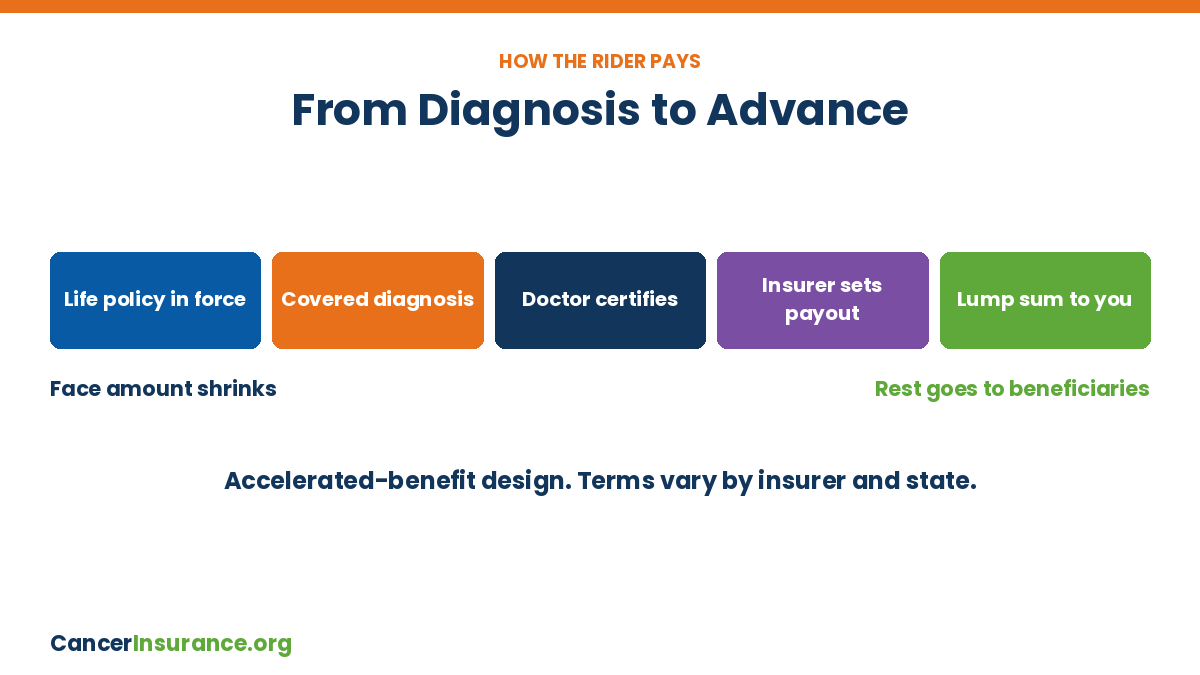
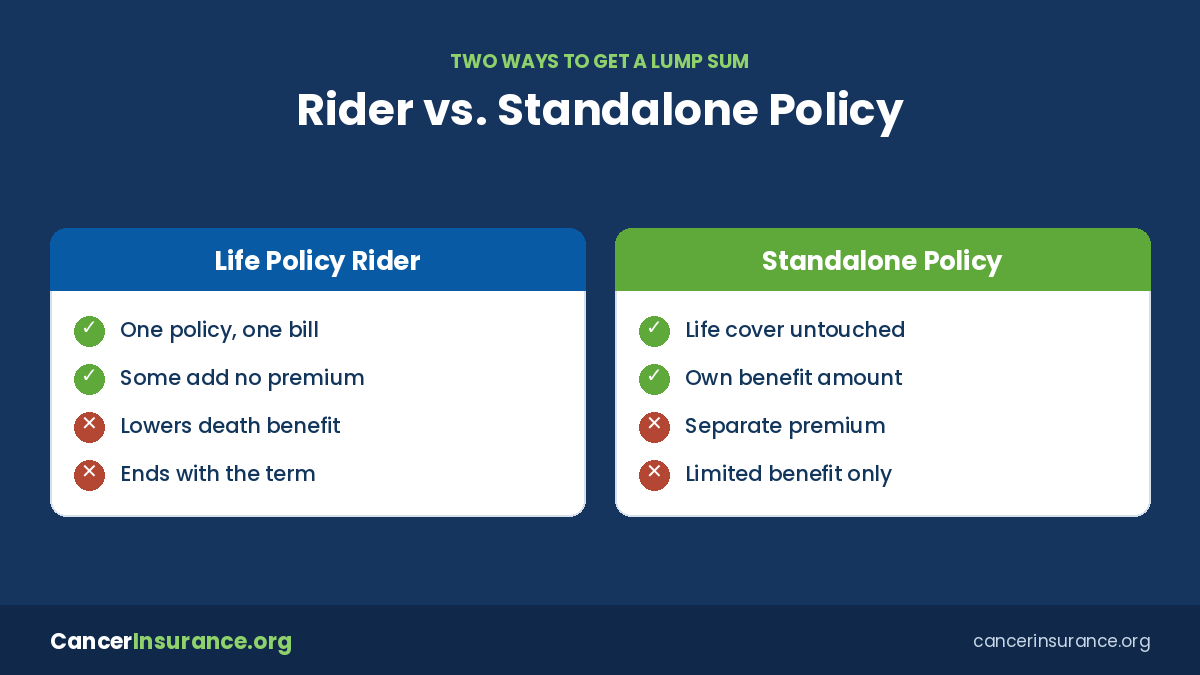
Life insurance with a critical illness rider lets you pull part of your death benefit early, as a lump sum, if you are diagnosed with a listed condition such as a heart attack, stroke or life-threatening cancer. Whatever you take out is subtracted from what your beneficiaries get later, which is the main way it differs from a standalone critical illness or cancer policy.
2027 by the Numbers
80%
most of the face amount Term Life Express living benefit riders can advance (United of Omaha)
$2,000,000
lifetime cap across all Corebridge accelerated benefit riders (Corebridge disclosure)
$430/day
2026 federal per diem limit that applies to chronic illness benefits (IRS)
Many term, whole and universal life policies now come with a living benefit option. The most common version is a critical illness rider: if you suffer a serious diagnosis while the policy is in force, the insurer advances part of the death benefit to you instead of waiting until you die.
That sounds like free critical illness coverage, and sometimes the rider adds nothing to your premium. But the money comes out of the pot your family is counting on, and the insurer often shrinks the check for paying early. Below we compare four insurers’ rider papers, explain the tax rules, and show when a separate critical illness insurance policy is the better tool.