




Speak with a licensed insurance agent

1-888-891-0229

Individual Critical Illness Insurance: Buying Your Own Policy Without an Employer

Updated November 2026

Key Takeaway

Individual critical illness insurance is a lump-sum policy you buy directly from an insurer, not through a job, and carriers such as Mutual of Omaha, Assurity and Aflac sell it with benefits from $5,000 up to $100,000 depending on the company. You answer health questions to qualify, you own the policy no matter where you work, and it adds cash on top of health insurance rather than replacing it.

2027 by the Numbers

$10K-$100K

lump-sum range for Mutual of Omaha’s individual critical illness policy (Mutual of Omaha brochure)

18-70

issue ages for Assurity’s individual critical illness policy (Assurity product highlights)

$50,000

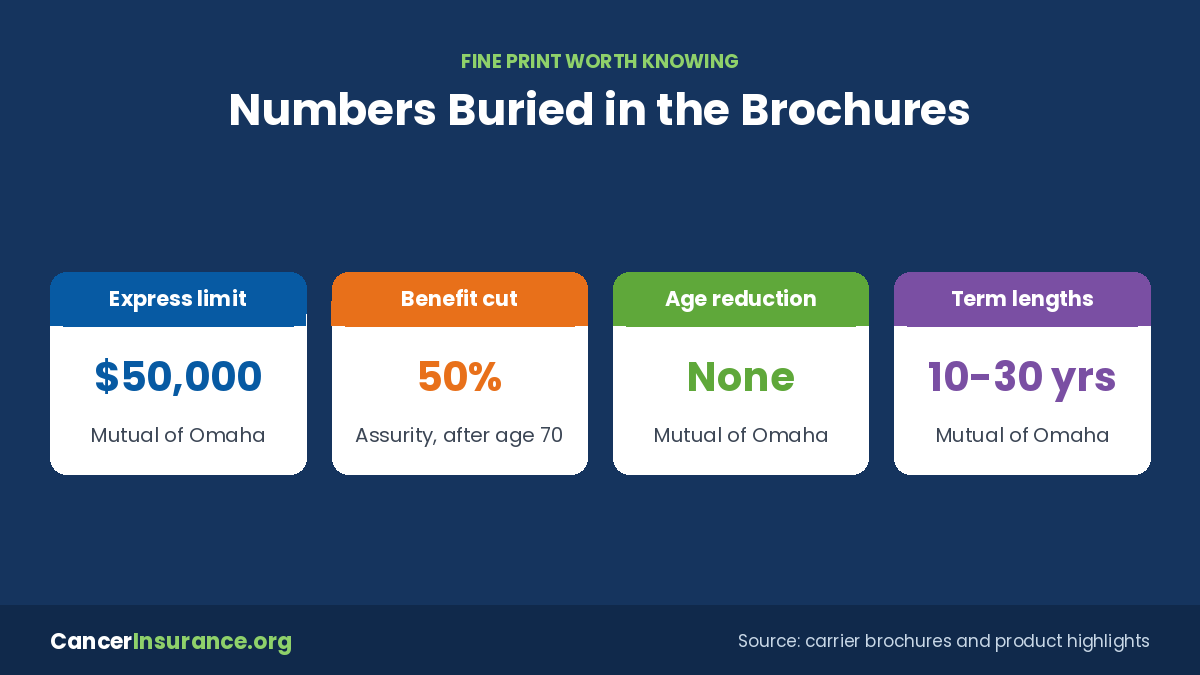
highest amount Mutual of Omaha writes with express underwriting before simplified underwriting applies (Mutual of Omaha brochure)

Most people first meet critical illness coverage on an employer enrollment screen. If you work for yourself or have retired, that screen never appears. The way in is an individual policy: you apply to the insurer, the insurer decides whether to accept you, and the contract is yours from the start date until you stop paying.

This guide lines up four policies sold to individuals using the carriers’ own brochures and outlines, explains how they differ from workplace plans, and flags the age cutoffs that matter if you are 60 or older. If you need the product basics first, read our critical illness insurance overview. Keep in mind that this is supplemental, limited-benefit coverage. It pays a set amount of cash after a covered diagnosis and does not replace an ACA plan, Medicare or any other health insurance.

See Individual Critical Illness Options

Speak with a licensed insurance agent

1-888-891-0229

CancerInsurance.org logo

Who Shops for Critical Illness Coverage on Their Own

Individual critical illness insurance compared with an employer plan on ownership, health questions and portability

An individual policy fills the gap when there is no group plan to join, or when the group plan is too small or too temporary to count on. The buyers tend to fall into a few groups.

Self-employed and gig workers. Freelancers, contractors and rideshare or delivery drivers have no benefits office. A lump sum can cover bills when there is no paid sick leave.

Workers whose job offers none. Many small employers sponsor a medical plan and nothing else. Buying alone is the only way to add this kind of cash benefit.

People leaving work or retiring. An individual policy is not tied to any employer, so a job change or retirement does not end it.

Anyone wanting a larger amount. Some people add an individual policy on top of a modest work plan.

If cancer is the single risk you worry about, a cancer-only policy may fit better. Our page on cancer insurance for self-employed individuals covers that option.

Cancer Insurance Quotes

Call a Licensed Agent Now

Compare cancer insurance plans and cash benefits from several insurance companies in one call.

☎ 1-888-891-0229

No obligation to buy

Four Individual Policies From the Carriers' Own Documents

The table below puts individual products side by side, using each insurer’s brochure, outline of coverage or product highlights. Two rows are true critical illness policies with a list of covered conditions. The Aetna row is a narrower cancer or heart attack and stroke plan, included because it accepts older applicants.

Carrier and productIssue agesLump-sum choicesCancer waiting period
Mutual of Omaha Critical Illness (Mutual of Omaha Insurance Company)18-64 lifetime, 18-54 term$10,000 to $100,000Not stated in the brochure reviewed
Assurity Critical Illness18-70$5,000 to $75,00030 days; other conditions covered from day one
Aflac Lump Sum Specified Critical Illness, Series B71000 (American Family Life Assurance Company of Columbus)Not stated in the outlines reviewed$10,000, $15,000 or $20,000; spouse and children at 50%30 days for internal cancer
Aetna Protection Series Cancer or Heart Attack or Stroke Plus18-89$5,000 to $75,000 in $5,000 stepsNot stated on the product page

Our review of Mutual of Omaha client brochure 459893, Assurity product highlights, Aflac outlines of coverage B71125GA and B71275TX, and Aetna’s product page. Amounts and availability vary by state, and the policy you receive controls.

Two other names come up when you shop alone. Cigna’s individual lump-sum cancer and heart attack and stroke policies now belong to Health Care Service Corporation, which acquired that supplemental business. UnitedHealthcare offers individual critical illness plans underwritten by Golden Rule Insurance Company, with plan design varying by state. For a wider list of carriers, see our cancer insurance providers guide.

Owning the Policy vs. Getting It Through a Job

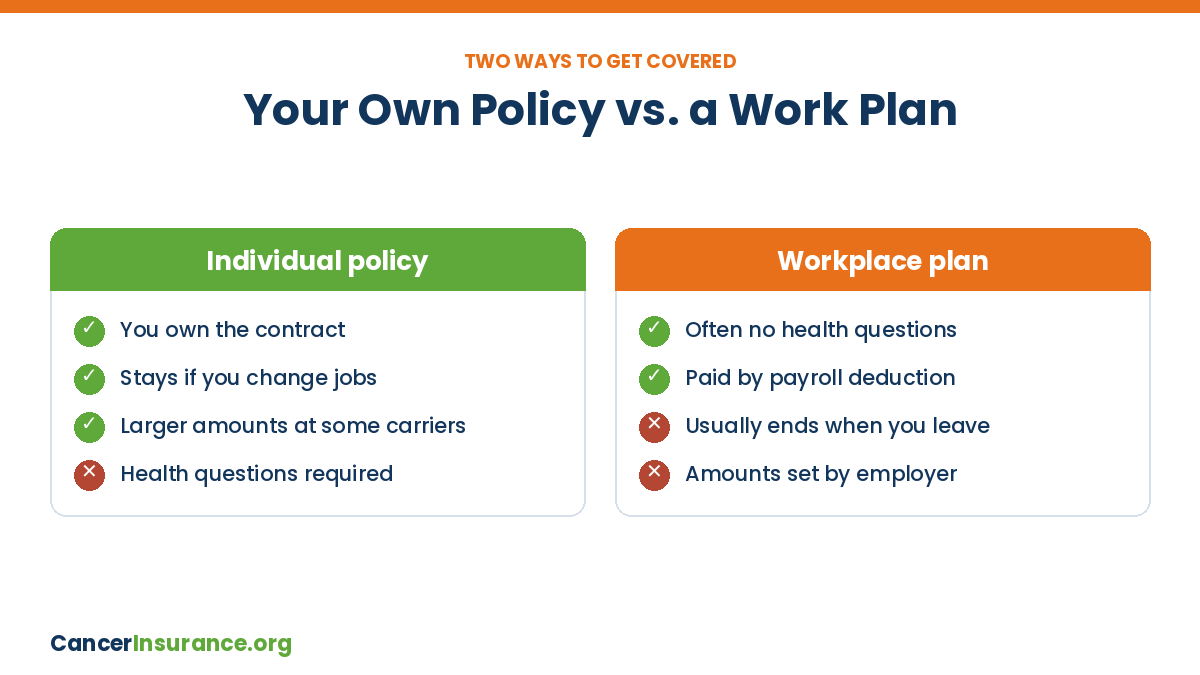
A workplace plan and an individual policy can pay for the same heart attack, but the deal behind each one is different. Workplace plans usually take every employee who enrolls on time up to a set amount, with no health questions, and premiums come out of each paycheck. Individual policies screen you first and bill you directly.

Portability check: Group coverage normally ends when employment ends. Some group plans let you continue by paying the insurer directly, but only if you act within a short deadline after leaving. An individual policy has no employer in the middle, and Aflac’s outline describes its individual policy as guaranteed renewable for life as long as premiums are paid on time.

Benefit size is the other big split. Employer plan summaries for large carriers often stop at $30,000 to $40,000 for employees. On the individual side, Mutual of Omaha writes up to $100,000 and Assurity up to $75,000. Aflac’s individual outlines top out at $20,000, so carrier choice matters as much as the channel. Aflac’s outline says it may raise premiums only for everyone with the same policy form and class in your state, never for one person.

Age Limits and Benefit Cuts That Matter After 60

Individual critical illness insurance fine print by carrier: underwriting ceiling, age reduction and term options

The age you apply at decides which doors are open. Mutual of Omaha accepts critical illness applicants only through age 64 for lifetime coverage and through 54 for its term versions. Assurity accepts applicants through age 70. Someone already on Medicare at 66 is past Mutual of Omaha’s critical illness cutoff but can still look at Assurity, or at the cancer and heart attack or stroke plans from Aetna and Mutual of Omaha that accept applicants through age 89.

Fine print for older buyers: Assurity’s policy cuts the benefit by 50% starting in the later of the third policy year or the policy year after the insured turns 70. Mutual of Omaha’s brochure states there is no reduction of benefits at any age.

Term options change the math too. Mutual of Omaha offers lifetime coverage or terms of 10, 15, 20 or 30 years. A term policy ends just as the risk of heart disease and cancer climbs, which matters if you buy in your 50s.

See Individual Critical Illness Options

Speak with a licensed insurance agent

1-888-891-0229

CancerInsurance.org logo

Health Questions and How to Apply

Individual policies ask about your health, and how deep the review goes can depend on the amount. Mutual of Omaha uses express underwriting for $10,000 to $50,000 and simplified underwriting for $51,000 to $100,000, and Assurity uses simplified underwriting with separate classes for tobacco users.

1

Check your age against each carrier’s limit. Rule out any policy you are too old for before comparing prices.

2

Pick a target amount. Staying at or under an express underwriting ceiling can mean fewer questions and a faster decision.

3

Gather your medical history. Have dates for any heart, cancer, stroke, kidney or diabetes care ready. Our page on critical illness insurance and pre-existing conditions explains how look-back limits work.

4

Answer every question accurately. Misstatements can give the insurer grounds to rescind coverage or deny a claim later, which is worse than a decline today.

5

Note the start dates. A cancer waiting period, such as Aflac’s and Assurity’s 30 days, means an early diagnosis may not pay. Aflac’s outline lets you void the policy for a full premium refund if internal cancer is found in that window.

What an Individual Policy Cannot Do

These policies pay a fixed amount for a defined list of diagnoses. Aflac’s outline says its policy is issued only to supplement insurance already in force, and UnitedHealthcare notes its plans are subject to pre-existing condition rules and pay on first diagnosis in most states. If you are uninsured, a health plan comes first.

Not health insurance. It does not pay doctors or hospitals and does not count as coverage under the Affordable Care Act.

Not every illness. Only listed conditions that meet the policy’s definitions pay. Mutual of Omaha’s critical illness policy names 11 conditions, two of which pay 25%.

Not a past diagnosis. An illness found before your start date is not covered as a new claim.

For premium ranges by age, see how much critical illness insurance costs.

Bottom Line

Individual critical illness insurance lets self-employed workers, retirees and anyone without a workplace plan buy lump-sum coverage they own outright. Carriers differ sharply on issue ages, maximum amounts and benefit cuts later in life, so compare those limits before price. Use it as extra cash on top of real health insurance, never instead of it.

Related: is critical illness insurance taxable How the way premiums are paid decides whether a critical illness payout counts as income.

Related: Lincoln Financial critical illness insurance What Lincoln’s workplace plan pays for cancer, how screening pay works and how five employer designs differ.

Related: Assurity critical illness insurance What Assurity’s agent-sold policy pays for cancer, how its group tiers differ and when the age-70 cut applies.

Related: term critical illness insurance How long U.S. critical illness coverage lasts, how it renews and when it ends, by carrier.

Request Free Critical Illness Quotes

Speak with a licensed insurance agent

1-888-891-0229

CancerInsurance.org logo

Individual Critical Illness Insurance — Frequently Asked Questions

➤ Can I buy critical illness insurance if I am self-employed?

Yes. Individual policies are sold directly to you with no employer involved, and you pay the premium yourself.

➤ Do individual critical illness policies require a medical exam?

The products reviewed here describe express or simplified underwriting, which relies on application questions rather than an exam. Higher amounts can bring more review, as with Mutual of Omaha’s simplified tier above $50,000.

➤ What is the oldest age to buy an individual critical illness policy?

It depends on the carrier. Mutual of Omaha stops at 64 for lifetime coverage and Assurity at 70, while Aetna’s cancer or heart attack and stroke plans accept applicants up to 89.

➤ Can I keep an individual policy if I change jobs?

Yes. The contract is between you and the insurer, so a new job, a layoff or retirement does not affect it as long as you keep paying premiums.

➤ Can I have a work plan and an individual policy at the same time?

Generally yes. Critical illness policies pay according to their own terms regardless of other coverage, so both can pay for the same covered diagnosis.

➤ Does an individual policy cover my spouse and kids?

Many do through family options or riders. Aflac’s individual outline pays a spouse or dependent child 50% of the primary amount, and Assurity offers spouse and child riders at extra cost.

➤ Will my premium go up after I buy?

It can. Aflac’s outline allows rate changes only for an entire policy form and class in a state, not for one person, and other carriers set their own rules in the policy.

➤ Is individual critical illness insurance a replacement for health insurance?

No. It is limited-benefit supplemental coverage that pays cash after a covered diagnosis. You still need a major medical plan or Medicare for doctor and hospital bills.

Cancer Insurance Quotes

Call a Licensed Agent Now

Compare cancer insurance plans and cash benefits from several insurance companies in one call.

☎ 1-888-891-0229

No obligation to buy

Ready to Compare? Get Free Cancer Insurance Quotes

Speak with a licensed insurance agent

1-888-891-0229

CancerInsurance.org logo

ZRN Health & Financial Services, LLC, a Texas limited liability company