




Reviewed by Russell Noga, Licensed Insurance Agent — Last updated November 27, 2026
Key Takeaway
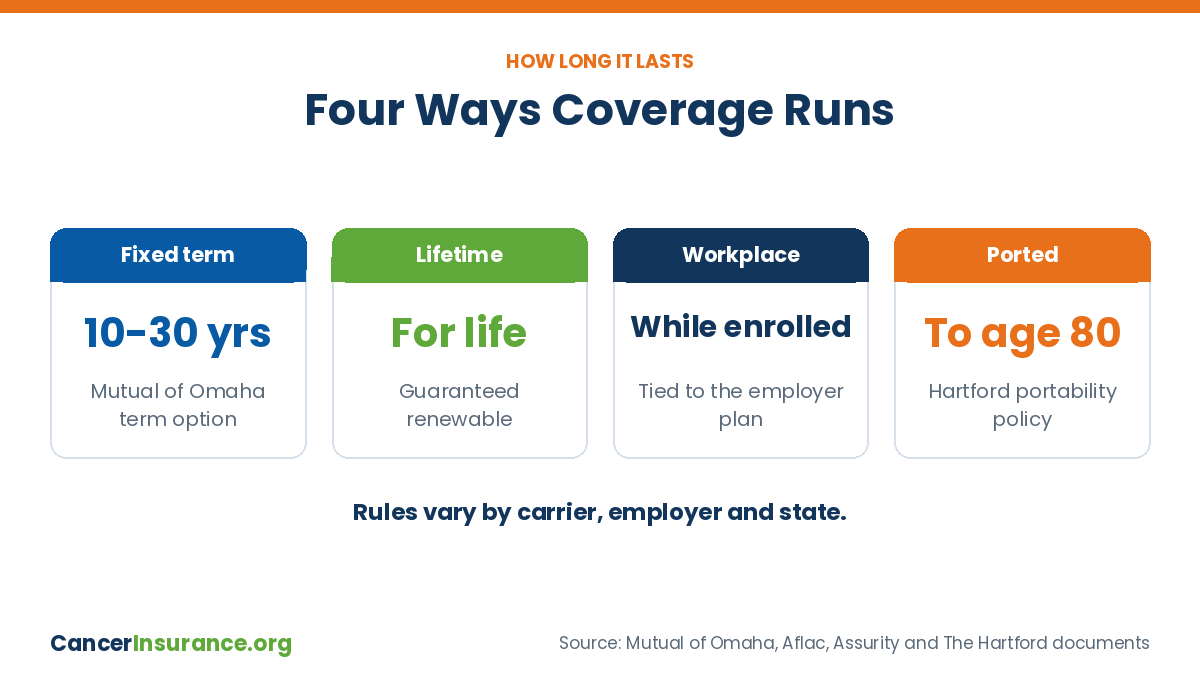
Term critical illness insurance is a lump-sum policy that covers you for a set number of years, such as the 10, 15, 20 or 30-year terms Mutual of Omaha sells, rather than for life. Most other U.S. critical illness coverage is either an individual policy that is guaranteed renewable for life or a workplace certificate that lasts only while you stay in the employer’s plan, unless you port it when you leave.
2027 by the Numbers
10 to 30 yrs
term lengths on Mutual of Omaha’s individual critical illness policy
Age 80
when ported coverage ends under The Hartford’s group critical illness portability policy
Age 100
when all coverage ends in Dartmouth’s 2026 Cigna group summary
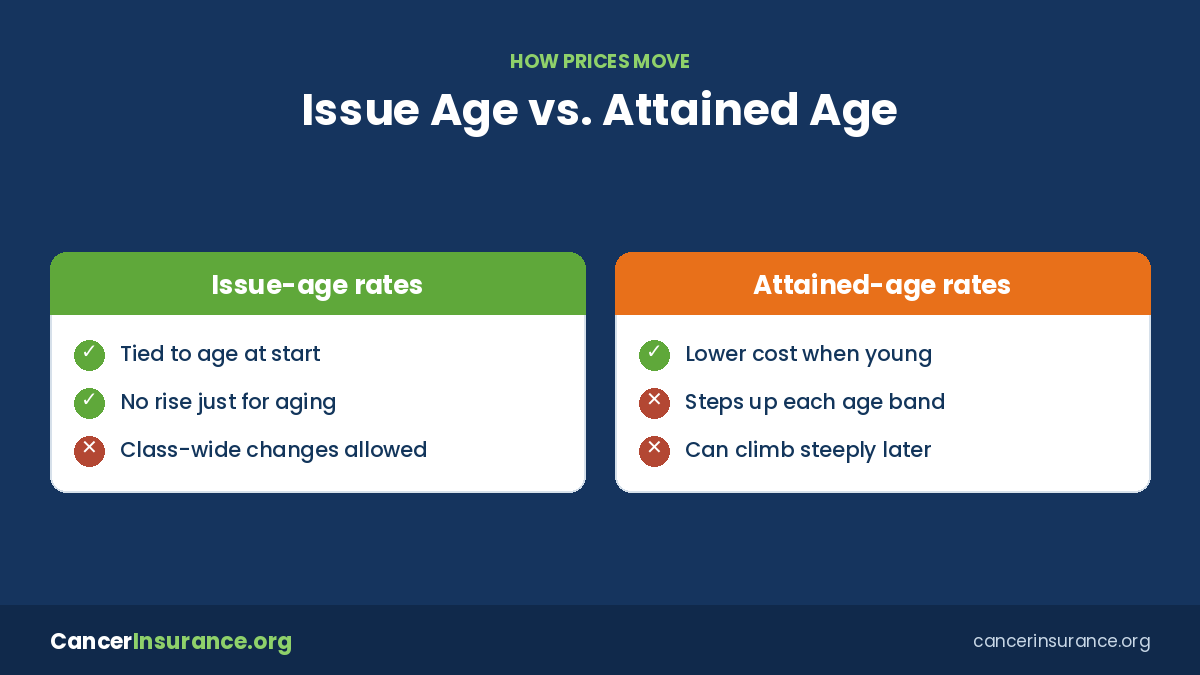
Search for this phrase and most of what comes back describes Canadian, U.K. or Hong Kong products. American carriers rarely put the word term on a critical illness policy. The question underneath it is still a fair one: how long does the coverage last, can the price go up, and what makes it stop?
This guide answers that from the carriers’ own brochures, outlines and employer benefit summaries. If you are new to the product, start with our overview of critical illness insurance. Every policy below is supplemental, limited-benefit insurance. It pays a fixed amount of cash after a covered diagnosis and does not replace health insurance, Medicare or Medicaid.