




Updated November 2026
Key Takeaway
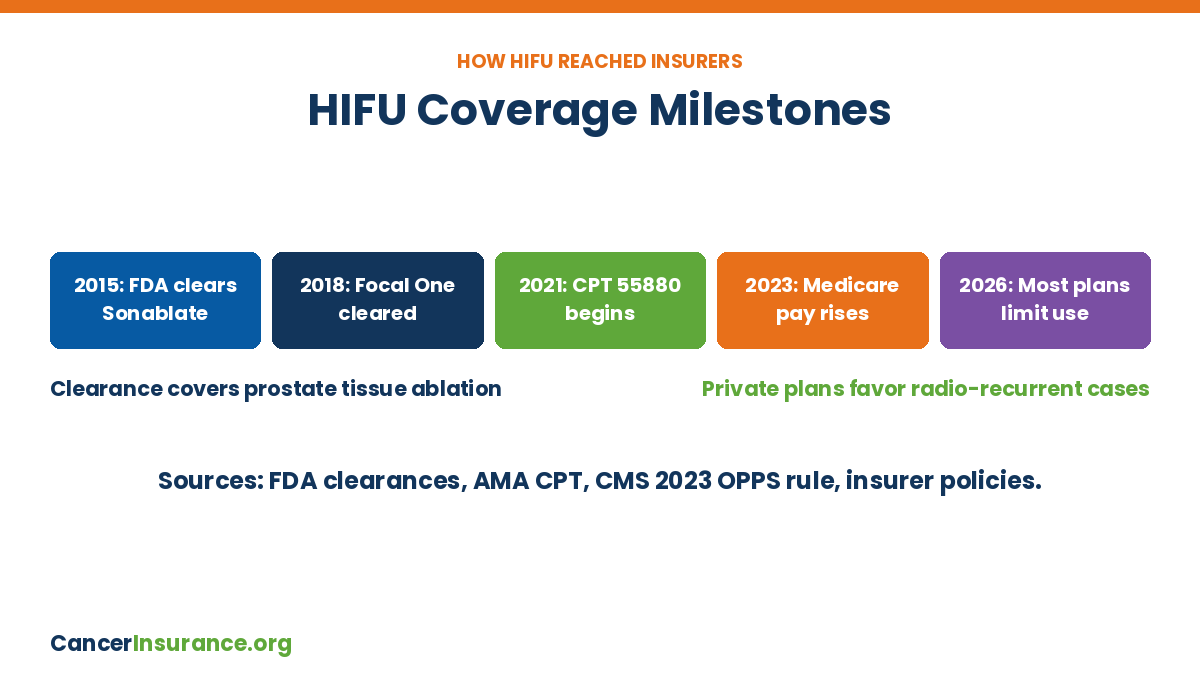
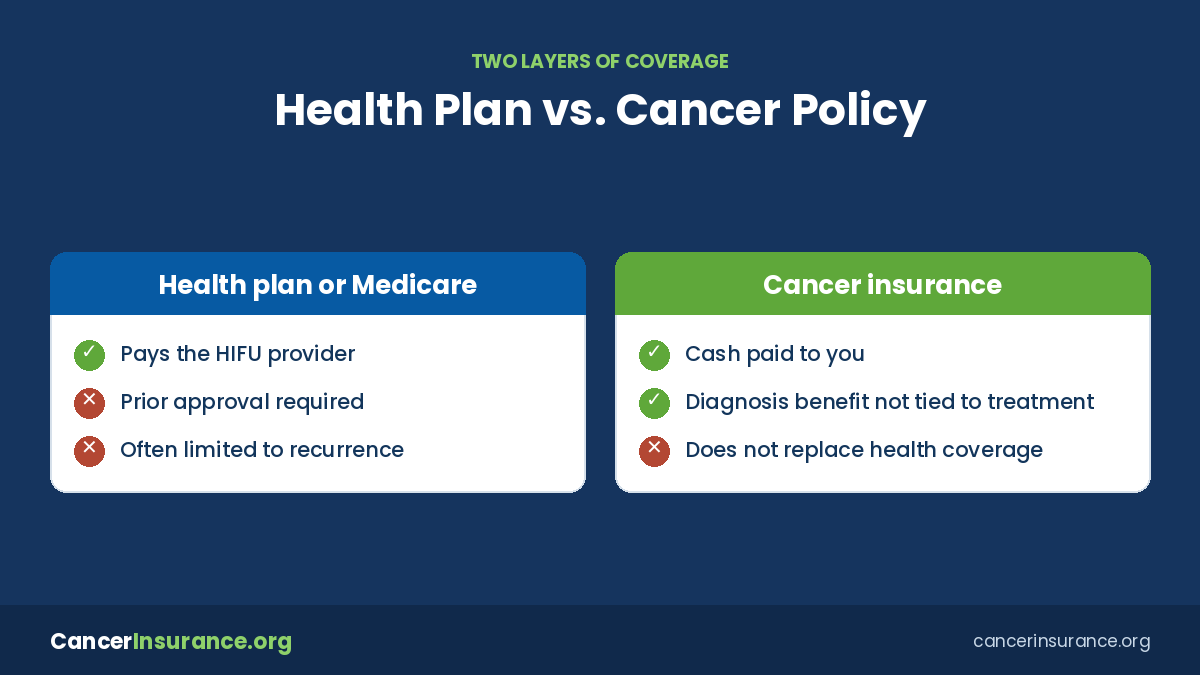
HIFU for prostate cancer is covered by many private insurers only when cancer comes back after radiation therapy; published Aetna and Cigna policies treat it as medically necessary for that use but not as a first treatment, and several Anthem and Blue Cross policies call it not medically necessary or investigational. Medicare has no national coverage decision for prostate HIFU, so payment depends on the regional Medicare contractor or the Medicare Advantage plan.
2027 by the Numbers
Jan. 1, 2021
date CPT code 55880 for transrectal HIFU took effect (AMA, reported by AUA News)
$8,558
average Medicare outpatient payment per HIFU prostate ablation under the 2023 CMS rule, up from $4,506 (Health Imaging)
180 days
to file an internal appeal after a private plan denial (HealthCare.gov)
High-intensity focused ultrasound, or HIFU, heats and destroys prostate tissue with sound waves aimed through a probe in the rectum, usually as an outpatient procedure. Whether a health plan pays for it is a separate question from whether a urologist thinks it fits.
This guide lines up what major insurers have published about HIFU, explains how Medicare handles it, walks through prior authorization and appeals, and shows where a supplemental policy can add cash. It builds on our overview of cancer insurance and experimental treatments. Treatment choice belongs with a urologist; this page covers the money side only.