




Updated November 2026
Key Takeaway
Bankers Life critical illness insurance is a policy called Critical Benefit that pays you a lump sum of $10,000 to $70,000 after a covered diagnosis such as cancer, heart attack, stroke or end-stage renal failure, with issue ages 18 to 85. It is sold only through Bankers Life agents, usually at your kitchen table, and it is a supplemental, limited-benefit policy that does not replace health insurance.
2027 by the Numbers
$10K to $70K
lump-sum choices, in $10,000 steps (Bankers Life)
18 to 85
issue ages without a rider; up to 75 with an optional rider (Bankers Life)
20 years
time the return-of-premium rider must stay in force before a refund (Bankers Life)
A (Excellent)
AM Best rating for Bankers Life and Casualty, affirmed April 2026 with a stable outlook
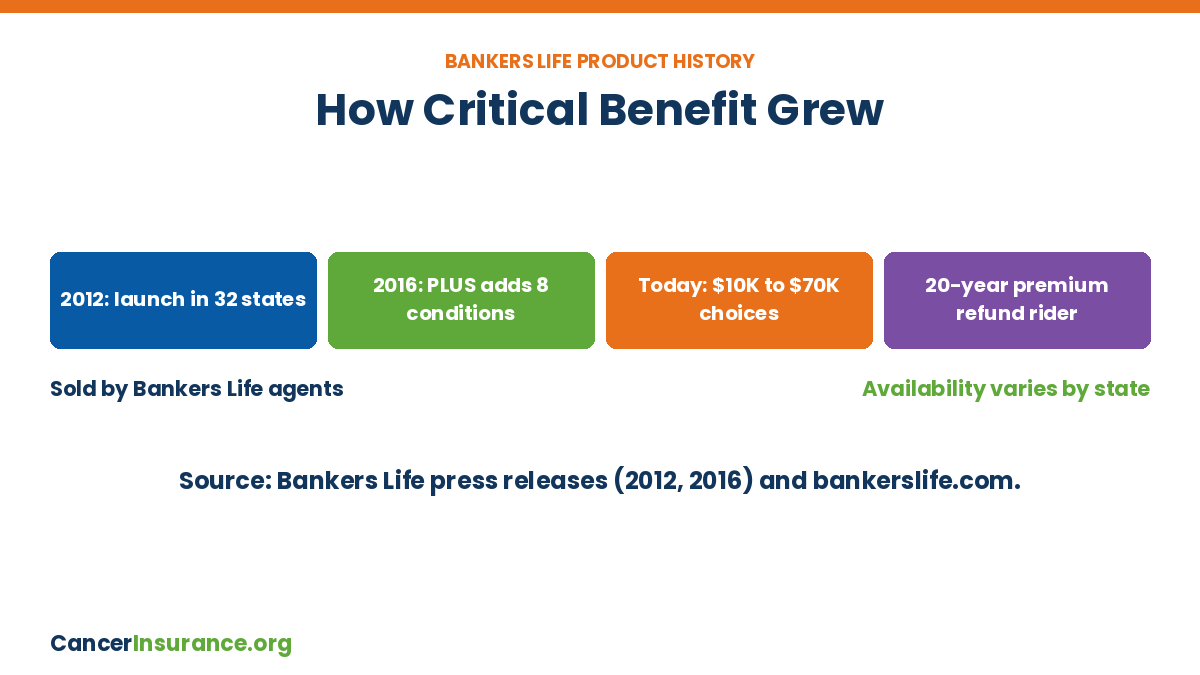
Bankers Life is better known for Medicare supplement and long-term care coverage, but it has sold a lump-sum illness policy since 2012. The idea is simple: if a doctor diagnoses a condition the policy names, Bankers Life sends a check to you. A hospital or doctor never sees the money unless you choose to pay them with it.
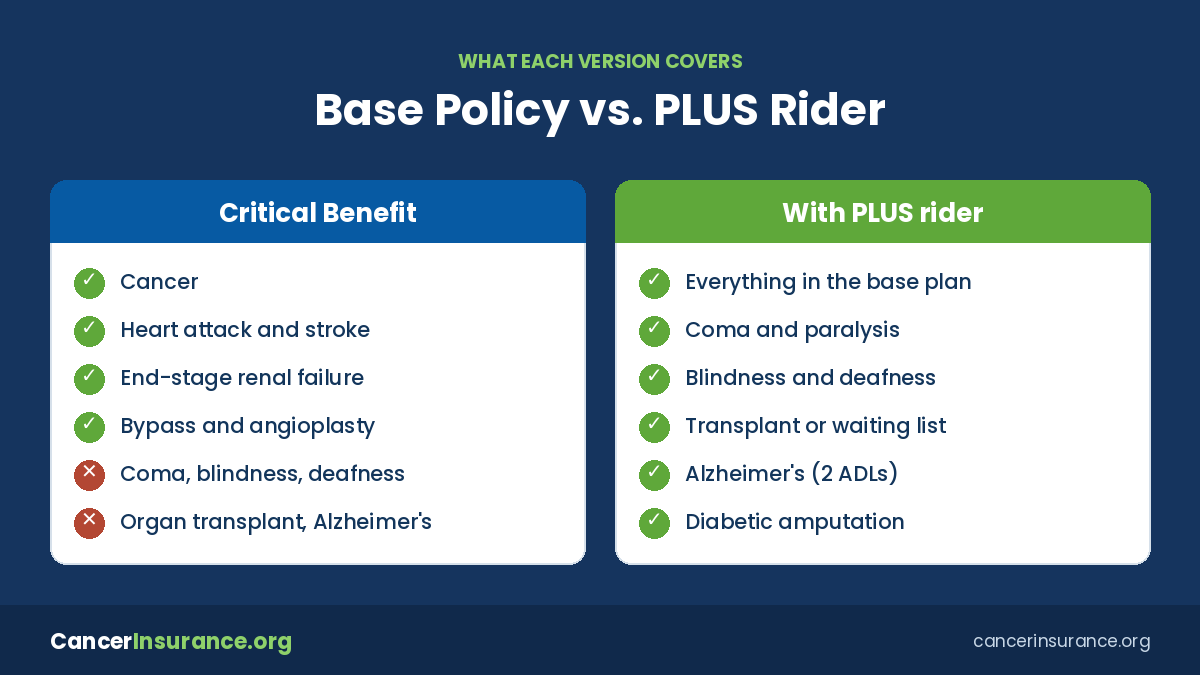
This guide sticks to what Bankers Life itself has published: the two versions of the policy, the optional add-ons, who can apply, what the policy will not pay for, and how it stacks up against its CNO Financial sister, Washington National. If lump-sum coverage is new to you, our critical illness insurance primer explains the basics first.