




Speak with a licensed insurance agent

1-888-891-0229

Prostate Cancer Insurance: How Cancer and Critical Illness Policies Pay, From PSA Test to Treatment

Reviewed by Russell Noga, Licensed Insurance Agent — Last updated November 25, 2026

Key Takeaway

Prostate cancer insurance is not a separate product: it is a supplemental cancer or critical illness policy, sold by insurers such as Aflac, Mutual of Omaha, UnitedHealthcare and Unum, that pays you cash when prostate cancer is diagnosed or treated after coverage starts. Cancer policies pay by treatment, while some critical illness plans cut the lump sum to 25% for low-grade, early-stage prostate tumors.

2027 by the Numbers

333,830

estimated new US prostate cancer cases in 2026 (American Cancer Society)

1 in 8

US men diagnosed with prostate cancer in their lifetime (American Cancer Society)

About 6 in 10

prostate cancers found in men 65 or older (American Cancer Society)

59.6%

low-risk patients on active surveillance by the end of 2021 (AUA Quality Registry, via NCI)

Leaving skin cancer aside, prostate cancer is the cancer men are diagnosed with most often, and the American Cancer Society expects about 333,830 new US cases in 2026. The question for a buyer is what a cash policy adds on top of health insurance, and where its fine print treats prostate cancer differently.

No insurer sells a prostate-only plan. Men buy general cancer insurance plans or critical illness coverage, and the contract decides how a prostate diagnosis is paid. All of these are supplemental, limited-benefit policies that pay fixed cash amounts and do not replace health insurance.

Compare Cancer Insurance Plans for Men

Speak with a licensed insurance agent

1-888-891-0229

CancerInsurance.org logo

Where PSA Screening Fits Before You Buy

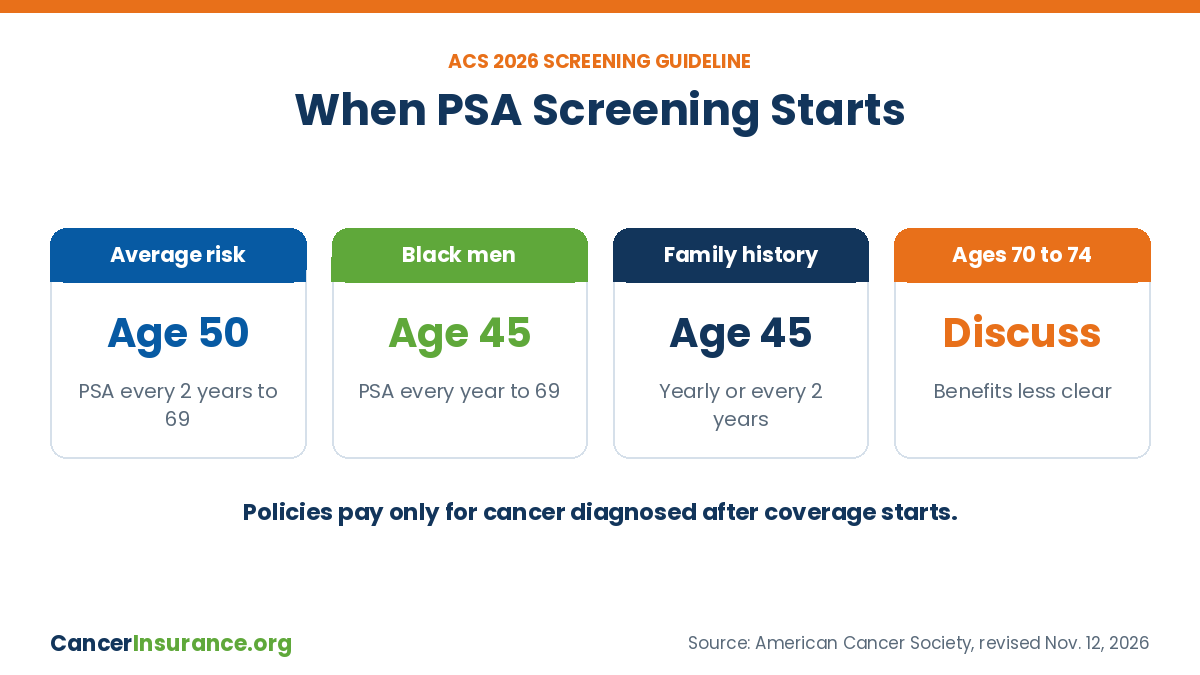
Prostate cancer insurance timing: ACS 2026 PSA screening start ages for average-risk men, Black men and men with family history

Most prostate cancers are found through a PSA blood test and a follow-up biopsy, often before symptoms. That timing matters, because a policy only pays for cancer first diagnosed after its effective date and waiting period.

The American Cancer Society issued a new early detection guideline in 2026, and its screening page was revised on November 12, 2026. Men at average risk get a PSA test every 2 years from 50 through 69, while Black men start at 45 and test yearly. Men with a father, brother or son who had prostate cancer also start at 45. Between 70 and 74 the guideline calls the trade-offs less clear, and it does not recommend routine screening from 75 on.

Screening rule that differs: The US Preventive Services Task Force still lists its 2018 statement as current, with an update in progress: PSA screening is an individual decision for men 55 to 69, and it recommends against routine screening at 70 and older. Because that grade is a C, the Affordable Care Act rule that makes A and B grade screenings free does not require plans to cover PSA tests at no cost.

Cancer Insurance Quotes

Call a Licensed Agent Now

Compare cancer insurance plans and cash benefits from several insurance companies in one call.

☎ 1-888-891-0229

No obligation to buy

Two Policy Designs, Two Very Different Prostate Claims

The same biopsy report can produce very different checks depending on the kind of policy you hold.

Per-treatment cancer policy. Pays set amounts as care happens: a hospital stay, an operation, a month of radiation or hormone therapy. Some forms add a one-time payment at first diagnosis.

Lump-sum critical illness policy. Pays one check at first diagnosis, whatever treatment you choose. Many group plans grade cancer into full and partial tiers, and early prostate tumors can land in the partial one.

Neither design pays your doctor. The cash goes to you, and your health plan still handles the bills. To see which insurers write each design where you live, browse the cancer insurance providers directory.

Five Filed Policy Documents, Read for Prostate Cancer

Marketing pages rarely mention the prostate, so this page compared five documents insurers and employers publish: two individual cancer policies, one individual lump-sum plan and two employer certificates.

DocumentDesignEarly or low-grade prostate cancerHormone therapyTiming and age rules
Aflac Cancer Protection Assurance, outline B70225N (series B70200)Individual per-treatmentOne-time Initial Diagnosis Benefit for internal cancer; treatment benefits need treatment prescribed, received and chargedOnce per calendar month30-day waiting period; if cancer is found in it, treatment benefits start 2 years after the effective date, or you can void the policy for a full refund
Mutual of Omaha cancer policy, form CL10-22900 (brochure 463530)Individual per-treatment, cancer onlyNo diagnosis lump sum listed; pays for covered surgery, radiation and hospital staysNo separate benefit listedNo benefits for cancer first diagnosed within 30 days
Aflac Lump Sum Critical Illness, outline A73100, cancer rider A73050 (Illinois)Individual lump sumInternal cancer and carcinoma in situ each pay the schedule amount onceNot treatment based12-month pre-existing look-back; all benefits cut in half on or after age 75
UnitedHealthcare Insurance Company group certificate, Louisiana State UniversityEmployer lump sumFull Level 1 only for Gleason 7 or higher or stage T1bN0M0 or greater; other prostate cancer pays 25%Not treatment basedNothing paid if diagnosed before the effective date
Unum Insurance Company group certificate, Caltech (2022)Employer lump sumNo prostate carve-out found; in situ (Stage 0) pays 25%Not treatment based6-month look-back in state amendments reviewed; recurrence paid after 180 days

Our review of each document as published by the insurer or employer. The policy or certificate issued in your state controls.

What the comparison shows: The Aflac 50% reduction at age 75 and the UnitedHealthcare Gleason test both matter more for prostate cancer than for many other cancers, since the ACS puts the average age at diagnosis at about 68.

Matching Each Prostate Treatment to the Benefit That Pays

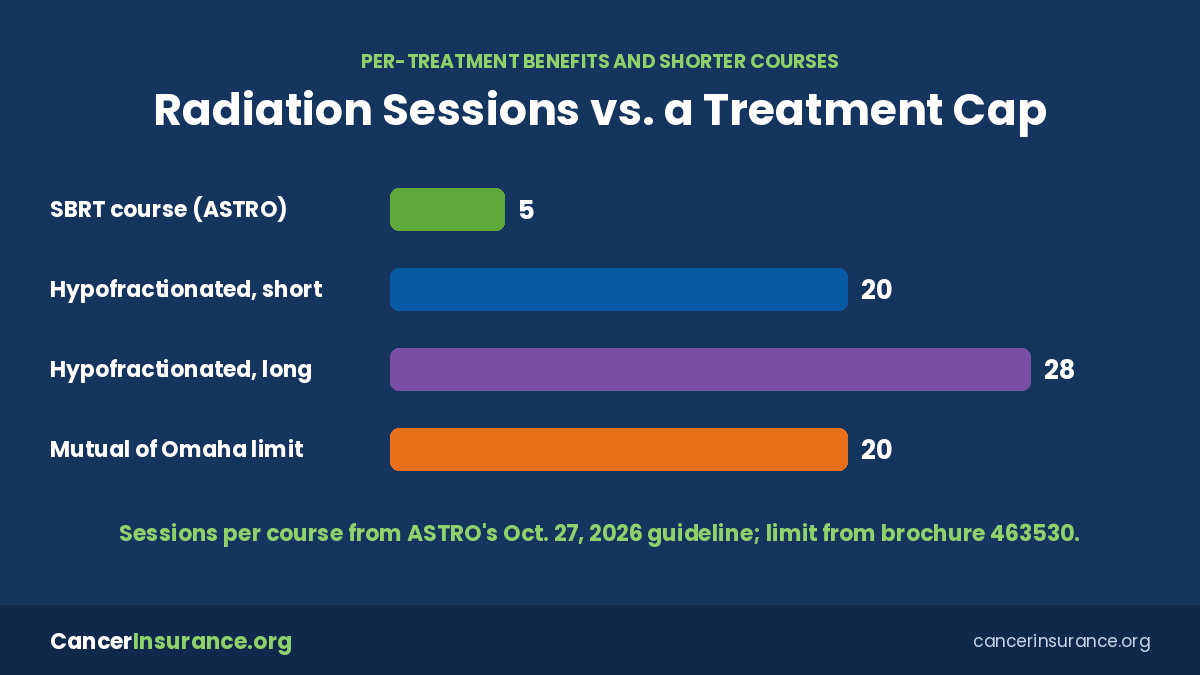
Prostate cancer insurance and radiation: 5-session SBRT and 20 or 28-session courses compared with a 20-treatment policy limit

The CDC lists the main options as active surveillance, watchful waiting, surgery, radiation and hormone therapy, plus chemotherapy, targeted and immune-based drugs for cancer that has spread. Each lines up with a different part of a policy.

TreatmentPer-treatment cancer policyLump-sum critical illness plan
Active surveillance (PSA tests, biopsies, MRI)A first-diagnosis benefit may pay if the form has one; treatment benefits wait for treatmentPays at diagnosis, at the tier stage and grade earn
Radical prostatectomySurgery and anesthesia benefits from the schedule of operationsNo extra payment; the diagnosis triggered the claim
External beam radiation or seed implantsRadiation benefit, per treatment or per month by formSame single payment
Hormone therapy (androgen deprivation)Monthly benefit in Aflac’s B70200 outline; not named in every formSame single payment
Chemotherapy or immunotherapy for spread cancerChemotherapy benefits; Aflac asks for yearly proof the cancer is active after 12 paid monthsA recurrence may pay again if the plan allows

Benefit names from the filed documents above. HIFU and cryotherapy depend on how a form classifies the procedure.

Radiation schedules are getting shorter. On October 27, 2026, ASTRO updated its guideline to favor moderate hypofractionation, such as 20 or 28 sessions over four to six weeks, and conditionally recommend a five-session course. A per-treatment benefit pays fewer times on a shorter course, while a per-month benefit may pay the same. For focal therapy, read is HIFU for prostate cancer covered by insurance.

Compare Cancer Insurance Plans for Men

Speak with a licensed insurance agent

1-888-891-0229

CancerInsurance.org logo

The Low-Grade Tumor and Active Surveillance Gap

Active surveillance is now the usual path for low-risk disease. NCI reported that its use among low-risk patients in the AUA Quality Registry rose from 26.5% in 2014 to 59.6% by the end of 2021. Many of these men never need surgery or radiation.

Per-treatment policies can sit idle. Monitoring visits and repeat PSA tests are not surgery, radiation or hormone therapy. Without a diagnosis or test benefit that fits, a man on surveillance may collect little until treatment starts.

Tiered plans can pay a fraction. Under the UnitedHealthcare certificate, a Gleason 6 tumor below stage T1b falls to 25%. How an insurer ranks T1c, the stage for cancers found through PSA testing, is worth asking in writing.

Upgrades are not automatic. If the tumor later grows or its grade rises, a second payment depends on the recurrence or upgrade rules. Some plans pay the difference; others pay nothing more.

Partial payouts across other cancers are covered in does critical illness insurance cover cancer. For prostate cancer, ask which Gleason score and stage trigger the full benefit before you enroll.

Already Diagnosed or Facing a High PSA? Timing Rules That Decide a Claim

1

Know that recent testing can count against a claim. Aflac’s critical illness outline treats a condition as pre-existing if medical testing was recommended in the 12 months before coverage. An elevated PSA with a biopsy already advised could fit. Answer every application question truthfully.

2

Clear the waiting period. Both individual cancer policies reviewed start with a 30-day window in which a new diagnosis is not paid in full.

3

Expect a prior diagnosis to be excluded. The UnitedHealthcare certificate pays nothing for an illness diagnosed before the effective date, so a man already on surveillance should not count on a new policy for that cancer.

4

Look for a treatment-free clause after past cancer. Aflac’s cancer rider covers a return of a cancer diagnosed before coverage only after 12 straight months free from treatment. Ongoing hormone therapy may keep that clock from starting.

Application health questions vary by carrier; the cancer insurance and pre-existing conditions guide covers them. Men on Medicare can hold these policies too, since they pay cash beside any coverage. More options are on the CancerInsurance.org home page.

Bottom Line

Prostate cancer insurance means a general cancer or critical illness policy, and the filed documents show how differently they pay for one diagnosis: a monthly hormone therapy benefit on one form, 25% for low-grade tumors on another, a 50% cut at 75 on a third. Check the pre-existing, Gleason and stage terms, and keep your health plan as the base layer.

Get Free Prostate Cancer Insurance Quotes

Speak with a licensed insurance agent

1-888-891-0229

CancerInsurance.org logo

Prostate Cancer Insurance — Frequently Asked Questions

➤ Is there an insurance policy made only for prostate cancer?

Not in the documents reviewed. Men buy a general cancer policy or a critical illness plan that includes cancer, and its definitions decide how prostate cancer is paid.

➤ Will cancer insurance pay anything if I choose active surveillance?

A lump-sum plan pays at diagnosis at the tier your stage and grade earn. A per-treatment policy may pay a first-diagnosis benefit if it has one, but most treatment benefits wait until treatment begins.

➤ Does a Gleason 6 tumor get the full lump sum?

Not always. The UnitedHealthcare certificate reviewed pays its full level only for Gleason 7 or higher or stage T1bN0M0 or greater; other prostate cancer gets 25%.

➤ Can I buy a policy after my PSA came back high?

You can usually apply, but a pre-existing clause may block payment for a cancer found soon after. Aflac’s critical illness outline looks back 12 months for recommended testing.

➤ Do supplemental cancer policies pay for hormone therapy injections?

Some do. Aflac’s B70200 outline pays a hormonal therapy benefit once per calendar month, while the Mutual of Omaha brochure reviewed lists no separate one.

➤ Will a five-session radiation course pay less than a longer one?

Under a per-treatment benefit, fewer sessions mean fewer payments. A benefit paid once per calendar month may pay the same for a short course.

➤ What happens to benefits for older men?

It depends on the policy. Aflac’s Lump Sum Critical Illness outline cuts all benefits in half for losses on or after the 75th birthday.

➤ Does this coverage replace my health plan for prostate cancer care?

No. Cancer and critical illness insurance are supplemental, limited-benefit policies that pay fixed cash. Your health plan still pays for surgery, radiation and drugs.

Cancer Insurance Quotes

Call a Licensed Agent Now

Compare cancer insurance plans and cash benefits from several insurance companies in one call.

☎ 1-888-891-0229

No obligation to buy

Ready to Compare? Get Free Cancer Insurance Quotes

Speak with a licensed insurance agent

1-888-891-0229

CancerInsurance.org logo

ZRN Health & Financial Services, LLC, a Texas limited liability company