




Reviewed by Russell Noga, Licensed Insurance Agent — Last updated November 24, 2026
Key Takeaway
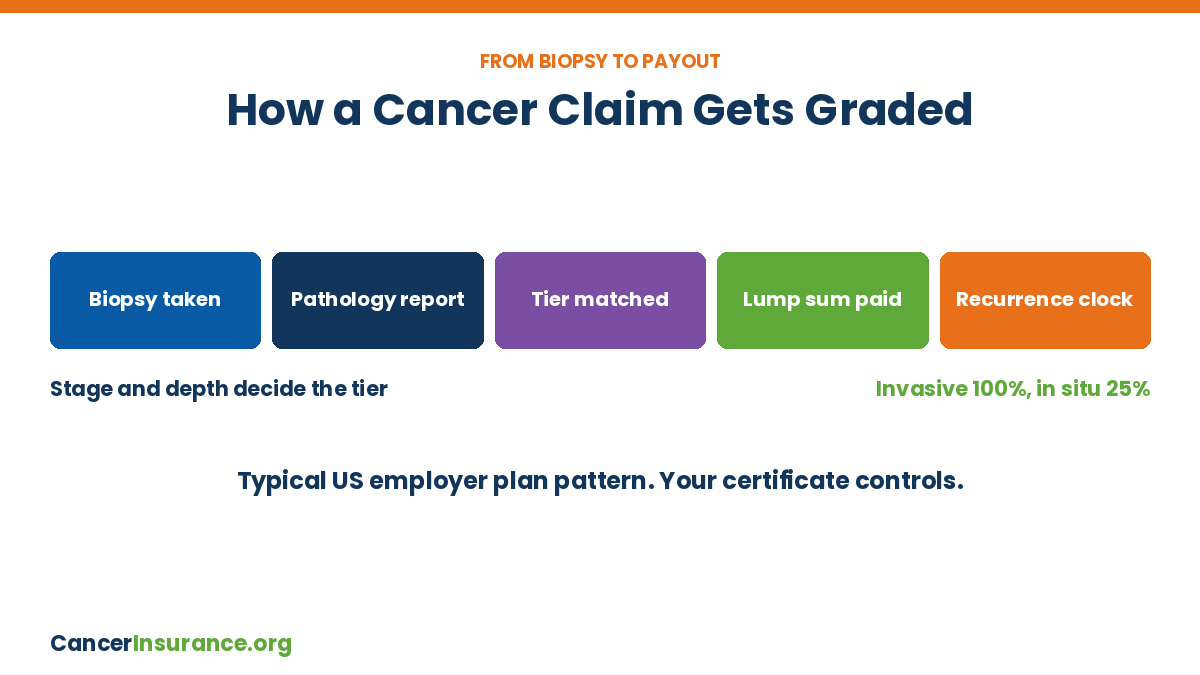
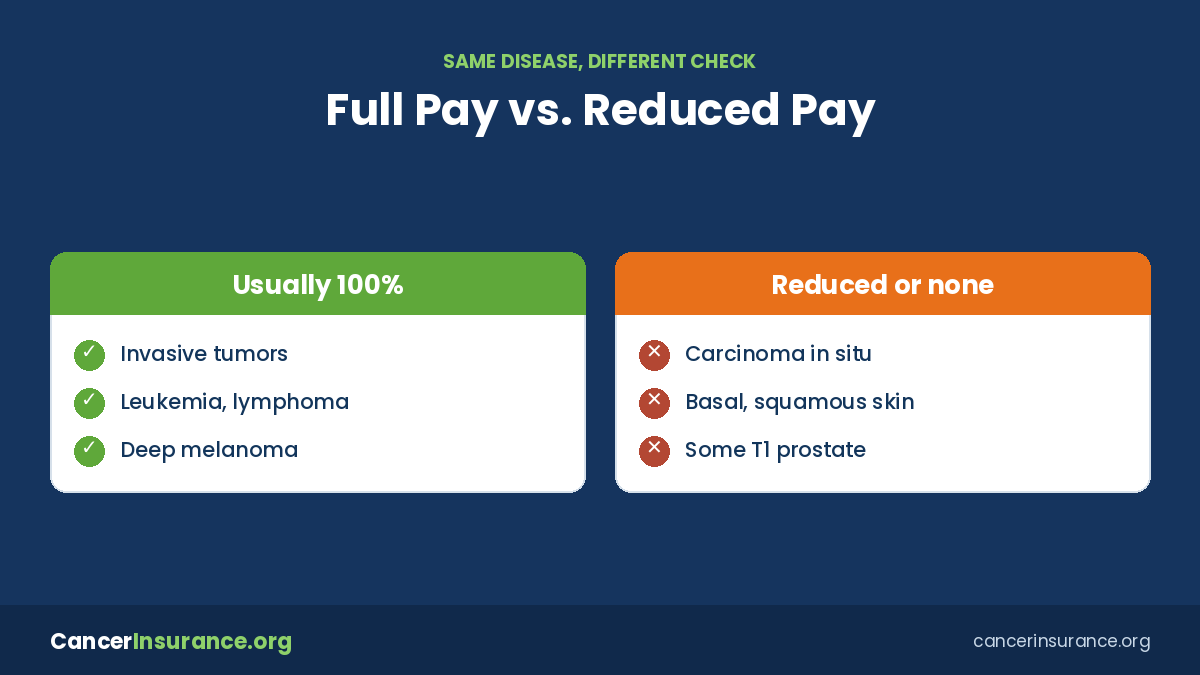
Yes, critical illness insurance covers cancer: most policies list invasive cancer as a covered condition and pay 100% of the lump sum when it is first diagnosed while coverage is in force. Carcinoma in situ paid 25% in all five employer plans reviewed here, non-melanoma skin cancer usually gets a small fixed amount, and some very early prostate and thyroid tumors pay a reduced benefit or nothing.
2027 by the Numbers
25%
carcinoma in situ payout in all 5 employer plan documents reviewed (Aflac, Aetna, Cigna, MetLife, ReliaStar)
$250 vs $1,000
one-time skin cancer benefit in the Cigna and Aetna employer documents reviewed
3 of 5
documents that move some early prostate tumors out of the full-benefit cancer tier
Cancer sits on the covered list of most critical illness policies sold in the US. The harder question is how much a policy pays for your specific diagnosis. A pathology report that says invasive ductal carcinoma triggers a very different check than one that says ductal carcinoma in situ, even though both are breast cancer.
This page walks through how a critical illness plan grades a cancer diagnosis, using five real employer plan documents filed by Aflac, Aetna, Cigna, MetLife and ReliaStar (a Voya company). Critical illness coverage is a supplemental, limited-benefit policy that pays cash on top of health insurance and does not replace it. For a broader look at the product, start with our critical illness insurance guide.