




Speak with a licensed insurance agent

1-888-891-0229

Multiple Critical Illness Insurance: How US Policies Pay a Second, Third or Repeat Claim

Reviewed by Russell Noga, Licensed Insurance Agent — Last updated November 26, 2026

Key Takeaway

Multiple critical illness insurance is coverage that can pay a lump sum more than once: for a different covered illness after a set gap, and for the same illness coming back after a treatment-free period. In the US, most employer group plans build this in through additional occurrence and recurrence benefits, usually up to an overall cap such as 500% or 1,000% of the benefit amount.

2027 by the Numbers

1,000%

lifetime cap per person in a United of Omaha group plan summary, policy form G2018MP (Mutual of Omaha)

7 times

the Benefit Amount, the Total Benefit Amount in a MetLife group summary for Columbia University (MetLife)

6, 12 or 18 months

treatment-free wait an employer can choose for Sun Life’s group recurrence benefit (Sun Life)

A heart attack at 52 and a cancer diagnosis at 58 are two separate events, and a well-built policy treats them that way. Whether the second one pays depends on a few rules buried in the plan summary.

This guide pulls those repeat-payout rules out of eleven US plan documents and lines them up. Critical illness coverage is a supplemental, limited-benefit policy that pays cash to you; it does not pay doctors or hospitals and does not replace health insurance. For how a first claim works, start with our critical illness insurance guide.

Compare Critical Illness Coverage

Speak with a licensed insurance agent

1-888-891-0229

CancerInsurance.org logo

Four Ways One Policy Can Pay Again

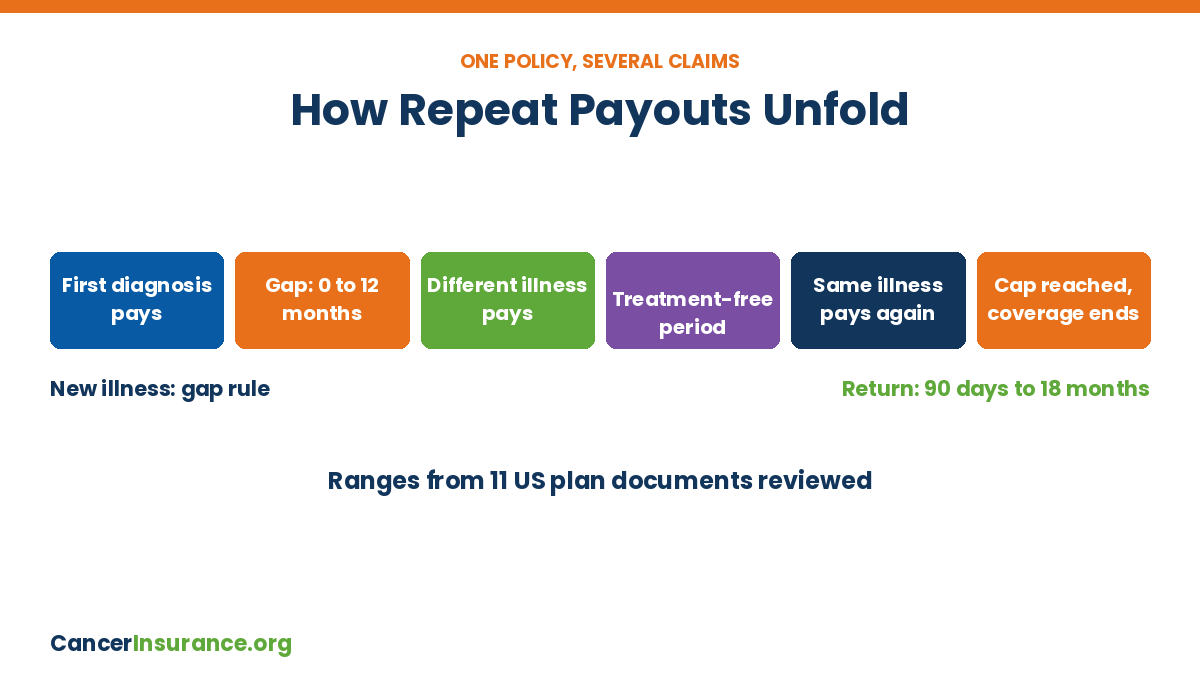
Timeline of how multiple critical illness insurance pays a first claim, a different illness, a recurrence and then reaches its cap

US carriers rarely sell a product called multiple or multi-pay critical illness insurance. Instead, the repeat payouts sit inside the regular plan under names that change from one carrier to the next.

Initial benefit. The first lump sum for the first diagnosis of each covered condition, often 100% of the amount you chose, or a smaller share for conditions such as carcinoma in situ.

Additional occurrence. A payment for a different covered illness after the first claim. Carriers call it a subsequent diagnosis, a different diagnosis or a second event.

Recurrence benefit. A payment when the same illness returns, such as a second heart attack. Many plans pay less the second time, and some conditions have none.

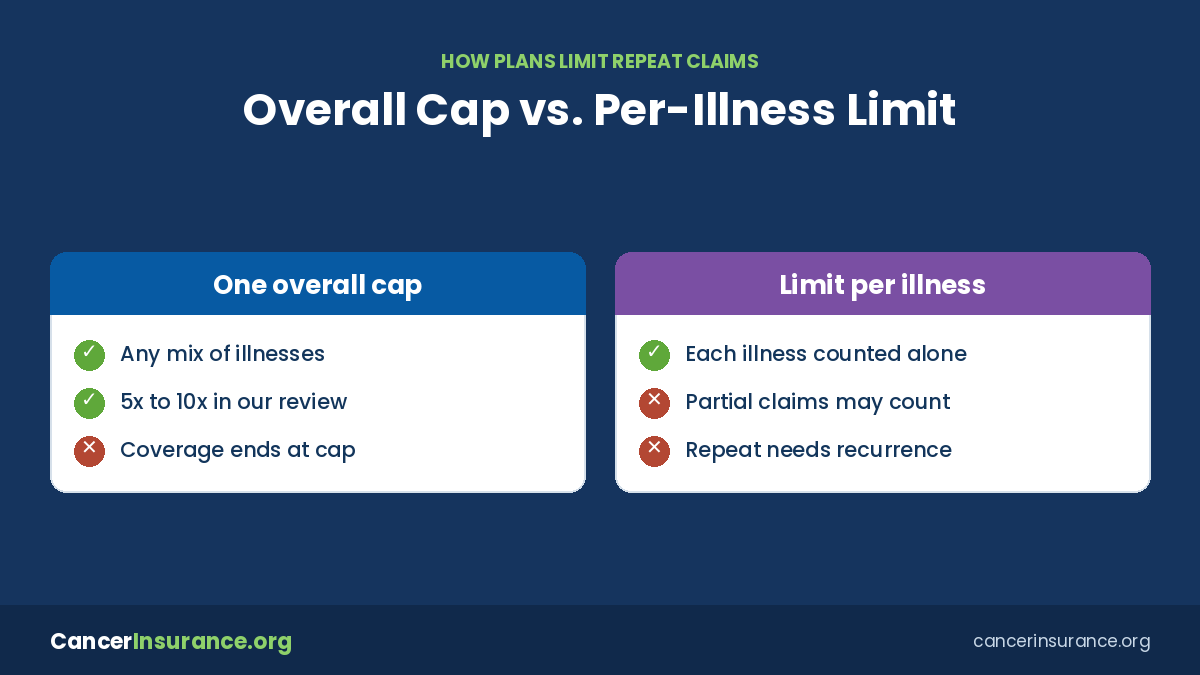
Overall cap. A lifetime limit on what the policy pays one person, written as a multiple or percentage of the benefit amount.

Cancer Insurance Quotes

Call a Licensed Agent Now

Compare cancer insurance plans and cash benefits from several insurance companies in one call.

☎ 1-888-891-0229

No obligation to buy

Repeat-Claim Rules in 11 Plan Documents

No single public source compares these rules. The table below comes from each carrier’s own outline of coverage, certificate, brochure or a plan summary an employer posted for its workers.

Plan documentA different illnessThe same illness againCancer that returnsOverall cap
MetLife group, Columbia University summaryPays each different condition; a suspension period may apply100% for cancer, heart attack, stroke and bypass; none for kidney or organ failureNo symptoms or treatment for that cancer; no repeat pay for skin cancer7 times the Benefit Amount
The Hartford group plan summary3 months apart100% after a 6-month separationNo separate cancer rule listed500% adult, 300% child
United of Omaha group summary, form G2018MP30 days after the prior diagnosisOften 100% after 90 days treatment-free; some conditions noneSkin cancer: 1 repeat a year, 5 in total1,000% of the Principal Sum
Guardian group summary, Lincoln Memorial University3 months if the illnesses are related50% for heart attack, stroke, heart failure, organ or kidney failure12 months in a row with no symptoms, care or treatmentNot listed
Colonial Life GCI6000 Plan 1, Cameron County, TXUp to 100% of the coverage amount25%, diagnoses more than 180 days apartNo cancer-specific rule listedNot listed
Allstate Benefits form GVCIP2, San Diego CountySecond Event benefit, same amount, more than 12 months laterNot listed separatelyNo treatment during the 12 monthsEach benefit once; coverage ends when all are used
Sun Life group brochure GCIBCH-6449Pays after a required gap; length not givenUp to 100%; employer picks 6, 12 or 18 months treatment-freeCancer is optional; same recurrence termsEach condition once per lifetime, plus recurrence
The Standard, State of California group certificate, 20260-day gap listed100%, once per illness per lifetime6-month treatment-free periodNo overall cap listed
Voya (ReliaStar), State of Georgia certificateMore than 12 months after the prior diagnosisWithin 12 months, not paidNo separate cancer rule in the sections reviewedPer illness; none for heart attack or cancer in this schedule
Aflac individual outline, form B71125GA50% of the face amount50% of the face amount12 months in a row treatment-freeNo lifetime maximum on this benefit
American Fidelity recurrent diagnosis benefitNot part of this benefit50%, at least 180 days apartNot included; heart attack, stroke and organ failure onlyNot listed

Our side-by-side review of each insurer’s published document or an employer’s posted plan summary. Not listed means that document gives no figure. Employer contracts and state versions differ, and your own certificate controls.

What stands out: The widest spread is the cap: ten times the base amount per person in United of Omaha’s summary, versus each benefit once in the Allstate Benefits flyer.

When Cancer Comes Back

Cancer is the condition most likely to return, so its repeat rule deserves the closest read. Most documents reviewed tie a second cancer payment to a stretch with no treatment before the new diagnosis date. Whether a first cancer counts at all is covered on our does critical illness insurance cover cancer page.

1

Find the treatment-free length. It ran from 90 days under United of Omaha to 12 months under Guardian, Aflac and Allstate Benefits. Sun Life lets the employer choose 6, 12 or 18 months.

2

Check what counts as treatment. The Standard and Allstate Benefits documents say maintenance drug therapy and routine follow-up visits do not count. Guardian excludes preventive medicine taken without active disease and scheduled check-ups.

3

Look for a remission test. Aflac’s group series C21000 summary adds that the insured must be in complete remission before the next diagnosis, on top of 12 treatment-free months.

4

Confirm skin cancer limits. MetLife’s Columbia summary pays no recurrence for skin cancer, and United of Omaha caps skin cancer at one repeat a year.

A spread of the same cancer to a new organ is often treated as the original cancer, so read the cancer definition in the certificate.

Lifetime Caps and How Partial Claims Use Them

Multiple critical illness insurance cap designs compared: one overall lifetime cap versus a limit for each illness

The cap decides how many times a policy can realistically pay. A MetLife FAQ page describes a total benefit of 5 times the initial amount, while its Columbia summary shows 7 times. The Hartford sets 500% for employees and spouses and 300% for children, and United of Omaha sets 1,000%. Once the cap is reached, coverage for that person ends.

Partial payouts count: Voya’s Georgia certificate states that partial benefits reduce the total maximum benefit for that illness, and that a spouse or child claim does not reduce the employee’s benefit amount. A 25% payment for an early cancer can leave less room for a later invasive cancer.

None of the US documents reviewed described a benefit restoration that refills the amount after a claim.

Compare Critical Illness Coverage

Speak with a licensed insurance agent

1-888-891-0229

CancerInsurance.org logo

Why Multi-Pay Articles Online Can Mislead US Buyers

Many top search results for this topic come from Singapore, Hong Kong and the UK, where multi-pay critical illness is sold as its own product with its own staging rules. Those features do not carry over to US policies.

Related illnesses. Several US plans treat linked conditions as one event. Guardian groups cancer conditions and vascular conditions and asks for 3 months between related claims.

Same-diagnosis windows. Voya’s certificate treats a repeat within 12 months as the same diagnosis and pays nothing for it.

One loss at a time. Aflac’s individual outline pays one covered loss at a time, and only the highest benefit if two losses happen the same day.

Narrow recurrence lists. American Fidelity’s recurrent diagnosis benefit applies only to heart attack, stroke and major organ failure.

Comparing Carriers on Repeat Payouts

1

Ask for the certificate or outline of coverage. Flyers often skip the gap rules; the certificate lists them.

2

Write down two gaps. Note the wait for a different illness and the treatment-free stretch for the same one. They differ in almost every plan above.

3

Compare the cap, not just the base amount. A smaller benefit with a high cap may pay more over a lifetime than a larger one that pays each condition once.

4

Keep claim records. Repeat claims turn on diagnosis dates, so save pathology and doctor reports. Our critical illness insurance claims guide covers the paperwork.

Choosing the benefit amount itself is a separate question from how often it can pay. For carriers that sell this coverage, see our critical illness insurance providers list, and if cancer is the main worry, compare cancer insurance plans that pay per treatment rather than once.

Bottom Line

Multiple critical illness insurance in the US usually means a regular plan with additional occurrence and recurrence benefits, not a separate product. The rules that decide a second or third payout are the gap between diagnoses, the treatment-free period for a returning illness and the lifetime cap, and they varied widely across the eleven documents reviewed. Read them in your own certificate, and keep health insurance in place, since this coverage only adds cash on top.

Get Free Critical Illness Quotes

Speak with a licensed insurance agent

1-888-891-0229

CancerInsurance.org logo

Multiple Critical Illness Insurance — Frequently Asked Questions

➤ Can a critical illness policy pay out more than once?

Yes, many can. Most group plans reviewed pay again for a different covered illness after a gap and for a return of the same illness after a treatment-free period, up to a lifetime cap.

➤ What is the difference between a recurrence benefit and an additional occurrence benefit?

A recurrence benefit pays when the same illness returns, such as a second stroke. An additional occurrence benefit pays for a different covered illness, such as cancer after a heart attack.

➤ Does a cancer recurrence count as a new claim?

Often, if the treatment-free rule is met. The documents reviewed asked for 90 days to 12 months without treatment, and Sun Life lets employers set up to 18 months.

➤ What happens when the lifetime maximum is reached?

Payments stop and coverage for that person usually ends. Caps in the documents reviewed included 5 or 7 times the benefit at MetLife, 500% at The Hartford and 1,000% at United of Omaha.

➤ Do partial payouts reduce what is left for later claims?

They can. Voya’s Georgia certificate says partial benefits reduce the total maximum for that illness, so an early-stage claim can shrink a later payout for the same illness.

➤ Is multi-pay critical illness insurance sold in the US?

Rarely under that name. US carriers build repeat payouts into standard plans through recurrence and additional occurrence benefits, while stand-alone multi-pay products are more common in Asia and the UK.

➤ Do follow-up scans or maintenance medicine break a treatment-free period?

Usually not. The Standard, Allstate Benefits and Guardian documents say routine follow-up visits and maintenance or preventive drugs do not count as treatment, but check your own certificate.

➤ Does a policy that pays multiple times replace health insurance?

No. It is still a supplemental, limited-benefit policy that pays cash to you. Medical bills still need a health plan.

Cancer Insurance Quotes

Call a Licensed Agent Now

Compare cancer insurance plans and cash benefits from several insurance companies in one call.

☎ 1-888-891-0229

No obligation to buy

Ready to Compare? Get Free Cancer Insurance Quotes

Speak with a licensed insurance agent

1-888-891-0229

CancerInsurance.org logo

ZRN Health & Financial Services, LLC, a Texas limited liability company