




Speak with a licensed insurance agent

1-888-891-0229

Best Supplemental Cancer Insurance: Top Picks by Need and How to Choose

Updated October 2026

Key Takeaway

The best supplemental cancer insurance depends on how you want to be paid. Lump-sum plans such as Aetna and HealthSpring pay one large check at diagnosis, while scheduled plans such as Aflac pay cash through months of treatment. Pick a highly rated insurer, a benefit sized to your out-of-pocket gap and riders you will actually use.

There is no single best cancer policy for everyone. A 30-year-old with a high-deductible plan at work, a self-employed parent on an ACA Marketplace plan and a retiree on Medicare all need different things from the same kind of coverage. What they share is a gap between what health insurance pays and what cancer actually costs.

This guide ranks options by the need they fill best, explains the two ways plans pay, and gives you a short process for choosing. For a broader look at the market, see our list of the 5 best cancer insurance policies. Every plan here is supplemental, limited-benefit cancer insurance. It pays you cash and does not replace health insurance.

Compare Supplemental Cancer Insurance

Speak with a licensed insurance agent

1-888-891-0229

CancerInsurance.org logo

What Makes Supplemental Cancer Insurance the Best

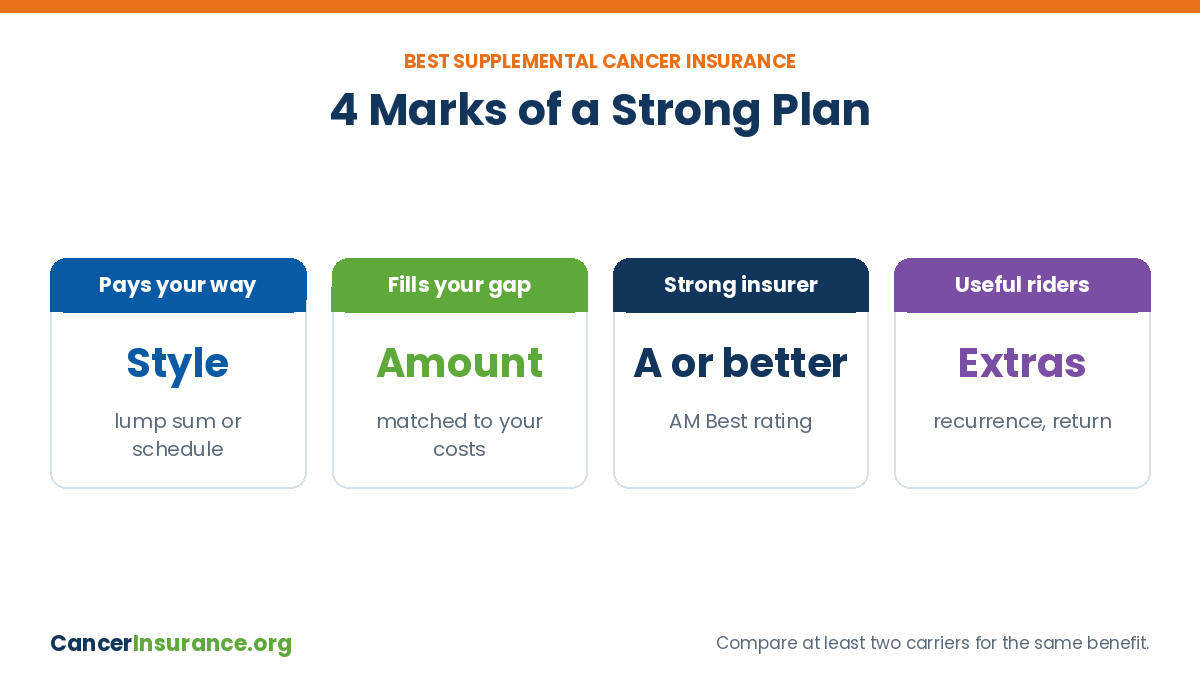
Best supplemental cancer insurance checklist of payout style, benefit size, rating and riders

A good supplemental cancer policy does three jobs. It pays enough to cover the gap your health plan leaves, it pays in a way that matches how your treatment and bills would unfold, and it comes from a company with the financial strength to pay claims years from now.

The size of the gap depends on your main coverage. For 2027, employer and ACA Marketplace plans can set in-network out-of-pocket maximums up to $12,000 for one person and $24,000 for a family. Original Medicare has no yearly cap on its 20% Part B coinsurance. Travel, lodging and lost income come on top of any of those.

Broker tip: The cheapest premium is rarely the best value. Compare what each plan would pay in a realistic case, such as a diagnosis followed by six months of chemotherapy, not just the monthly price.

Cancer Insurance Quotes

Call a Licensed Agent Now

Compare cancer insurance plans and cash benefits from several insurance companies in one call.

☎ 1-888-891-0229

No obligation to buy

Best Supplemental Cancer Insurance by Need

These picks are based on plan features in carrier brochures and product pages we reviewed in 2026. Benefits, ages and availability vary by state.

Best forCompanyWhy it stands out
Long or repeated treatmentAflacScheduled benefits for chemo, radiation and hospital days, plus a yearly screening benefit; A+ (Superior) AM Best rating
Highest lump sum ceilingHealthSpringLump sum of $5,000 to $100,000, varying by state, with issue ages of 18 to 99 in many states
Paying again if cancer returnsAetna$5,000 to $75,000 lump sum with an optional recurrence benefit that can pay up to another 100%
Buying later in lifeMutual of OmahaIssue ages 18 to 89 and no reduction of benefits at any age, per agent materials
Getting premiums backWashington NationalOptional premium-return rider; A (Excellent) AM Best rating affirmed April 2026

Sources: carrier brochures, product pages and AM Best announcements. Not every plan is sold in every state, and riders cost extra.

To dig into the insurers themselves, see our guide to supplemental cancer insurance companies.

Lump Sum or Scheduled Benefits: Which Is Best?

Most supplemental cancer plans pay in one of two ways. Neither is better for everyone; the right style depends on your finances and how much paperwork you want.

Lump sum plans. Pay one amount you choose when you buy, right after a covered diagnosis. Best if you want fast cash and one simple claim.

Scheduled plans. Pay set amounts as treatment happens, such as per month of chemotherapy or per hospital day. Best if treatment could run long.

Using both. Cancer policies generally pay regardless of other coverage, so some families pair a lump sum plan with a scheduled plan.

Here is a simple way to think about it. If you were diagnosed tomorrow and your treatment was surgery followed by a short recovery, a lump sum plan would likely pay more, because the scheduled plan has few events to pay on. If treatment turned into a year of chemotherapy and hospital stays, a scheduled plan could keep paying long after a lump sum was spent. Since no one knows which path they would face, many buyers choose based on what would hurt their budget most.

Our lump sum cancer insurance guide explains how one-check plans are priced and when they pay.

Best Choices at Work vs. On Your Own

Best supplemental cancer insurance bought at work compared with an individual policy

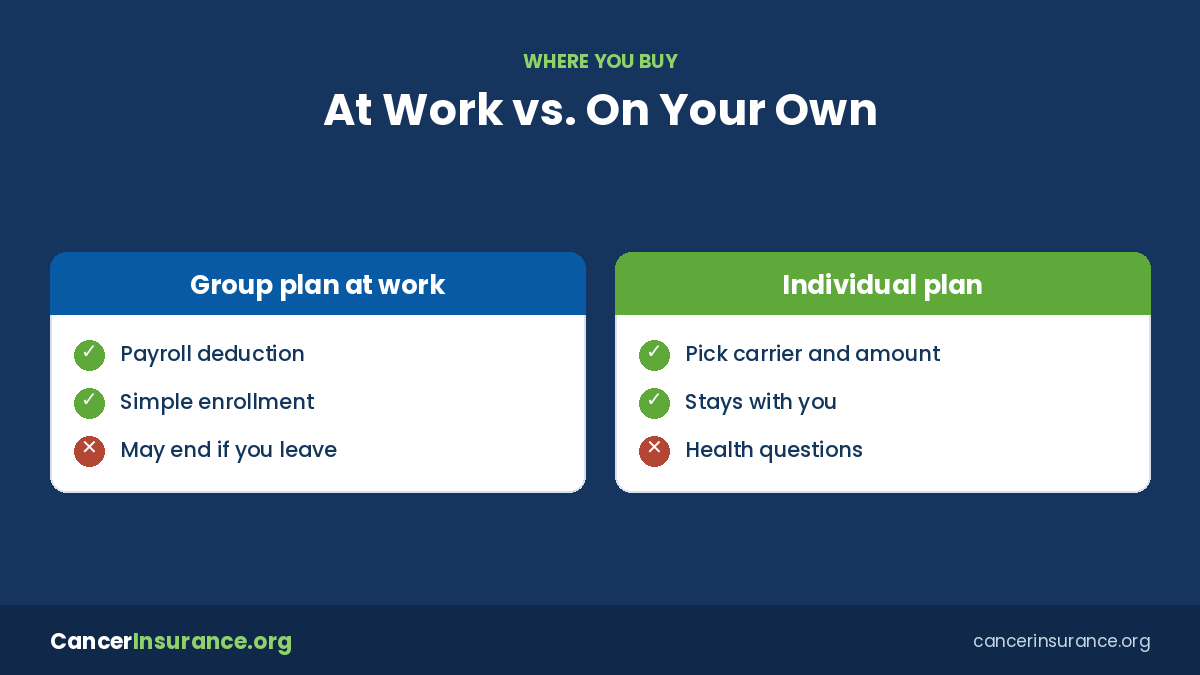
Where you buy shapes what is best for you. Workplace cancer plans can be easy to get, while individual plans give you more choice and stay with you if you change jobs.

At work. Payroll deduction and simple enrollment. One county employer’s 2025 group plan from American Heritage Life charged $26.35 a month for employee-only coverage with a $3,000 diagnosis benefit.

On your own. Choose your carrier, benefit amount and riders. You answer health questions, and the policy stays yours if you leave a job.

On Medicare. Individual plans with high issue ages, such as Aetna to 89, let retirees add cash on top of Medicare, Medigap or Medicare Advantage.

Group rates are set for each employer and are not the same as individual rates, so compare both if your job offers a plan.

Compare Supplemental Cancer Insurance

Speak with a licensed insurance agent

1-888-891-0229

CancerInsurance.org logo

Features That Separate the Best Plans

Once you narrow the field, these features often decide which plan is truly best for you.

Recurrence coverage. Some plans can pay again if cancer returns after a cancer-free period. Most basic plans pay one diagnosis benefit per person.

Early-stage cancer benefit. Check how a plan treats carcinoma in situ. Some pay the full benefit and others pay a smaller share, so read the outline.

Waiting period. Many plans use 30 days, but some are longer for older buyers. Shorter is better if all else is equal.

Family coverage. Adding a spouse or children gives each covered person their own benefit.

Also look for coverage that is guaranteed renewable, so the insurer cannot cancel you because your health changes, and a free-look period that lets you return the policy for a full refund if it is not what you expected.

See every plan type side by side in our overview of cancer insurance plans.

How to Choose the Best Plan for Your Budget

Use your own numbers and a short checklist rather than a brand name alone.

1

Find your gap. Write down your plan’s out-of-pocket maximum or your Medicare cost sharing, then add a few months of travel and lost pay.

2

Pick a style. Decide whether one large check or ongoing payments fit your situation better.

3

Check the insurer. Look up the AM Best rating of the exact company named on the policy.

4

Compare like for like. Price the same benefit amount from two or three carriers, with and without riders.

A licensed agent who represents several carriers can run those quotes side by side. Buy while you are healthy, since most plans exclude cancer diagnosed before coverage starts or during the waiting period.

Bottom Line

The best supplemental cancer insurance is the plan that fills your own out-of-pocket gap, pays in the way your treatment would unfold and comes from a highly rated insurer. Aflac stands out for long treatment, HealthSpring and Aetna for lump sums, and riders like recurrence or premium return can tip the choice. It supplements health insurance, so compare quotes before you buy.

Get Free Cancer Insurance Quotes

Speak with a licensed insurance agent

1-888-891-0229

CancerInsurance.org logo

Best Supplemental Cancer Insurance — Frequently Asked Questions

➤ What is the best supplemental cancer insurance?

It depends on your needs. Aflac’s scheduled plan suits long treatment, HealthSpring offers lump sums up to $100,000 in many states, and Aetna adds an optional recurrence benefit. Compare plans for your state.

➤ Is lump sum or scheduled cancer insurance better?

Lump sum plans pay one check at diagnosis and are simple to claim. Scheduled plans pay as treatment happens and can pay more if treatment runs long. Some people buy one of each.

➤ Which cancer insurance company has the best rating?

Among the carriers in this guide, Aflac’s main U.S. insurer has an A+ (Superior) AM Best rating, and Washington National has an A (Excellent). Check the rating of the exact company on your policy.

➤ Is supplemental cancer insurance worth it?

It can be if a diagnosis would strain your savings, such as with a high-deductible plan or Original Medicare without a supplement. If you have large savings, it may add less value.

➤ Can I get supplemental cancer insurance through work?

Yes. Many employers offer group cancer plans with payroll deduction. Rates are set for each employer, so compare them with individual plans.

➤ What is the best supplemental cancer insurance for seniors?

Look for high issue ages and no age-based benefit cuts. Aetna accepts applicants to age 89, Mutual of Omaha to 89 and HealthSpring to 99 in many states.

➤ Does supplemental cancer insurance cover pre-existing cancer?

Generally no. Most plans exclude cancer diagnosed before coverage starts or during the waiting period, so buy while you are healthy.

➤ Does supplemental cancer insurance replace health insurance?

No. It is a limited-benefit policy that pays you cash. You still need employer, Marketplace, Medicare or other major medical coverage.

Cancer Insurance Quotes

Call a Licensed Agent Now

Compare cancer insurance plans and cash benefits from several insurance companies in one call.

☎ 1-888-891-0229

No obligation to buy

Ready to Compare? Get Free Cancer Insurance Quotes

Speak with a licensed insurance agent

1-888-891-0229

CancerInsurance.org logo

ZRN Health & Financial Services, LLC, a Texas limited liability company