




Reviewed by Russell Noga, Licensed Insurance Agent — Last updated November 26, 2026
Key Takeaway
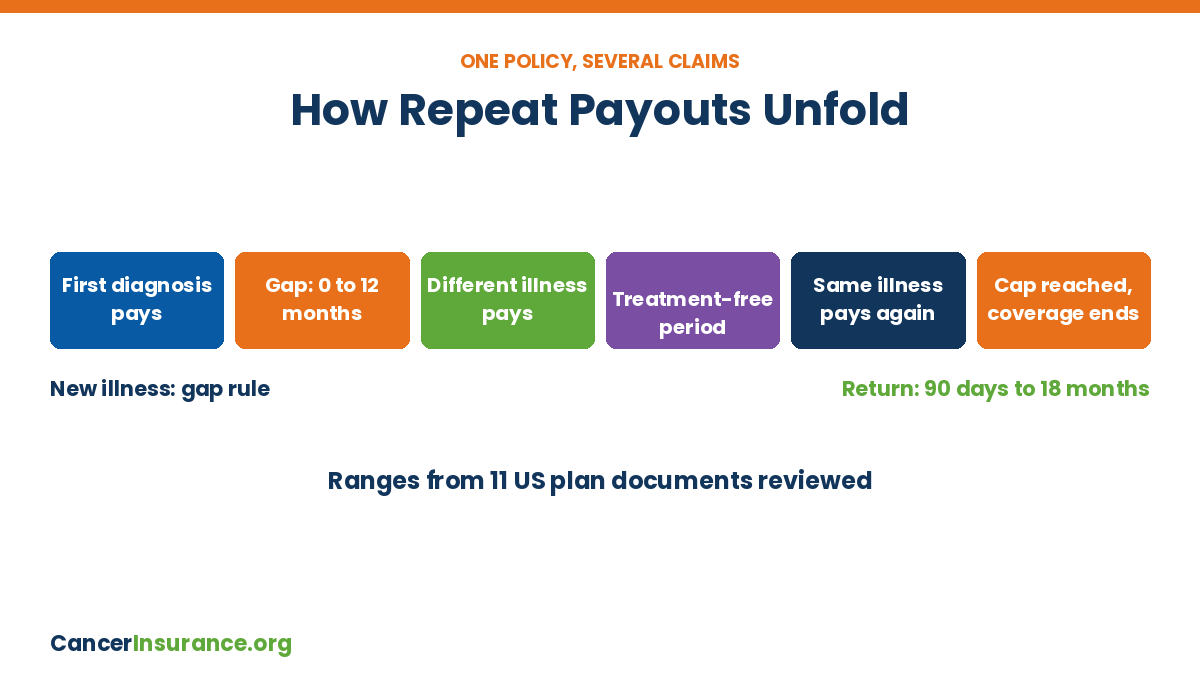
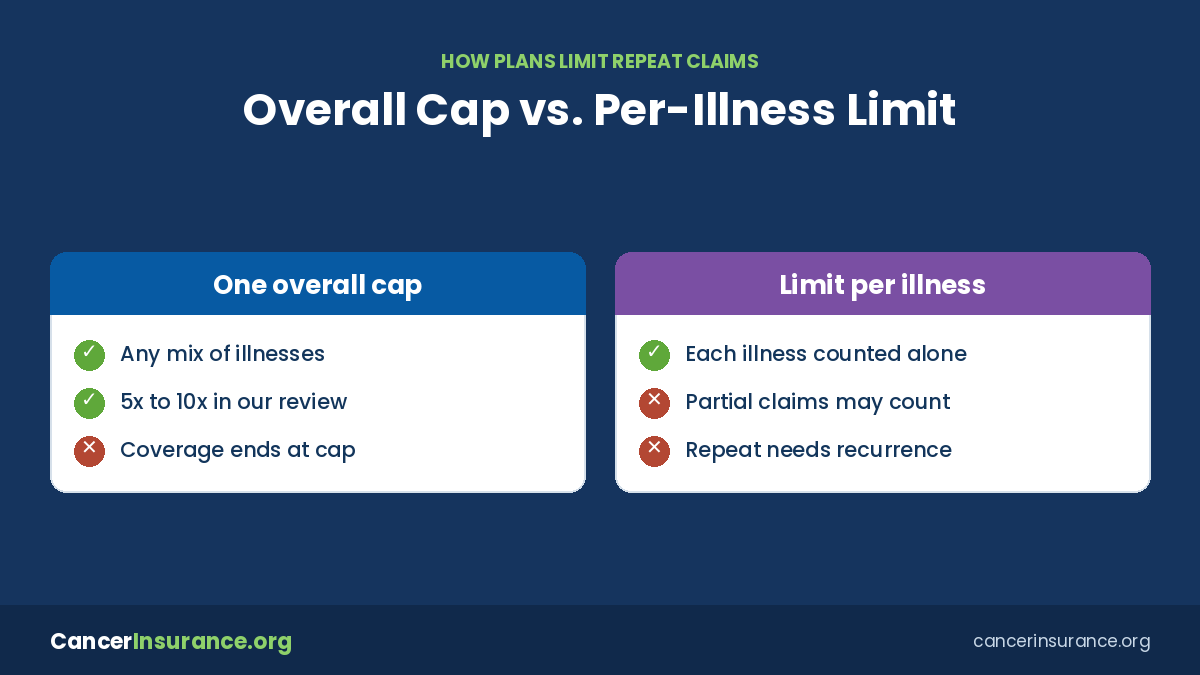
Multiple critical illness insurance is coverage that can pay a lump sum more than once: for a different covered illness after a set gap, and for the same illness coming back after a treatment-free period. In the US, most employer group plans build this in through additional occurrence and recurrence benefits, usually up to an overall cap such as 500% or 1,000% of the benefit amount.
2027 by the Numbers
1,000%
lifetime cap per person in a United of Omaha group plan summary, policy form G2018MP (Mutual of Omaha)
7 times
the Benefit Amount, the Total Benefit Amount in a MetLife group summary for Columbia University (MetLife)
6, 12 or 18 months
treatment-free wait an employer can choose for Sun Life’s group recurrence benefit (Sun Life)
A heart attack at 52 and a cancer diagnosis at 58 are two separate events, and a well-built policy treats them that way. Whether the second one pays depends on a few rules buried in the plan summary.
This guide pulls those repeat-payout rules out of eleven US plan documents and lines them up. Critical illness coverage is a supplemental, limited-benefit policy that pays cash to you; it does not pay doctors or hospitals and does not replace health insurance. For how a first claim works, start with our critical illness insurance guide.